LONDON(RAHNUMA): From the very start of the joint US-Israeli war on Iran on Feb. 28, the states of the Gulf Cooperation Council were shocked to find themselves on the receiving end of Tehran’s violent retaliation.
They had neither been involved in the surprise attacks, nor even consulted about them. Yet by March 1, all six GCC states had come under attack.
As a report on Wednesday by the Washington-based Stimson Center put it: “The US-Israel-Iran conflict, now in its fourth week, has unfolded into a nightmarish and escalating war that no Gulf Cooperation Council member sought.”
Worse, it quickly became clear that Iran’s barrage was being targeted predominantly at civilian infrastructure — not at the US bases Iran claimed were its primary objectives.
On day one, missiles or debris from intercepted Iranian weapons struck Dubai airport, the city’s iconic Burj Al-Arab hotel, Jebel Ali port and the Palm Jumeirah manmade island.
That day, Iran fired 137 missiles and 209 drones at the UAE in a clear attempt to undermine its reputation as a safe haven for tourists, businesses and investors.
Saudi Arabia, Bahrain and Qatar also came under attack from the earliest days of the conflict.
Iran claimed to be targeting only military sites linked to the US. But over the next days and weeks, an undeniable pattern of attacks on civilian infrastructure began to emerge, with targets in Saudi Arabia including the Ras Tanura oil refinery, Aramco facilities and the Shaybah oil field.
The Saudi Ministry of Defense reports that numerous drones heading for Riyadh have been intercepted.
“I was just walking out with my little boy when we suddenly heard the blast,” a Jordanian resident in Riyadh told AFP on Feb. 28.
“People around us were looking up at the sky, trying to understand what was happening. It’s not something you expect in Riyadh.”
It wasn’t something any of the GCC states had expected, nor felt that they deserved.
Even Oman, which had mediated the positive talks between Iran and the US that were immediately followed by the attacks, has been hit. Since March 3, there have been several attacks on oil infrastructure and other civilian facilities in the country.
Now, the latest figures reveal the hugely disproportionate price the Gulf states are paying for a war they did not start, did not want, and had no hand in.
Since Feb. 28, the GCC states have been on the receiving end of 4,391 Iranian drone and missile attacks — an astonishing 83 percent of the total fired.
Israel, on the other hand, which started the war and has bombed Iran daily for the past month, has been targeted by 930 missiles and drones — just 17 percent of the total fired.
The number raises questions as to what Iran’s real motives are, given that for over four decades Tehran has referred to Israel as “Little Satan” and has called for its destruction and annihilation.
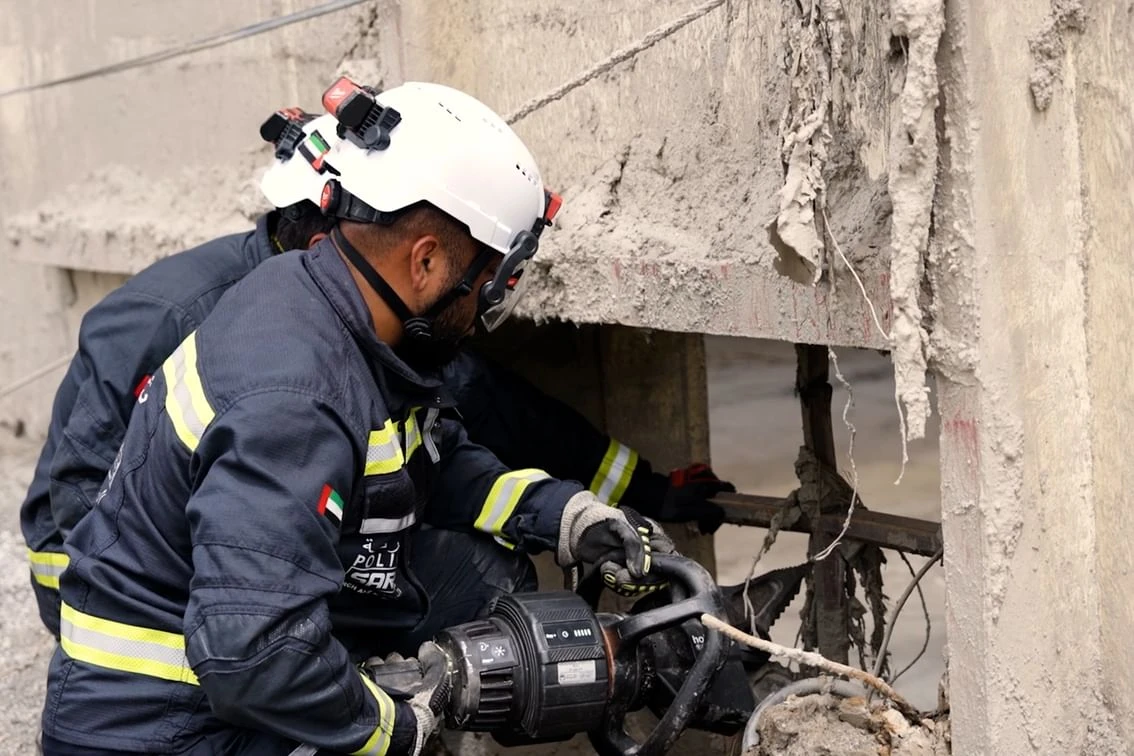
Top of the list of target states is the UAE, which has been subjected to 2,156 attacks. Eleven residents have been killed, including two who died on Thursday when their car was struck by falling debris from an intercepted missile.
So far, Saudi Arabia has dealt with 723 drones and missiles, and has suffered two deaths and several injuries.
Most of the missiles fired at the GCC have been intercepted. Other than an occasional drone attack by the Houthis in Yemen, this is the first time the air-defense systems of the Gulf states have been properly tested, and they have passed with flying colors.
But it is the intention behind the daily attacks that is angering governments across the region, raising questions as to what Iran’s real intentions are, and whether it sees the peace, tolerance and prosperity of fellow Muslim Gulf countries, in general, as the bigger threat to its existence.
Despite claiming it has only targeted sites supposedly linked to US forces, “it is very clear that Iran has targeted key bits of civilian infrastructure,” Chris Doyle, director of the Council for Arab-British Understanding, told Arab News.
“So it is just not credible to make that sort of claim.”
The objective of the Iranian leadership, he said, “is survival in a war that it will see as an existential one. Therefore it wishes to make it as painful for the US as possible, and it has limited options given that, conventionally, the US and Israel are far superior.”
As a result, “it has had to open up a very wide military front to force the US and its allies to defend a huge range of targets, now across 12 countries, and to exact an economic price for what is going on.
“So the point of their targeting is to ensure that the US looks for its exit strategy earlier, rather than later, and they can force them to the negotiating table.”
It is, he added, no coincidence that, among the GCC states, the UAE has been targeted the most.
“It is a fair assumption that in part that is because the UAE is so close to Israel, normalized relations with Israel, and has such deep links now that Iran sees it as a preferred target, whereas it’s a little bit more wary of some of the other Gulf states, which it hasn’t targeted to quite the same degree.”
Caroline Rose, a director at the New Lines Institute, said Tehran’s strategy is “to demonstrate its ability to rapidly undermine security across the entire region.
“This strategy was taken under the premise that GCC states would immediately apply pressure to the US to halt strikes, concede to a deal, and create further distance with Israel.
“However, it’s a strategy that has likely backfired, as countries such Saudi Arabia have undone policies to enable US forces to operate from their territory and some are contemplating entering the war.”
On Wednesday, the UN Human Rights Council endorsed a resolution brought by the GCC states and Jordan condemning Iran’s “egregious” actions and demanding reparations for the extensive damage and loss of life that had been suffered.
That same day, in a joint statement, Saudi Arabia, the UAE, Kuwait, Bahrain, Qatar and Jordan condemned “in the strongest terms of the blatant Iranian attacks, which constitute a flagrant violation of their sovereignty, territorial integrity, international law, international humanitarian law, and the Charter of the United Nations, whether carried out directly or through their proxies and armed factions they support in the region.”
In a glimpse of hitherto unrecognized threats, they also condemned “the destabilizing acts and activities targeting the security and stability of the region’s countries, which are planned by sleeper cells loyal to Iran and terrorist organizations linked to Hezbollah, and praise our brave armed forces for confronting these attacks.”
The statement added: “We also reaffirm our full and inherent right to self-defense against these criminal attacks in accordance with Article 51 of the Charter of the United Nations, which guarantees the right of states to self-defense, individually and collectively, in the event of aggression, and our right to take all necessary measures to safeguard our sovereignty, security, and stability.”