Search News
Search
Close this search box.
Blasphemy laws in Pakistan expose religious minorities to prosecution: Report Islamabad, Nov 2 (IANS) Blasphemy laws in Pakistan expose religious minorities to prosecution, where a religious accusation can rapidly move from allegations to arrest, a death sentence or mob violence. For people from the Christian, Hindu and Ahmadiyya communities living in Pakistan, the danger is not merely confined to extremists doing activities outside the law, a report has detailed. The legal framework in Pakistan includes provisions that criminalise religious expression and restrict how a community can identify and practice its faith in the case of the Ahmadiyya community. Under Pakistan’s constitution, Islam has been named as the state religion, while its penal code includes some of the world’s most severe blasphemy provisions. The blasphemy cases of Christians, Hindus and Ahmadis expose how accusations can lead from allegations to arrest, imprisonment, death sentences or mob violence, a report in UK-based newspaper ‘The Asian Lite’ detailed. “The country has not carried out a state execution specifically for blasphemy, but those accused can remain imprisoned for years, sometimes on death row. The legal framework extends beyond conventional blasphemy provisions. Pakistan’s laws also impose specific restrictions on Ahmadis, including prohibitions on presenting themselves as Muslims or describing their places of worship as mosques. The result is a system in which religious identity itself can become legally consequential,” Sakariya Kareem wrote in ‘The Asian Lite’. In 2016, a Christian teenager Nabeel Masih was arrested after he was accused of sharing alleged blasphemous content on social media platform Facebook and remained in prison until 2021. In 2017, a Christian man Nadeem James was detained after he forwarded alleged blasphemous material with a friend and was sentenced to death under blasphemy provisions, the report mentioned. Asia Bibi, a Christian woman, remained in prison for almost a decade after she was convicted and sentenced to death under blasphemy laws in Pakistan. She was released after Pakistan’s Supreme Court overturned his conviction in 2018 and eventually left Pakistan and sought asylum in Canada. In 2021, Ahmadi community leaders said that 61 people from the Ahmadiyya community were charged under blasphemy laws in Pakistan since 2019, according to the report. The blasphemy provisions in Pakistan have been misused in cases related to personal disputes, property conflicts and social hostility. In 2022, Hindu teacher Notan Lal was sentenced to life imprisonment after a student accused him of insulting Prophet Muhammad. Later, the student admitted that he made false allegations after the teacher had reprimanded him. “Over the past decade, the record of Pakistan’s blasphemy cases — from Nabeel Masih and Nadeem James to Asia Bibi, Notan Lal, Ashfaq Masih, Jaranwala and the cases still emerging in 2026 — shows the human consequences when religious accusation acquires the force of criminal law,” Kareem wrote in ‘The Asian Lite’. In October, a Christian man’s house and shop were set ablaze by a Muslim mob in Pakistan’s Punjab province after he was accused of blasphemy. Subsequently, over 35 Christian families were forced to leave their homes amid fear of further violence, a report has detailed. A day prior to the incident, police arrested a 40-year-old Christian man, identified as Kamran Masih, who ran a small pharmacy in Gharial Kalan village of Punjab. Local Muslims had accused him of sharing a blasphemous video in WhatsApp groups, Christian Daily International reported, citing a source. “As word of Masih’s arrest spread, his family and other Christians started fleeing the village, fearing a mob attack,” Christian Daily International-Morning Star News quoted the source on condition of anonymity. The source stated that dozens of Muslims gathered near Masih’s shop and his residence to protest and set fire to the two buildings. –IANS akl/as
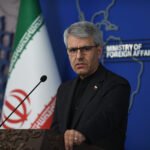
Iran says Strait of Hormuz can be reopened in two days if US meets its demands Tehran, Nov 2 (IANS) Iran’s Foreign Ministry spokesman Esmaeil Baghaei said on Monday that if the United States meets Iran’s “legitimate” demands, it will be possible to reopen the Strait of Hormuz within two days. At a weekly press conference in Tehran, Baghaei said the basis for any indirect interaction between Iran and the United States through mediators remains the seven-day plan proposed by Tehran in September, adding Iran has reduced the period for implementing the plan to two days based on its good faith. He noted, “We have announced that if Iran’s demands are met, the possibility will exist to restore security to the Strait of Hormuz and start the negotiation process in a short period of time,” stressing that all these depend on the American side’s decision on how to proceed regarding the future of the process, Xinhua News Agency reported. Baghaei said Iran has articulated its demands “clearly, reasonably, and logically,” underlining that unless the United States ends its anti-Iran naval blockade and addresses Tehran’s “legitimate” demands, no agreement will be reached and the Strait of Hormuz will not be reopened or secured. Iran conveyed the seven-day plan containing its conditions for ending the war and reopening the Strait of Hormuz to the United States through mediators on the sidelines of the 81st session of the UN General Assembly in New York on September 22, following which Tehran and Washington have reportedly continued exchanging messages on the proposal. On February 28, Israel and the United States launched joint attacks on Tehran and other Iranian cities. Iran responded with waves of missile and drone attacks targeting Israel and US bases and assets in the region, and tightened its grip on the Strait of Hormuz. The Strait of Hormuz links the Persian Gulf with the Gulf of Oman and the Arabian Sea. It is one of the world’s most important energy corridors, carrying oil and Liquefied Natural Gas (LNG) exports from major Gulf producers to international markets. –IANS akl/
Pakistan’s ranking in World Justice Project Rule of Law Index warrants reflection Islamabad, Nov 2 (IANS) Pakistan’s ranking in the World Justice Project (WJP) Rule of Law Index 2025 warrants reflection and not dismissal or indiscriminate blame. Pakistan secured the 130th spot among 143 nations in the WJP Rule of Law Index 2025, a report has detailed. The index assesses eight components, including constraints on government powers, corruption, open government, fundamental rights, order and security, regulatory enforcement, civil justice and criminal justice. Several of these dimensions are influenced by courts but they do not determine them all. The overall standing of the country must be seen as the picture of its wider rule of law environment and not a verdict on its courts, a report in leading Pakistani daily ‘The Express Tribune’ mentioned. Pakistan secured 129th spot in Civil Justice and was ranked 101st in Criminal Justice. According to the WJP Rule of Law Index 2025, Pakistan scored 0.36 on accessibility and affordability of civil justice, 0.28 on unreasonable delay and 0.35 on effective enforcement. “International indices can reveal shortcomings and encourage reform, but surveys and expert assessments should be considered alongside institutional records and lived experience. Some evidence underlying annual assessments predates recent changes, whose effects may take time to emerge. Pakistan’s ranking warrants reflection, neither dismissal nor indiscriminate blame,” Shahid Hussain Kamboyo wrote in ‘The Express Tribune’. “Ultimately, justice must be felt in the worker who recovers his wages, the widow who secures her inheritance, and the pensioner who receives relief while it still matters. The true measure of progress is not a better place on a table, but a lasting public confidence that the law will protect people when they need it most,” it added. On October 30, a leading human rights organisation severely condemned the 10-year prison sentences handed down to human rights lawyers Imaan Zainab Mazari-Hazir and her husband, Hadi Ali Chattha, in Pakistan, in connection with a security breach case, describing it as a “clear example of the helplessness of the judiciary in Pakistan, the absence of justice, and a system based on military dominance”. The Baloch Yakjehti Committee (BYC) said that sentencing the couple to 10 years in prison each “is an attempt to silence the struggle for the defence of human rights and justice.” It stated that Imaan Zainab Mazari-Hazir and Hadi Ali Chattha were not only lawyers but human rights activists who always raised their voices against the atrocities committed against the Baloch, Pashtun, and other oppressed nations, and have consistently played a leading role in the struggle for justice. In a statement shared on X, the BYC said, “Sentencing Iman Zainab Mazari and Hadi Ali Chatha to ten years in prison each is a clear example of the helplessness of the judiciary in Pakistan, the absence of justice, and a system based on military dominance. It is a reality that those who tirelessly struggle day and night to secure justice for others in a tyrannical state, and who raise their voices for the protection of human rights, eventually find themselves standing in the dock of a court under an oppressive system, forced to face state injustice themselves.” It mentioned that Imaan Zainab Mazari-Hazir and Hadi Ali Chattha expressed solidarity with the family impacted by state oppression, including enforced disappearances. The couple, the statement mentioned, is today facing injustice under the very system against which they have spoken for the rights of the oppressed. It said that the couple has been deprived of justice and was dealing with injustice. The BYC’s statement came as the anti-terrorism court in Islamabad announced a verdict in a case connected to removing barricades placed on the road during a cricket match in Islamabad in 2024 and sentenced Imaan Zainab Mazari-Hazir and Hadi Ali Chattha to 10 years in prison each. They were also fined Pakistani Rupees (PKR) one lakh each under the Anti-Terrorism Act (ATA), 1997. “The question is: Is raising one’s voice for justice a crime? Is standing with oppressed nations a punishable act? And is the attempt to silence those who defend human rights precisely because they dare to speak out against state oppression? The sentence handed down to Iman Zainab Mazari and Hadi Ali Chatha is not merely the punishment of two individuals; rather, it is an alarming message to all those voices that speak out for the oppressed and resist injustice. When lawyers and human rights activists begin to feel unsafe themselves, it is only natural for questions to arise about the entire justice system,” the BYC posted on X. –IANS akl/as

K’taka: ED raids five premises in counterfeit medicines racket case; bank accounts frozen Bengaluru, Nov 2 (IANS) The Enforcement Directorate (ED), Bengaluru, has conducted search and seizure operations at five premises linked to persons and entities allegedly involved in a counterfeit medicines racket, as part of an ongoing money-laundering investigation under the Prevention of Money Laundering Act (PMLA), 2002, the official statement said on Monday. The searches were carried out under Section 17 of the PMLA in connection with FIR No. 0266/2026, dated August 18, 2026, registered at Tavarekere Police Station in Bengaluru South, Karnataka. According to the ED, the case originated from a joint raid conducted by the Drug Controlling Authority and police personnel on August 18 at a residential property in CK Tandya village. During the raid, the accused were allegedly found storing medicines and pharmaceutical drugs without valid licences, permits or authorisation and replacing labels on the stored medicines. The offences registered under Section 318(4) of the Bharatiya Nyaya Sanhita, 2023, and Section 63 of the Copyright Act, 1957, are scheduled offences under the PMLA. Accordingly, the ED registered an Enforcement Case Information Report (ECIR No. ECIR/BGZO/45/2026) and initiated a money-laundering investigation. The investigation has allegedly revealed that R. Prashanth arranged a farmhouse near Bidadi for the manufacture, repackaging and relabelling of medicines without the mandatory drug licence or permit. According to the investigation, cheap bulk pharmaceutical formulations sourced from manufacturing centres in various states were allegedly repackaged into new vials and fraudulently relabelled as expensive Pfizer antibiotics, including Zavicefta and Emblaveo. Although the vials allegedly contained generic medicines, they carried labels bearing the Pfizer brand name. The counterfeit medicines were allegedly distributed through DM Pharmaceuticals and supplied to Krupa Healthcare. Subsequently, Krupa Healthcare allegedly supplied the products to other pharmaceutical entities and hospitals along with genuine medicines, apparently to avoid detection. During the search operations, the ED froze bank accounts belonging to Veeresh Kumar containing approximately Rs 9 lakh. Digital devices, records and incriminating documents belonging to various persons were also seized during the searches. Further investigation into the case is underway, the ED said. –IANS mka/dan
What makes Pune Metro’s new Pink Line so special? PM Modi highlights key features New Delhi, Nov 2 (IANS) Pune is set to take a major leap towards modern, sustainable and inclusive urban transportation as the inauguration of Metro Line 3, popularly known as the Pink Line, is scheduled for Tuesday (November 3). Prime Minister Narendra Modi will inaugurate the ambitious 23-kilometre corridor and lay the foundation stone for the second phase of Pune Metro projects, collectively worth around Rs 21,800 crore, on November 3 at 12:30 p.m. through video conferencing. He will also address the gathering on the occasion. Highlighting the significance of the project, the Prime Minister shared a post on X, stating, “What makes Pune Metro’s new Pink Line so special? 23 km connecting Hinjewadi’s IT hub with Shivajinagar. Operated by women. Almost a third of the electricity needs planned from solar energy. Tomorrow, this Rs 8,300 crore infra enhancement will be inaugurated! A significant boost to ‘Ease of Living’ for Pune!” Built at a cost of over Rs 8,300 crore, the Pink Line will connect Maan to District Court Metro station. It will provide direct Metro connectivity between Hinjewadi, Pune’s prominent IT hub, and Shivajinagar. According to the official release, the corridor is expected to significantly improve daily commuting for thousands of IT professionals and other passengers. This will also reduce dependence on private vehicles, easing traffic congestion and lowering vehicular emissions, the press release said. Its integration with the existing Metro network will further strengthen connectivity across the city. Its focus on women’s empowerment makes the Pink Line particularly remarkable. In a first-of-its-kind initiative, the entire corridor will be operated by women train operators. This will highlight the growing role of women in the country’s urban transport sector. The project also embraces environmental sustainability, with approximately 30 per cent of its electricity requirements envisaged to be met through solar energy. Alongside the inauguration, the Prime Minister will lay the foundation stone for Pune Metro Phase-II, estimated to cost around Rs 13,500 crore. The expansion will comprise Lines 2A, 2B, 4 and 4A, substantially extending the city’s Metro network. These corridors will connect important locations such as Vanaz, Chandani Chowk, Ramwadi, Vitthalwadi, Kharadi, Khadakwasla, Hadapsar, Swargate, Manik Baug and Nanded City. The new corridors will also integrate with intercity bus services and existing Metro routes through key interchange points, including Swargate, Nal Stop and Kharadi Bypass. –IANS brt/uk
World

Colombo, Sep 10 (IANS) Indian Naval Ship (INS) Udaygiri arrived at Sri Lanka’s Colombo for

India

K’taka: ED raids five premises in counterfeit medicines racket case; bank accounts frozen Bengaluru, Nov 2 (IANS) The Enforcement Directorate (ED), Bengaluru, has conducted search and seizure operations at five premises linked to persons and entities allegedly involved in a counterfeit medicines racket, as part of an ongoing money-laundering investigation under the Prevention of Money Laundering Act (PMLA), 2002, the official statement said on Monday. The searches were carried out under Section 17 of the PMLA in connection with FIR No. 0266/2026, dated August 18, 2026, registered at Tavarekere Police Station in Bengaluru South, Karnataka. According to the ED, the case originated from a joint raid conducted by the Drug Controlling Authority and police personnel on August 18 at a residential property in CK Tandya village. During the raid, the accused were allegedly found storing medicines and pharmaceutical drugs without valid licences, permits or authorisation and replacing labels on the stored medicines. The offences registered under Section 318(4) of the Bharatiya Nyaya Sanhita, 2023, and Section 63 of the Copyright Act, 1957, are scheduled offences under the PMLA. Accordingly, the ED registered an Enforcement Case Information Report (ECIR No. ECIR/BGZO/45/2026) and initiated a money-laundering investigation. The investigation has allegedly revealed that R. Prashanth arranged a farmhouse near Bidadi for the manufacture, repackaging and relabelling of medicines without the mandatory drug licence or permit. According to the investigation, cheap bulk pharmaceutical formulations sourced from manufacturing centres in various states were allegedly repackaged into new vials and fraudulently relabelled as expensive Pfizer antibiotics, including Zavicefta and Emblaveo. Although the vials allegedly contained generic medicines, they carried labels bearing the Pfizer brand name. The counterfeit medicines were allegedly distributed through DM Pharmaceuticals and supplied to Krupa Healthcare. Subsequently, Krupa Healthcare allegedly supplied the products to other pharmaceutical entities and hospitals along with genuine medicines, apparently to avoid detection. During the search operations, the ED froze bank accounts belonging to Veeresh Kumar containing approximately Rs 9 lakh. Digital devices, records and incriminating documents belonging to various persons were also seized during the searches. Further investigation into the case is underway, the ED said. –IANS mka/dan

Bengaluru, Nov 2 (IANS): The Enforcement Directorate (ED), Bengaluru, has conducted search and seizure operations

What makes Pune Metro’s new Pink Line so special? PM Modi highlights key features New Delhi, Nov 2 (IANS) Pune is set to take a major leap towards modern, sustainable and inclusive urban transportation as the inauguration of Metro Line 3, popularly known as the Pink Line, is scheduled for Tuesday (November 3). Prime Minister Narendra Modi will inaugurate the ambitious 23-kilometre corridor and lay the foundation stone for the second phase of Pune Metro projects, collectively worth around Rs 21,800 crore, on November 3 at 12:30 p.m. through video conferencing. He will also address the gathering on the occasion. Highlighting the significance of the project, the Prime Minister shared a post on X, stating, “What makes Pune Metro’s new Pink Line so special? 23 km connecting Hinjewadi’s IT hub with Shivajinagar. Operated by women. Almost a third of the electricity needs planned from solar energy. Tomorrow, this Rs 8,300 crore infra enhancement will be inaugurated! A significant boost to ‘Ease of Living’ for Pune!” Built at a cost of over Rs 8,300 crore, the Pink Line will connect Maan to District Court Metro station. It will provide direct Metro connectivity between Hinjewadi, Pune’s prominent IT hub, and Shivajinagar. According to the official release, the corridor is expected to significantly improve daily commuting for thousands of IT professionals and other passengers. This will also reduce dependence on private vehicles, easing traffic congestion and lowering vehicular emissions, the press release said. Its integration with the existing Metro network will further strengthen connectivity across the city. Its focus on women’s empowerment makes the Pink Line particularly remarkable. In a first-of-its-kind initiative, the entire corridor will be operated by women train operators. This will highlight the growing role of women in the country’s urban transport sector. The project also embraces environmental sustainability, with approximately 30 per cent of its electricity requirements envisaged to be met through solar energy. Alongside the inauguration, the Prime Minister will lay the foundation stone for Pune Metro Phase-II, estimated to cost around Rs 13,500 crore. The expansion will comprise Lines 2A, 2B, 4 and 4A, substantially extending the city’s Metro network. These corridors will connect important locations such as Vanaz, Chandani Chowk, Ramwadi, Vitthalwadi, Kharadi, Khadakwasla, Hadapsar, Swargate, Manik Baug and Nanded City. The new corridors will also integrate with intercity bus services and existing Metro routes through key interchange points, including Swargate, Nal Stop and Kharadi Bypass. –IANS brt/uk
Gujarat: Man held for sexually assaulting minor, extorting valuables worth Rs 46 lakh through photo threats Valsad (Gujarat), Nov 2 (IANS) A 21-year-old man was arrested by Gujarat’s Dungri police in Valsad district for allegedly sexually assaulting a minor girl, threatening to circulate photographs of the incident and extorting Rs 2.61 lakh in cash and gold ornaments worth around Rs 43.48 lakh from her, police said on Monday. The accused, identified as Dhruvil Patel, a resident of Shankartalav Mandir Faliya in Valsad, was arrested on October 29, approximately 10 days after the girl’s family lodged a complaint on October 19. According to the complaint, Patel allegedly lured the girl away from her guardians on August 31 and September 26 and took her to Hotel Aamantran on Tithal Road in Valsad. “He sexually assaulted her against her wishes and took photographs of the incident. He subsequently threatened to circulate the photographs and defame her, using them to intimidate her into arranging money and valuables from her home,” officials said. Police said the accused allegedly obtained Rs 2.61 lakh in cash on different occasions and various gold ornaments weighing approximately 32.4 tolas, valued at Rs 43.48 lakh. Following the registration of a case under Sections 308(2), 64(2)(m) and 351(2) of the Bharatiya Nyaya Sanhita (BNS), 2023, and Sections 4 and 6 of the Protection of Children from Sexual Offences (POCSO) Act, a team led by Dungri Police Inspector U H Patel began efforts to trace the accused using technical analysis and human intelligence. Police said Assistant Sub-Inspector Hirenbhai Patel received a tip-off about the accused, following which a team was dispatched to the location and apprehended him. He was subsequently brought to Dungri police station and arrested on October 29. During police remand, investigators recovered gold ornaments weighing approximately 15.33 tolas, valued at Rs 19.54 lakh, along with Rs 5,000 in cash and a mobile phone worth Rs 5,000. A SIM card and a diary were also seized. The total value of the recovered property was estimated at Rs 19.64 lakh. The operation was carried out under the supervision of senior officials. Further investigation is underway. –IANS mys/uk
Delhi HC stays JNU’s order dismissing Congress MP Akoijam over sexual harassment allegations New Delhi, Nov 2 (IANS) The Delhi High Court on Monday granted interim relief to Congress MP Angomcha Bimol Akoijam by staying the operation of Jawaharlal Nehru University’s (JNU) order dismissing him from service following an inquiry into sexual harassment allegations levelled by 11 female students. A single-judge Bench of Justice Anup J. Bhambhani passed the interim order while hearing Akoijam’s plea challenging his dismissal from the university. The High Court also issued notice to JNU and listed the matter for further hearing in January. Meanwhile, Akoijam has approached the Rouse Avenue Court in Delhi seeking anticipatory bail in connection with a case registered against him by the Delhi Police. The court is scheduled to hear his anticipatory bail plea on Tuesday. The developments come amid allegations of sexual harassment levelled against Akoijam – the Congress MP from Inner Manipur Lok Sabha constituency. According to the university’s order dated October 9, JNU Vice-Chancellor Santishree D. Pandit had ordered Akoijam’s dismissal from service with immediate effect following an inquiry conducted by the university’s Internal Committee. The university had stated that the disciplinary action was taken on the basis of the committee’s findings and after following due process under the applicable service rules. The complaints against Akoijam were submitted by 11 female students in May this year, following which the university’s Internal Committee conducted an inquiry and found the allegations to be true. Akoijam had subsequently been dismissed from service on October 9. On October 15, Akoijam had appeared before the Delhi Police at the Vasant Kunj North police station in response to a summons to join the investigation. Describing the developments as a “political matter”, the Congress MP had said that he had appeared to cooperate with the investigation and did not want his absence to be construed as a lack of cooperation with the police. –IANS pds/vd
Over 44,000 government buildings connected to solar power, saving Rs 700 crore annually: PM Modi New Delhi, Nov 2 (IANS) More than 44,000 government buildings across India have been connected to solar energy, generating annual savings of around Rs 700 crore, Prime Minister Narendra Modi said on Monday, highlighting the country’s progress in renewable energy and its commitment to strengthening energy security through clean power. Addressing the Bharat Renewable Energy Summit at the Bharat Mandapam here, the Prime Minister said India has made significant strides in the renewable energy sector over the past 12 years, connecting industries, farms and households with solar power. “Over the last 12 years, we have worked to connect industries and farms with solar power. More than 44,000 government buildings across India are now connected to solar energy, generating annual savings of around Rs 700 crore,” he said “Farmers across the country are also benefiting from the PM-KUSUM scheme. Through this initiative, more than 30 lakh farmers have been provided with solar-powered irrigation facilities. Estimates suggest that each farmer can save around Rs 1 lakh annually by using solar pumps,” the Prime Minister added. PM Modi said the government aims to bring every government building, school, college, hospital and street-lighting system under solar energy to further expand the country’s clean energy infrastructure. The Prime Minister also highlighted the progress made under the PM Surya Ghar Muft Bijli Yojana, launched in February 2024 with the target of installing rooftop solar panels in one crore households. “More than 65 lakh households have joined the initiative in the past 24-25 months,” he said. Emphasising India’s commitment to global climate goals, PM Modi said the country had achieved its target of meeting 50 per cent of its installed electricity capacity from non-fossil fuel sources in 2025, five years ahead of the schedule set under the Paris Agreement. “Under the Paris Agreement, India also pledged to meet 50 per cent of its installed power capacity from non-fossil fuel sources. We achieved this target in 2025, five years ahead of schedule. Today, more than 50 per cent of India’s installed power capacity comes from non-fossil fuel sources,” the Prime Minister stated.
Telangana

Hyderabad, Sept.12 (RAHNUMA): IT and Industries Minister D. Sridhar Babu introduced the Core Urban Region

Gulf Countries

DUBLIN(RAHNUMA): US President Donald Trump said on Saturday that Iran was probably responsible for an

Blasphemy laws in Pakistan expose religious minorities to prosecution: Report Islamabad, Nov 2 (IANS) Blasphemy laws in Pakistan expose religious minorities to prosecution, where a religious accusation can rapidly move from allegations to arrest, a death sentence or mob violence. For people from the Christian, Hindu and Ahmadiyya communities living in Pakistan, the danger is not merely confined to extremists doing activities outside the law, a report has detailed. The legal framework in Pakistan includes provisions that criminalise religious expression and restrict how a community can identify and practice its faith in the case of the Ahmadiyya community. Under Pakistan’s constitution, Islam has been named as the state religion, while its penal code includes some of the world’s most severe blasphemy provisions. The blasphemy cases of Christians, Hindus and Ahmadis expose how accusations can lead from allegations to arrest, imprisonment, death sentences or mob violence, a report in UK-based newspaper ‘The Asian Lite’ detailed. “The country has not carried out a state execution specifically for blasphemy, but those accused can remain imprisoned for years, sometimes on death row. The legal framework extends beyond conventional blasphemy provisions. Pakistan’s laws also impose specific restrictions on Ahmadis, including prohibitions on presenting themselves as Muslims or describing their places of worship as mosques. The result is a system in which religious identity itself can become legally consequential,” Sakariya Kareem wrote in ‘The Asian Lite’. In 2016, a Christian teenager Nabeel Masih was arrested after he was accused of sharing alleged blasphemous content on social media platform Facebook and remained in prison until 2021. In 2017, a Christian man Nadeem James was detained after he forwarded alleged blasphemous material with a friend and was sentenced to death under blasphemy provisions, the report mentioned. Asia Bibi, a Christian woman, remained in prison for almost a decade after she was convicted and sentenced to death under blasphemy laws in Pakistan. She was released after Pakistan’s Supreme Court overturned his conviction in 2018 and eventually left Pakistan and sought asylum in Canada. In 2021, Ahmadi community leaders said that 61 people from the Ahmadiyya community were charged under blasphemy laws in Pakistan since 2019, according to the report. The blasphemy provisions in Pakistan have been misused in cases related to personal disputes, property conflicts and social hostility. In 2022, Hindu teacher Notan Lal was sentenced to life imprisonment after a student accused him of insulting Prophet Muhammad. Later, the student admitted that he made false allegations after the teacher had reprimanded him. “Over the past decade, the record of Pakistan’s blasphemy cases — from Nabeel Masih and Nadeem James to Asia Bibi, Notan Lal, Ashfaq Masih, Jaranwala and the cases still emerging in 2026 — shows the human consequences when religious accusation acquires the force of criminal law,” Kareem wrote in ‘The Asian Lite’. In October, a Christian man’s house and shop were set ablaze by a Muslim mob in Pakistan’s Punjab province after he was accused of blasphemy. Subsequently, over 35 Christian families were forced to leave their homes amid fear of further violence, a report has detailed. A day prior to the incident, police arrested a 40-year-old Christian man, identified as Kamran Masih, who ran a small pharmacy in Gharial Kalan village of Punjab. Local Muslims had accused him of sharing a blasphemous video in WhatsApp groups, Christian Daily International reported, citing a source. “As word of Masih’s arrest spread, his family and other Christians started fleeing the village, fearing a mob attack,” Christian Daily International-Morning Star News quoted the source on condition of anonymity. The source stated that dozens of Muslims gathered near Masih’s shop and his residence to protest and set fire to the two buildings. –IANS akl/as
Iran says Strait of Hormuz can be reopened in two days if US meets its demands Tehran, Nov 2 (IANS) Iran’s Foreign Ministry spokesman Esmaeil Baghaei said on Monday that if the United States meets Iran’s “legitimate” demands, it will be possible to reopen the Strait of Hormuz within two days. At a weekly press conference in Tehran, Baghaei said the basis for any indirect interaction between Iran and the United States through mediators remains the seven-day plan proposed by Tehran in September, adding Iran has reduced the period for implementing the plan to two days based on its good faith. He noted, “We have announced that if Iran’s demands are met, the possibility will exist to restore security to the Strait of Hormuz and start the negotiation process in a short period of time,” stressing that all these depend on the American side’s decision on how to proceed regarding the future of the process, Xinhua News Agency reported. Baghaei said Iran has articulated its demands “clearly, reasonably, and logically,” underlining that unless the United States ends its anti-Iran naval blockade and addresses Tehran’s “legitimate” demands, no agreement will be reached and the Strait of Hormuz will not be reopened or secured. Iran conveyed the seven-day plan containing its conditions for ending the war and reopening the Strait of Hormuz to the United States through mediators on the sidelines of the 81st session of the UN General Assembly in New York on September 22, following which Tehran and Washington have reportedly continued exchanging messages on the proposal. On February 28, Israel and the United States launched joint attacks on Tehran and other Iranian cities. Iran responded with waves of missile and drone attacks targeting Israel and US bases and assets in the region, and tightened its grip on the Strait of Hormuz. The Strait of Hormuz links the Persian Gulf with the Gulf of Oman and the Arabian Sea. It is one of the world’s most important energy corridors, carrying oil and Liquefied Natural Gas (LNG) exports from major Gulf producers to international markets. –IANS akl/
Pakistan’s ranking in World Justice Project Rule of Law Index warrants reflection Islamabad, Nov 2 (IANS) Pakistan’s ranking in the World Justice Project (WJP) Rule of Law Index 2025 warrants reflection and not dismissal or indiscriminate blame. Pakistan secured the 130th spot among 143 nations in the WJP Rule of Law Index 2025, a report has detailed. The index assesses eight components, including constraints on government powers, corruption, open government, fundamental rights, order and security, regulatory enforcement, civil justice and criminal justice. Several of these dimensions are influenced by courts but they do not determine them all. The overall standing of the country must be seen as the picture of its wider rule of law environment and not a verdict on its courts, a report in leading Pakistani daily ‘The Express Tribune’ mentioned. Pakistan secured 129th spot in Civil Justice and was ranked 101st in Criminal Justice. According to the WJP Rule of Law Index 2025, Pakistan scored 0.36 on accessibility and affordability of civil justice, 0.28 on unreasonable delay and 0.35 on effective enforcement. “International indices can reveal shortcomings and encourage reform, but surveys and expert assessments should be considered alongside institutional records and lived experience. Some evidence underlying annual assessments predates recent changes, whose effects may take time to emerge. Pakistan’s ranking warrants reflection, neither dismissal nor indiscriminate blame,” Shahid Hussain Kamboyo wrote in ‘The Express Tribune’. “Ultimately, justice must be felt in the worker who recovers his wages, the widow who secures her inheritance, and the pensioner who receives relief while it still matters. The true measure of progress is not a better place on a table, but a lasting public confidence that the law will protect people when they need it most,” it added. On October 30, a leading human rights organisation severely condemned the 10-year prison sentences handed down to human rights lawyers Imaan Zainab Mazari-Hazir and her husband, Hadi Ali Chattha, in Pakistan, in connection with a security breach case, describing it as a “clear example of the helplessness of the judiciary in Pakistan, the absence of justice, and a system based on military dominance”. The Baloch Yakjehti Committee (BYC) said that sentencing the couple to 10 years in prison each “is an attempt to silence the struggle for the defence of human rights and justice.” It stated that Imaan Zainab Mazari-Hazir and Hadi Ali Chattha were not only lawyers but human rights activists who always raised their voices against the atrocities committed against the Baloch, Pashtun, and other oppressed nations, and have consistently played a leading role in the struggle for justice. In a statement shared on X, the BYC said, “Sentencing Iman Zainab Mazari and Hadi Ali Chatha to ten years in prison each is a clear example of the helplessness of the judiciary in Pakistan, the absence of justice, and a system based on military dominance. It is a reality that those who tirelessly struggle day and night to secure justice for others in a tyrannical state, and who raise their voices for the protection of human rights, eventually find themselves standing in the dock of a court under an oppressive system, forced to face state injustice themselves.” It mentioned that Imaan Zainab Mazari-Hazir and Hadi Ali Chattha expressed solidarity with the family impacted by state oppression, including enforced disappearances. The couple, the statement mentioned, is today facing injustice under the very system against which they have spoken for the rights of the oppressed. It said that the couple has been deprived of justice and was dealing with injustice. The BYC’s statement came as the anti-terrorism court in Islamabad announced a verdict in a case connected to removing barricades placed on the road during a cricket match in Islamabad in 2024 and sentenced Imaan Zainab Mazari-Hazir and Hadi Ali Chattha to 10 years in prison each. They were also fined Pakistani Rupees (PKR) one lakh each under the Anti-Terrorism Act (ATA), 1997. “The question is: Is raising one’s voice for justice a crime? Is standing with oppressed nations a punishable act? And is the attempt to silence those who defend human rights precisely because they dare to speak out against state oppression? The sentence handed down to Iman Zainab Mazari and Hadi Ali Chatha is not merely the punishment of two individuals; rather, it is an alarming message to all those voices that speak out for the oppressed and resist injustice. When lawyers and human rights activists begin to feel unsafe themselves, it is only natural for questions to arise about the entire justice system,” the BYC posted on X. –IANS akl/as

K’taka: ED raids five premises in counterfeit medicines racket case; bank accounts frozen Bengaluru, Nov 2 (IANS) The Enforcement Directorate (ED), Bengaluru, has conducted search and seizure operations at five premises linked to persons and entities allegedly involved in a counterfeit medicines racket, as part of an ongoing money-laundering investigation under the Prevention of Money Laundering Act (PMLA), 2002, the official statement said on Monday. The searches were carried out under Section 17 of the PMLA in connection with FIR No. 0266/2026, dated August 18, 2026, registered at Tavarekere Police Station in Bengaluru South, Karnataka. According to the ED, the case originated from a joint raid conducted by the Drug Controlling Authority and police personnel on August 18 at a residential property in CK Tandya village. During the raid, the accused were allegedly found storing medicines and pharmaceutical drugs without valid licences, permits or authorisation and replacing labels on the stored medicines. The offences registered under Section 318(4) of the Bharatiya Nyaya Sanhita, 2023, and Section 63 of the Copyright Act, 1957, are scheduled offences under the PMLA. Accordingly, the ED registered an Enforcement Case Information Report (ECIR No. ECIR/BGZO/45/2026) and initiated a money-laundering investigation. The investigation has allegedly revealed that R. Prashanth arranged a farmhouse near Bidadi for the manufacture, repackaging and relabelling of medicines without the mandatory drug licence or permit. According to the investigation, cheap bulk pharmaceutical formulations sourced from manufacturing centres in various states were allegedly repackaged into new vials and fraudulently relabelled as expensive Pfizer antibiotics, including Zavicefta and Emblaveo. Although the vials allegedly contained generic medicines, they carried labels bearing the Pfizer brand name. The counterfeit medicines were allegedly distributed through DM Pharmaceuticals and supplied to Krupa Healthcare. Subsequently, Krupa Healthcare allegedly supplied the products to other pharmaceutical entities and hospitals along with genuine medicines, apparently to avoid detection. During the search operations, the ED froze bank accounts belonging to Veeresh Kumar containing approximately Rs 9 lakh. Digital devices, records and incriminating documents belonging to various persons were also seized during the searches. Further investigation into the case is underway, the ED said. –IANS mka/dan
What makes Pune Metro’s new Pink Line so special? PM Modi highlights key features New Delhi, Nov 2 (IANS) Pune is set to take a major leap towards modern, sustainable and inclusive urban transportation as the inauguration of Metro Line 3, popularly known as the Pink Line, is scheduled for Tuesday (November 3). Prime Minister Narendra Modi will inaugurate the ambitious 23-kilometre corridor and lay the foundation stone for the second phase of Pune Metro projects, collectively worth around Rs 21,800 crore, on November 3 at 12:30 p.m. through video conferencing. He will also address the gathering on the occasion. Highlighting the significance of the project, the Prime Minister shared a post on X, stating, “What makes Pune Metro’s new Pink Line so special? 23 km connecting Hinjewadi’s IT hub with Shivajinagar. Operated by women. Almost a third of the electricity needs planned from solar energy. Tomorrow, this Rs 8,300 crore infra enhancement will be inaugurated! A significant boost to ‘Ease of Living’ for Pune!” Built at a cost of over Rs 8,300 crore, the Pink Line will connect Maan to District Court Metro station. It will provide direct Metro connectivity between Hinjewadi, Pune’s prominent IT hub, and Shivajinagar. According to the official release, the corridor is expected to significantly improve daily commuting for thousands of IT professionals and other passengers. This will also reduce dependence on private vehicles, easing traffic congestion and lowering vehicular emissions, the press release said. Its integration with the existing Metro network will further strengthen connectivity across the city. Its focus on women’s empowerment makes the Pink Line particularly remarkable. In a first-of-its-kind initiative, the entire corridor will be operated by women train operators. This will highlight the growing role of women in the country’s urban transport sector. The project also embraces environmental sustainability, with approximately 30 per cent of its electricity requirements envisaged to be met through solar energy. Alongside the inauguration, the Prime Minister will lay the foundation stone for Pune Metro Phase-II, estimated to cost around Rs 13,500 crore. The expansion will comprise Lines 2A, 2B, 4 and 4A, substantially extending the city’s Metro network. These corridors will connect important locations such as Vanaz, Chandani Chowk, Ramwadi, Vitthalwadi, Kharadi, Khadakwasla, Hadapsar, Swargate, Manik Baug and Nanded City. The new corridors will also integrate with intercity bus services and existing Metro routes through key interchange points, including Swargate, Nal Stop and Kharadi Bypass. –IANS brt/uk
Sports

Dubai, Sep 10 (IANS) India wicketkeeper-batter Richa Ghosh expressed satisfaction over the team reaching almost

Business

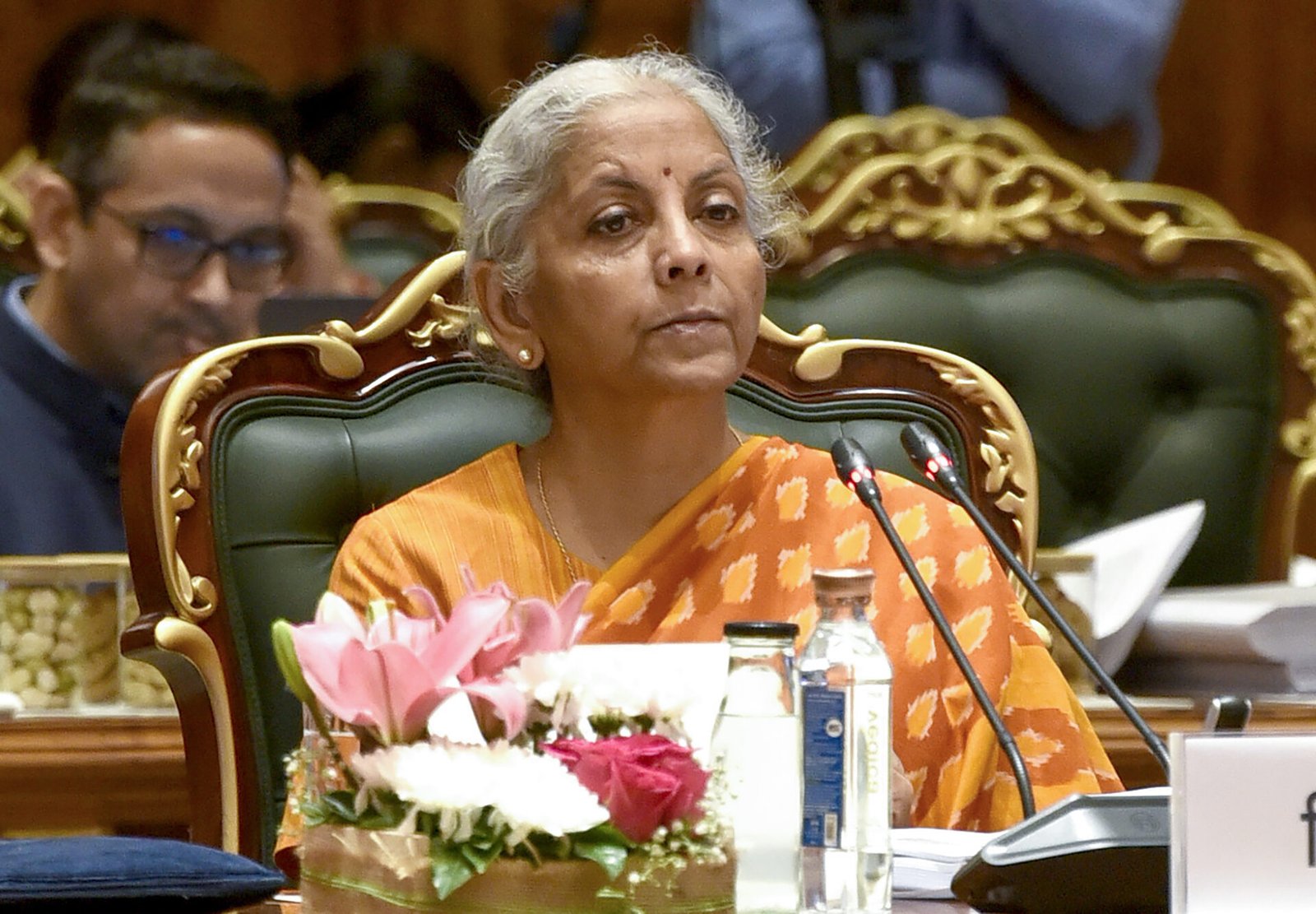
Will assess FPI demands on LTCG tax; expects Tata Trusts-Tata Sons issues to be settled amicably, says FM Sitharaman Mumbai, Nov 2 (IANS) Finance Minister Nirmala Sitharaman on Monday expressed confidence that the issues within the Tata Group, including differences over the re-appointment of its chairman and the proposed listing of Tata Sons, would be resolved amicably through internal discussions. Speaking at the Financial Express Leadership Awards here, FM Sitharaman described the matter as a sensitive issue involving significant commercial and business considerations, and said it should be settled by the concerned parties rather than through public disagreements. Highlighting the Tata Group’s importance to the Indian economy, she pointed to the conglomerate’s global brand value, the contribution of the Parsi community in building the group, and the wide range of sectors in which Tata companies operate. “I know the brand value of Tata, the contribution of the Parsee community to make Tata a huge global brand. I also know the expanse of activities in which Tatas are invested. So this is a very critical component to the Indian economy and therefore it has to be amicably settled between themselves,” FM Sitharaman said. The Finance Minister urged all stakeholders to engage in dialogue and restore normalcy at the earliest, adding that prolonged public disputes were not desirable for an institution of such stature. Addressing another key issue concerning investors, FM Sitharaman said the government would listen to concerns raised by foreign portfolio investors (FPIs) regarding India’s capital gains tax regime before deciding on any course of action. Speaking amid growing demands for a reduction in long-term capital gains (LTCG) tax, the minister acknowledged that changing market conditions and foreign investment outflows had intensified calls for a reassessment of the tax structure. “These are very delicate matters, and a lot of business and commercial acumen will have to come into play,” the finance minister said. FM Sitharaman, however, noted that the existing taxation framework was the same during 2023, when India witnessed record foreign investment inflows. “The taxation structure was what it is today even in 2023, when inflows were at record highs. Today, the circumstances have changed. FII outflows have happened, and voices of concern are louder. I will consider all this,” FM Sitharaman mentioned. The Finance Minister indicated that the government would weigh multiple factors before considering any changes to the current tax regime, while taking into account concerns voiced by global investors. –IANS pk

Mumbai, Nov 2 (IANS): Finance Minister Nirmala Sitharaman on Monday expressed confidence that the issues

Will assess FPI demands on LTCG tax; expects Tata Trusts-Tata Sons issues to be settled amicably, says FM Sitharaman Mumbai, Nov 2 (IANS) Finance Minister Nirmala Sitharaman on Monday expressed confidence that the issues within the Tata Group, including differences over the re-appointment of its chairman and the proposed listing of Tata Sons, would be resolved amicably through internal discussions. Speaking at the Financial Express Leadership Awards here, FM Sitharaman described the matter as a sensitive issue involving significant commercial and business considerations, and said it should be settled by the concerned parties rather than through public disagreements. Highlighting the Tata Group’s importance to the Indian economy, she pointed to the conglomerate’s global brand value, the contribution of the Parsi community in building the group, and the wide range of sectors in which Tata companies operate. “I know the brand value of Tata, the contribution of the Parsee community to make Tata a huge global brand. I also know the expanse of activities in which Tatas are invested. So this is a very critical component to the Indian economy and therefore it has to be amicably settled between themselves,” FM Sitharaman said. The Finance Minister urged all stakeholders to engage in dialogue and restore normalcy at the earliest, adding that prolonged public disputes were not desirable for an institution of such stature. Addressing another key issue concerning investors, FM Sitharaman said the government would listen to concerns raised by foreign portfolio investors (FPIs) regarding India’s capital gains tax regime before deciding on any course of action. Speaking amid growing demands for a reduction in long-term capital gains (LTCG) tax, the minister acknowledged that changing market conditions and foreign investment outflows had intensified calls for a reassessment of the tax structure. “These are very delicate matters, and a lot of business and commercial acumen will have to come into play,” the finance minister said. FM Sitharaman, however, noted that the existing taxation framework was the same during 2023, when India witnessed record foreign investment inflows. “The taxation structure was what it is today even in 2023, when inflows were at record highs. Today, the circumstances have changed. FII outflows have happened, and voices of concern are louder. I will consider all this,” FM Sitharaman mentioned. The Finance Minister indicated that the government would weigh multiple factors before considering any changes to the current tax regime, while taking into account concerns voiced by global investors. –IANS pk
Science Technology

New Delhi, Sep 10 (IANS) India’s Civil Aviation Minister Ram Mohan Naidu on Thursday held

Editorials

Iran’s Deputy Justice Minister Seyed Mohammad Mahdi Ghamami condemns the deadly attack on a primary

An Islamic Perspective on Two Competing Archetypes of Love Editorial | TheRahnuma.com (RAHNUMA) Every civilization

By: Seyyed Ali Shahbaz (HYDERABAD) Prophet Muhammad (SAWA) while delivering his famous sermon on the

(RAHNUMA) Bani Hashem, the clan of the Prophet Muhammad, hold a unique place in sacred

Fatima al-Zahra and the Unresolved Question of Succession Shiʿism did not originate as a movement

Video Today!