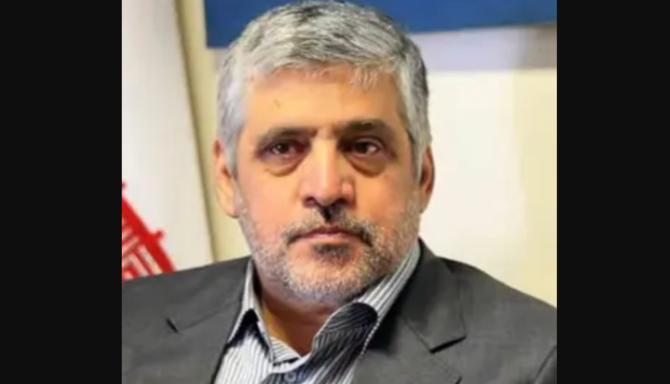
BEIRUT(RAHNUMA): A deadline for the Iranian ambassador-designate to leave the country set by Lebanon expired on Sunday, with no confirmation that Mohammad Reza Shibani had departed.
The Lebanese Ministry of Foreign Affairs last week withdrew Shibani’s accreditation and declared him persona non grata, citing “statements considered interference in Lebanon’s internal politics.”
An official source told Arab News that Shibani could legally remain inside the Iranian embassy due to diplomatic immunity.
“If Shibani stays within the embassy grounds, he is permitted to do so, as the embassy is considered Iranian territory and those inside it are protected,” the source said.
“However, if he leaves, he will be in violation of Lebanese law and must be deported. Similar cases have occurred elsewhere, including that of Julian Assange.”
The expulsion decision angered Iran-backed Hezbollah and its ally, the Amal Movement. Ministers from both parties boycotted Thursday’s cabinet session in protest.
On Friday, dozens of Hezbollah supporters and allied groups, along with religious figures aligned with the party, gathered outside the Iranian embassy to denounce the move as “a political escalation that affects bilateral relations between Lebanon and Iran.”
Some demonstrators said the decision targeted Hezbollah supporters, adding: “We are the people of this country and those who sacrifice our young people in confronting Israel.”
Pro-Hezbollah activists also circulated claims on social media that Shibani remains in Lebanon and has not complied with the decision, amid continued silence from the Iranian embassy.
The Foreign Ministry said Shibani had “made statements considered interference in internal Lebanese politics, assessed government decisions and held meetings with unofficial Lebanese bodies without going through the ministry.”
It added that the measure “does not signify the severance of diplomatic relations with Iran,” but was a response to violations of diplomatic norms, noting that Article 41 of the Vienna Convention prohibits interference in a host country’s internal affairs.
Lebanon remains committed to maintaining friendly relations, the ministry said, provided they are based on “mutual respect and non-interference.”
The diplomatic dispute comes against the backdrop of escalating regional tensions.
Since Feb. 28, Israel and the US have launched attacks on Iran, leading to the assassination of Supreme Leader Ali Khamenei and senior security officials.
Hezbollah entered the conflict on March 2 by opening the southern front, despite widespread opposition among the Lebanese public to involvement in a war they do not support.
Amid this climate, concern spread on Sunday at the American University of Beirut after Iran’s Revolutionary Guard issued a warning at dawn threatening US universities in the Middle East.
The warning came in response to “US-Israeli strikes that hit educational institutions inside Iran,” and called on Washington to condemn the attacks by noon Monday.
Failure to do so, the statement said, “may expose these universities in the region to retaliatory strikes.”
It also urged staff, faculty and students to stay at least one kilometer away from US-affiliated universities, suggesting they could be targeted.
A Lebanese official downplayed the risk to AUB, describing it as “an institution that serves all Lebanese and includes a large number of members of the Shia community and Hezbollah supporters.”
AUB President Dr. Fadlo Khuri later sought to reassure students and staff.
“Like many of you, we learned early this morning of threats issued against American universities in the region. We have been looking into these reports diligently and gathering facts amid the many rumors circulating in the media,” he said.
“At this time, we have no evidence of direct threats against our university, its campuses or medical centers,” he added.
However, he said the university would move fully online on Monday and Tuesday, except for essential personnel.
“There will be no instructional activities or exams on campus during these two days. Our highest priority has always been and will always be the safety of our community and the people we serve,” Khuri added.
He also reaffirmed AUB’s longstanding mission.
“For more than a century and a half, AUB has stood for the peaceful emancipation and progress of the people we educate and serve. For 160 years, we have been an inclusive, empowering and independent institution, welcoming people from every faith, political affiliation and background. Our medical centers continue to treat and care for people from all walks of life.”
Khuri urged the university community to “rely only on official communications from the university for updates.”