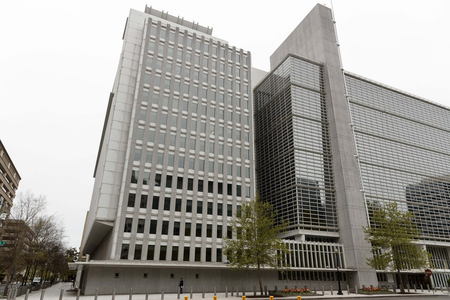
Washington, April 9 (IANS) Bangladesh’s economy is expected to see a gradual recovery after a period of slowdown, supported by improving domestic demand and stabilising conditions, the World Bank said.
Growth is projected at 3.9 per cent in fiscal year 2025-26, reflecting the impact of earlier political unrest and external pressures on economic activity, according to the World Bank’s latest assessment.
The report said the economy is recovering from disruptions linked to political instability in late 2024, which weighed on investment, exports and overall economic momentum.
Private consumption is expected to remain the main driver of growth as conditions stabilise. However, the pace of recovery is likely to be gradual, with investment remaining subdued amid uncertainty and financial sector constraints.
Exports are expected to contribute to growth, though not as a major driver. Bangladesh’s key export sector, ready-made garments, has faced pressure from higher global tariffs and increased competition in international markets.
Inflation remains a concern. The report noted that price pressures have stayed elevated, driven by currency depreciation, supply disruptions and higher food prices, limiting purchasing power and economic recovery.
Monetary policy has remained tight to contain inflation, with interest rates at elevated levels. This has constrained credit growth and weighed on private investment, the World Bank said.
The banking sector continues to face stress, with high levels of non-performing loans affecting lending capacity and investor confidence.
External pressures also persist. Higher global energy prices and reliance on imports are expected to strain the current account and fiscal balances, adding to macroeconomic challenges.
Despite these headwinds, the World Bank said growth is expected to strengthen in the medium term if reforms are implemented and political stability holds.
Separate World Bank projections indicate Bangladesh’s growth could rise to around 4.6 per cent in FY2025-26 and further to about 6.1 per cent in FY2026-27 as inflation eases and investment picks up.
Bangladesh has been one of South Asia’s fastest-growing economies over the past decade, driven by strong export performance and a large manufacturing base centred on garments.
However, recurring challenges—including financial sector weaknesses, external vulnerabilities and political uncertainty—continue to shape its growth trajectory, keeping the recovery uneven.