Washington, April 16, (IANS) The United States on Thursday warned Iran that its energy infrastructure could be targetted if it fails to reach a deal, with Defence Secretary Pete Hegseth saying American forces are prepared to escalate beyond the current blockade.
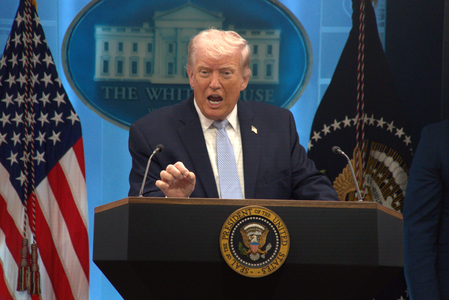
Speaking at a Pentagon briefing, Hegseth said US forces were ready to strike critical sectors, including power generation and energy facilities, if Tehran “chooses poorly”. “We are locked and loaded on your critical dual use infrastructure… and on your energy industry,” he said.
He added that while Washington preferred a diplomatic resolution, military options remained fully operational. “We’d rather not have to do it, but we’re ready to go at the command of our President and at the push of a button,” he said.
Hegseth was joined by Air Force General Dan Caine, Chairman of the Joint Chiefs of Staff, and Admiral Bradley Cooper, who oversees US military operations in the Middle East as Commander of US Central Command.
The warning comes as the US enforces a naval blockade targetting Iran’s ports and coastline, part of a broader effort to pressure Tehran following what officials described as recent combat operations under Operation Epic Fury.
Hegseth said the blockade was already constraining Iran’s economic lifelines, particularly energy exports. “Your energy is not moving and will not move and we can do this all day,” he said.
He framed the blockade as an alternative to direct strikes but made clear that escalation remained an option. “This blockade… is the polite way that this can go,” he said, warning that failure to reach an agreement could lead to attacks on infrastructure.
Military officials said US forces remain on high readiness despite a ceasefire that has temporarily paused major combat operations. Caine said the joint force was prepared “to resume major combat operations at literally a moment’s notice.”
The Pentagon said Iran’s military capabilities, particularly command and control systems, had been significantly degraded during recent operations. Hegseth noted that Tehran’s ability to coordinate had reached “the worst it’s ever been,” though he said the regime retained an incentive to avoid renewed conflict.
Cooper said US forces in the region were using the ceasefire period to strengthen operational readiness. “We’re rearming, we’re retooling, and we’re adjusting our tactics,” he said, adding that troops remained “highly motivated” following recent engagements.
He also highlighted coordination with regional partners, including Gulf states and Israel, describing them as “exceptional teammates” supporting joint defence efforts across the Middle East.