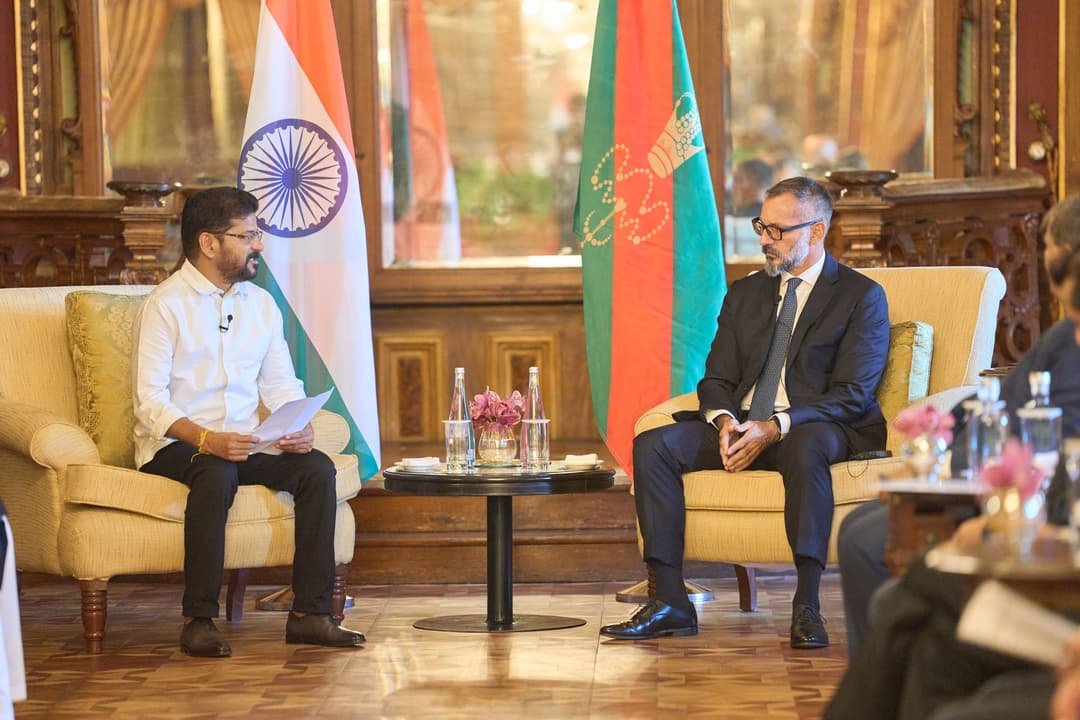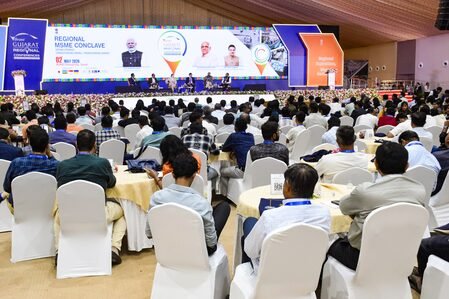
Surat, May 2 (IANS) Micro, small, and medium enterprises (MSMEs) were identified as a key driver of India’s push towards global competitiveness and self-reliance during discussions at the MSME Conclave held as part of the Vibrant Gujarat Regional Conference (VGRC) in Surat.
At the programme, experts focused on digital transformation, supply chain integration, and international market access.
The session, held at Auro University on the second day of the conference, centred on productivity and competitive global pathways for MSMEs, with an emphasis on strengthening their role in domestic manufacturing, employment generation, and export growth, in line with the vision of a Self-Reliant India.
Officials and industry experts discussed how digitisation, Industry 4.0 technologies, and economic diplomacy could enhance the efficiency and global reach of small and medium enterprises.
The use of single-window clearance systems and improved access to government schemes were highlighted as ways to reduce procedural hurdles for businesses.
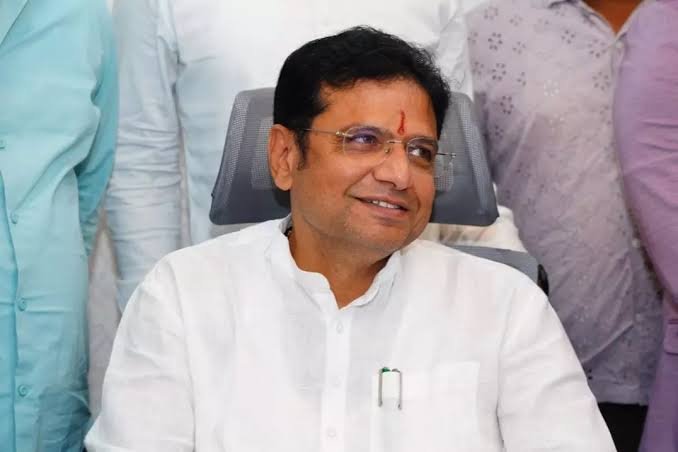
Amit Dharava outlined various government initiatives for MSMEs, including policy support frameworks, digitisation measures, and administrative facilitation systems.
He detailed how these mechanisms are intended to improve ease of doing business and strengthen industry engagement with public services.
Nirja Shekhar, Secretary in the Department for Promotion of Industry and Internal Trade, highlighted the importance of domestic production, employment creation, and incentive-based policy frameworks.
She noted that large-scale infrastructure initiatives, including the bullet train project, were being viewed as part of India’s long-term development trajectory.
She further stressed the significance of digital transformation and technological upgradation under Industry 4.0 and Gati Shakti 4.0 initiatives.
Shekhar also emphasised the potential of integrating MSMEs with start-ups to build a more resilient industrial ecosystem.
Efforts were underway to connect Indian enterprises with global platforms such as the BRICS, enabling greater participation in business-to-business collaborations and facilitating memorandums of understanding to expand international trade opportunities, she noted.
The international dimension of the discussions included perspectives from former United Arab Emirates Ambassador Sanjay Sudhir and Russian representative Zlata Atuzheva, who addressed disruptions in global trade and the impact of geopolitical tensions on supply chains.
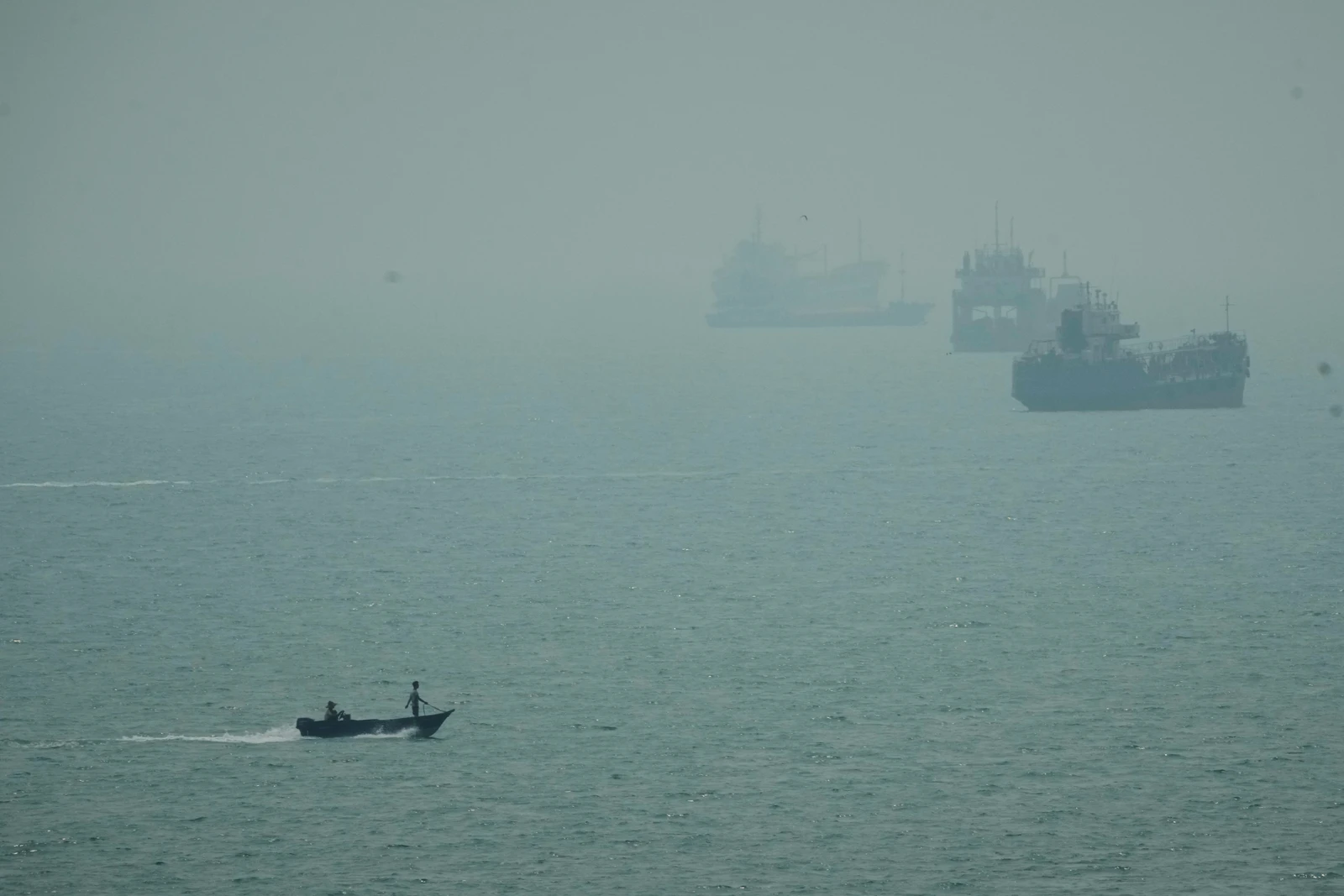
They referred to challenges affecting key maritime and cargo routes, including strategic corridors such as the Strait of Hormuz, and their implications for global commerce.
Participants also discussed economic diplomacy and tariff structures, with a particular focus on strengthening India’s trade relations with Russia and improving MSME export competitiveness.
Sector-specific issues in the pharmaceutical and textile industries were examined, including production constraints, export logistics, and strengthening the value chain.
Emerging technologies, particularly artificial intelligence, were identified as potential enablers for MSME growth, alongside increasing concerns around cybersecurity and data protection as businesses expand their digital footprint.
Delegates at the conclave noted that the discussions provided a framework for enhancing global competitiveness, accelerating technological adoption, and supporting MSMEs in securing a stronger position in international markets.