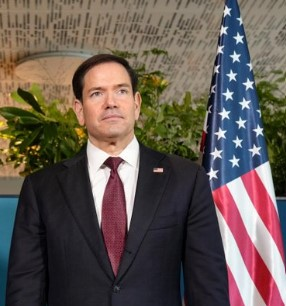
Washington, June 3 (IANS) US Secretary of State Marco Rubio described Cuba as both a failing state and a growing national security threat to the United States, accusing Havana of hosting Chinese and Russian intelligence operations while supporting anti-American activities across Latin America.
Speaking before the House Appropriations Subcommittee on National Security, Department of State and Related Programs, Rubio said Cuba’s economic crisis and close ties with US adversaries have combined to create a significant challenge for American interests in the Western Hemisphere.
“Cuba is two things,” Rubio told lawmakers. “The first thing is it’s a failed state.”
The Secretary argued that Cuba’s economic model has collapsed under decades of mismanagement and that much of the country’s economy is now controlled by military-linked entities rather than civilian institutions.
“The model that they have economically will never work,” Rubio said.
According to Rubio, Cuba faces chronic shortages of fuel and electricity despite substantial assets controlled by military-run enterprises.
He said the country has also experienced a significant exodus of people over the past two decades, weakening its economy and reducing its pool of skilled workers.
“They’ve lost a lot of human capital as well,” Rubio said.
Beyond economic concerns, Rubio argued that Cuba’s strategic relationships with China and Russia present a direct security challenge to the United States.
“The Chinese, the Russians operate intelligence collection facilities targeted at the southeastern United States from the island of Cuba,” Rubio said.
He added that reports of such activities have been widely documented and described Cuba as a platform for intelligence gathering and political influence operations across the region.
According to Rubio, Cuba has historically maintained ties with groups and movements that have sought to destabilise pro-American governments in Latin America.
“If you travel extensively in the Western Hemisphere, you will find that behind every disruptive element in their society designed to, for example, overthrow or pressure a pro-American government, there is a Cuban element involved,” he said.
Rubio accused Havana of maintaining connections with transnational groups operating across the region, arguing that these activities continue to undermine democratic institutions and regional stability.
The administration remains willing to support humanitarian assistance for the Cuban people, provided aid reaches citizens directly rather than state-controlled entities, he said.
“We have offered to distribute $100 million of humanitarian aid through the Catholic Church and other non-governmental organisations,” he said.
The Secretary argued that previous humanitarian assistance delivered through independent channels had successfully reached Cuban communities while avoiding government-controlled distribution systems.
Rubio also noted that US policy toward Cuba remains governed by statutory requirements, including provisions contained in the Helms-Burton Act, limiting the administration’s flexibility in altering sanctions and broader policy measures.