New Delhi, July 12 (IANS) More than 70 per cent of India’s total textile waste is currently recovered and channelled into recycling, upcycling, downcycling, or reuse as part of the circular economy, according to a government factsheet issued on Sunday.
A circular economy is an economic system where materials and resources are reused, recycled, and kept in use for longer. This helps reduce waste and emissions while promoting a more sustainable mode of production. Its core principle is to ensure circularity in the use of inputs.
In the textile sector, sustainability and circularity are important for reducing the adverse effects of the supply chain. The existing materials are reused without changing their basic structure. This lowers the use of energy, chemicals, and water, while reducing environmental impact.
Of the 7.8 million tonnes of textile waste managed annually, over 90 per cent is sourced from domestic pre-consumer (factory scrap) and post-consumer waste. Recovery is especially strong at the pre-consumer stage, where nearly 95 per cent of textile waste is collected and reused through established value-chain networks, as per the factsheet.
The spinning sector shows one of the clearest examples of closed-loop circularity. Nearly all spinning waste is reintegrated within production. Circularity is also visible in post-consumer textiles, with about 55 per cent of this waste diverted from landfills through India’s extensive collection and sorting network.
The factsheet highlights that this ecosystem supports nearly 40-45 lakh livelihoods, with women from marginalised communities playing a major role in collection, sorting, and redistribution.
Within this scope, circular production is gaining momentum across the sector. India’s rich heritage of textile craftsmanship and resource-conscious production is receiving wider recognition, as global markets increasingly value products with a lower environmental footprint.
The factsheet also highlights the detailed working of textile waste circulation at major facilities across the country.
India’s first Municipal Textile Recovery Facility in Belapur, Navi Mumbai, recognises textile waste as a circular economy opportunity. The facility integrates collection, sorting, upcycling, technology and livelihoods into one circular recovery ecosystem. It has collected 30 MT of post-consumer textile waste, sorted 25.5 MT, processed over 41,000 items and developed 400+ upcycled samples. It has reached 1.14 lakh families and supported women artisans through exhibitions and market access.
Similarly, Panipat has emerged as a major textile recycling hub. As a specialised downstream processing centre, it receives a large share of pre-consumer textile waste from other clusters. The cluster handles nearly 3,500-5,250 TPD of waste and supports collection, sorting, processing, knitting, and recycling. This creates strong scope for higher-value textile-to-textile recycling through improved material separation.
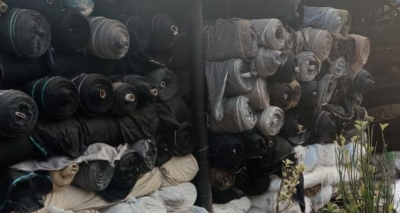
In Delhi, Katran Market at Mongolpuri shows how informal networks support textile circularity. Roadside handlers collect cutting waste from trucks arriving from Noida, Gurugram, Manesar, Jaipur, and Delhi. The waste is then sorted and segregated by colour, improving its value for recycling. The market supplies over 10 TPD of sorted cutting waste to formal recycling clusters in Panipat. Thus, creating an important link between local collection and downstream textile recovery.
With changing global demand patterns, sustainability is becoming a major growth lever for India’s textile sector. Policy action is supporting organic fibres, safer chemicals, circular production, waste recovery, eco-labelling, and traceability. Cleaner technologies, recycling, responsible sourcing, and waste reduction can help Indian textiles remain competitive in international markets.
Often called the “spinning wheel” of India’s industrial growth, the textile and apparel sector is a key pillar of the manufacturing economy. As per the National Account Statistics 2025, the sector accounts for about 2 per cent of India’s GDP and around 11 per cent of manufacturing GVA.
India is also the world’s sixth-largest exporter of textiles and apparel, holding a 4 per cent share in global exports. The sector also provides direct employment to more than 45 million people, including many women and rural workers.
Given its economic scale, export linkages, and employment intensity, sustainability has become increasingly important for the sector. As global markets are shifting towards environmentally responsible production, India’s textile industry has an opportunity to strengthen its competitiveness, the statement added.