 Rahnuma:Delhi HC refuses to suspend conviction of Bihar BJP MLA Raju Kumar Singh in 2018 celebratory firing case
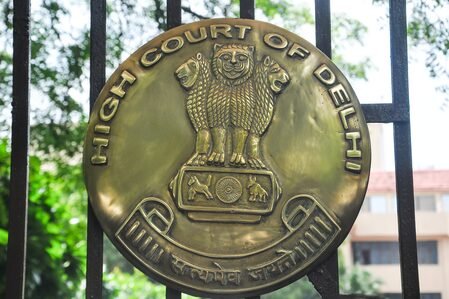
New Delhi, Oct 1 (IANS) The Delhi High Court has refused to suspend the conviction of Bihar BJP MLA Raju Kumar Singh in connection with the death of a woman during celebratory firing at a New Year’s Eve party in the national capital in 2018, holding that there was no “manifest perversity and palpable error” warranting such relief.
A single-judge Bench of Justice Manoj Jain dismissed Singh’s plea seeking suspension of his conviction under Section 304 Part II of the Indian Penal Code (IPC) and Section 30 of the Arms Act, observing that suspension of conviction can be granted only in exceptional circumstances.
Singh, a sitting MLA from Sahebganj in Bihar, had approached the High Court after being sentenced to four years’ imprisonment for culpable homicide not amounting to murder and two months’ imprisonment under the Arms Act.
He was also directed to pay Rs 25 lakh as compensation to the family of the deceased, with an additional three months’ imprisonment in case of default.
The High Court had already suspended the sentence on July 27, 2026, but Singh subsequently sought suspension of the conviction itself, citing the consequences of his disqualification as an elected legislator.
Senior advocate Siddharth Luthra, appearing for Singh, submitted that since the sentence under Section 304 Part II was for more than two years, Section 8(3) of the Representation of the People Act, 1951 would attract disqualification from the date of conviction and for a further six years from the date of release.
Luthra argued that Singh had a remainder tenure of around four years and that, if the conviction was not stayed, he would not only face disqualification as an MLA but would also be disqualified from contesting future elections.
It was also contended that the conviction was unsustainable as the finding of guilt was based on “unwarranted presumptions” while material evidence, including forensic analysis, had been overlooked.
Opposing the plea, the prosecution argued that suspension of conviction cannot be sought in a casual or mechanical manner and is permissible only in exceptional and rare circumstances, adding that no such circumstances existed in the present case.
In its order, the Delhi High Court referred to several Supreme Court judgments, which held that while a conviction could be stayed in a given factual matrix, “such exercise of power has to be under exceptional circumstances”.
It observed that the apex court had held that the question of irreversible consequences has to be examined in light of factors including criminal antecedents, gravity of the offence, moral turpitude, and wider social impact, while balancing the integrity of the electoral process with the rights of constituents to representation.
“Since the hardship cited is an omnibus one and not individual-centric, the factual matrix of any given case becomes the most dominant factor,” Justice Jain observed.
The High Court said it was required, at this stage, to examine the record only at a surface level to determine whether there was any “apparent, palpable and manifest illegality, gross on the face of record” warranting suspension of the conviction.
The case relates to the intervening night of December 31, 2018 and January 1, 2019, when a New Year’s Eve party was being held at Rose Farm House in Mandi village here.
According to the prosecution case, the MLA and security guard Hari Singh, who was armed with a .315-bore rifle, indulged in celebratory firing during the party. Raju Singh allegedly fired four to five rounds from his .22-bore pistol.
After a gap of around five minutes, another round of firing took place, during which, according to the prosecution, Singh alone was using a firearm.
Shortly thereafter, Archana Gupta was found unconscious on the dance floor and was taken to Fortis Hospital, Vasant Kunj, where she eventually succumbed to a gunshot injury.
The Rouse Avenue Court had convicted the MLA on June 6 under Section 304 Part-II IPC and Section 30 of the Arms Act, holding that his firing from a licensed pistol at a crowded gathering was an act done with the knowledge that it was likely to cause death.
After examining the material for the limited purpose of deciding the suspension plea, the Delhi High Court found no apparent error warranting interference.
“The facts, which emerge from the record, indicate that at the relevant time, it was the appellant who had used his pistol. No one else was seen firing at that crucial moment,” it said.
It further observed that whether the bullet had hit Gupta directly or after ricocheting “hardly matters” as the injury was a direct consequence of the firing attributed to Singh.
It also recorded that the offence involved an element of moral turpitude and that Singh did not have a clean antecedent record, though several cases against him had already ended in acquittal.
“In view of my foregoing discussion, the present application seeking suspension of order of conviction is dismissed,” Justice Jain ordered.
The Delhi High Court clarified that its observations were tentative and would not be treated as a final expression on the merits of the criminal appeal, which was admitted and directed to be listed in due course.
–IANS
pds/vd