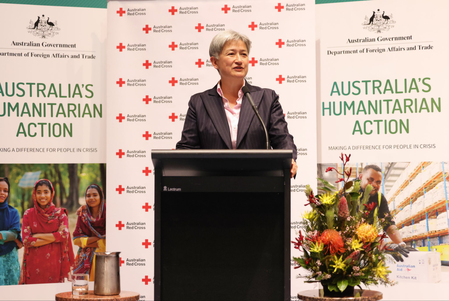
Canberra, Jan 29 (IANS) Australian Foreign Minister Penny Wong has announced 50 million Australian dollars in support for Afghanistan to address the deteriorating situation. She condemned Taliban’s oppression of women and girls and stated that Australia is continuing legal action against Afghanistan for violations of Convention on the Elimination of All Forms of Discrimination Against Women (CEDAW).
In a statement shared on X, Wong stated, “The people of Afghanistan are enduring one of the world’s worst protracted humanitarian crises, exacerbated by the Taliban’s failure to meet basic needs. In response, the Australian Government will provide a further $50 million in support through established UN partners.”
“We condemn the Taliban’s continued campaign of sustained oppression, particularly against women and girls. Australia is continuing legal action with international partners against Afghanistan for violations of CEDAW under the Taliban,” she added.
She noted that people of Afghanistan are facing one of the world’s largest protracted humanitarian crises, exacerbated by the Taliban’s failure to meet basic needs. Almost 22 million people require humanitarian support in Afghanistan.
In a statement, Penny Wong and Australia’s International Development Minister Anne Aly stated, “The Taliban’s oppression of women and girls, including limiting access to employment, medical services, education and public life, mean they are disproportionately impacted. Australia’s humanitarian assistance is focused on supporting women and girls, prioritising food security, health services, and protecting dignity, safety and rights.”
According to the statement, Australia is working with United Nations partners to ensure Canberra’s support for those who are in need. The humanitarian assistance will be delivered by agencies like the World Food Programme (WFP) and the UN Office for the Coordination of Humanitarian Affairs’ Afghanistan Humanitarian Fund.
In the statement, Penny Wong stated, “The situation in Afghanistan is dire. The Australian Government remains firmly committed to supporting the people of Afghanistan, with a strong focus on women and girls.” She noted that Afghanistan’s humanitarian support will help to save lives, alleviate suffering and meet the basic needs of people impacted by Afghanistan crisis.
On Tuesday, United Nations Children’s Fund (UNICEF) has said that Afghanistan is facing one of the worst child malnutrition crises, with around 3.7 million children facing acute malnutrition annually, local media reported.
UNICEF representative in Afghanistan, Tajudeen Oyewale, stressed the need to address the crisis during the launch of malnutrition prevention and treatment guidelines on Tuesday, Afghanistan’s leading news agency Khaama Press reported. The malnutrition crisis in Afghanistan has deteriorated since 2021 amid economic collapse, drought and humanitarian funding shortages.
According to the World Food Programme, more than 90 per cent of Afghan households cannot buy sufficient food, resulting in children facing permanent developmental damage from hunger and insufficient nutrition.
The updated guidelines include significant changes in treatment and prevention approaches, with more focus on life-saving interventions for the most severe cases of malnutrition. The guidelines have provided care instructions for babies under six months old, showcasing a critical step in reducing child malnutrition. UNICEF expressed hope that these revised guidelines will improve treatment outcomes and save the lives of children in Afghanistan amid the malnutrition crisis.
Various factors, including poverty, food insecurity, limited access to healthcare, and poor maternal nutrition, cause malnutrition among children in Afghanistan. Rural regions are particularly affected due to the crisis, as families face food scarcity and do not have access to medical facilities, while ongoing restrictions on women’s healthcare workers have further affected treatment access.