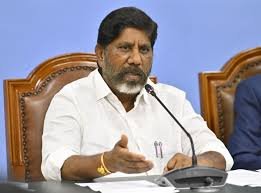
Hyderabad, Jan.29 (RAHNUMA): “True development is possible only with clean air. Keeping this in mind, the Telangana government is following a clear vision and a scientific approach. Under the leadership of Chief Minister Revanth Reddy, the entire Cabinet is moving forward with a firm commitment to provide a clean and healthy environment for the people of Hyderabad and the entire State, said Deputy Chief Minister Bhatti Vikramarka Mallu.
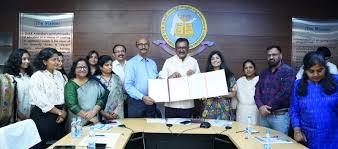
He was speaking as the chief guest at the conference on “Air Quality Index and Air Quality Management”, organised under the aegis of the State Planning department at the Marri Channa Reddy Human Resource Development Institute (MCRHRD) on Thursday.
Bhatti Vikramarka stated that the clear and overarching objective of this conference is clean air for a healthy Telangana.
“Today, Telangana is one of the fastest-growing states in the country. Hyderabad has emerged as a global hub for IT, life sciences, manufacturing, and innovation. This development is a matter of pride for all of us. But it also places a responsibility upon us. Development and environmental protection cannot be positioned against each other; they must move forward hand in hand,” the Deputy Chief Minister stressed.
With a strong resolve to achieve a three-trillion-dollar economy through sustainable development, the government is working relentlessly. At the same time, it is making large-scale investments in reservoir rejuvenation, conservation of natural resources, and improvement of air quality, he said.
Bhatti Vikramarka emphasised that development without clean air is not real progress and it is merely delayed damage.
“Air quality is not just an environmental indicator—it is a public health indicator, a productivity indicator, an an economic indicator,” he said.
“New risks must also be recognised. Presentations revealed that in some areas, industries contribute nearly 32% of air pollution. While particulate matter is being regulated, greater attention is needed on pollutants such as volatile organic compounds (VOCs),” he said.
Bhatti Vikramarka cited the Jeedimetla industrial area as an example—industries that were once on the outskirts of the city are now located amid residential zones. Similar situations exist in several industrial areas within the ORR. This poses serious risks to public safety and health, he said.
“Industrial accidents in residential areas can turn into major disasters. Hence, industrial restructuring, zoning reforms, and improved land-use planning must be examined seriously,” Bhatti Vikramarka said.
To ensure swift action on pollution complaints, special response teams will be piloted in two GHMC zones, and based on results, expanded across the State, he added.