NEW YORK CITY(RAHNUMA): The UN warned on Wednesday that Syria’s fragile recovery could be derailed by spillover from the widening military conflict in the region, and called for renewed efforts to insulate the country from the escalation.
The deputy special envoy for Syria, Claudio Cordone, said that incidents linked to Iranian missile and drone activity, including debris falling inside Syrian territory, had already caused civilian casualties, underscoring the urgent need to prevent further spillover.
“Let us redouble efforts to support Syria in shielding itself from this conflict,” he said, adding that prolonged regional tensions could undermine political, economic and institutional progress in a country just starting to recover after more than a decade of civil war.
He pointed to an increase in military activity affecting Syria, including Israeli air operations in Syrian airspace and cross-border violence involving the Lebanese group Hezbollah. The escalation has displaced about 140,000 people into Syria, most of them Syrian refugees who fled their country to escape fighting during the civil war and are now returning home to avoid the violence in neighboring Lebanon.
The UN also warned that the humanitarian situation remains precarious, with the military escalation in the region compounding already significant aid needs.
Assistant Secretary-General Joyce Msuya told the council that many of those arriving in Syria had intended eventually to return but were forced by the latest violence to move back immediately, adding to the pressure on already strained services. They join about 1.5 million refugees who have returned since late 2024, testing the country’s capacity to reabsorb them.
While the conditions in parts of northern and eastern Syria have stabilized, more than 100,000 people remain internally displaced and basic services continue to lag. Irregular electricity supplies are causing disruptions at hospitals, water stations and sanitation systems, affecting hundreds of thousands of people.
Aid agencies are providing assistance to more than 200,000 people each month in the form of food, healthcare and other essential services, but officials warn that humanitarian support is no substitute for functioning state institutions.
At the same time, funding shortfalls remain acute, raising concerns that critical assistance, from food and water to healthcare, could be reduced just as needs threaten to increase again.
Msuya also highlighted persistent threats to safety, including landmines and unexploded ordnance, which have killed or injured more than 140 people in recent weeks.
Meanwhile, Cordone reiterated calls for Israel to respect Syria’s sovereignty and adhere to the 1974 disengagement agreement, and commended Syrian authorities for engaging with regional actors in an attempt to prevent their territory being used to widen the conflict.
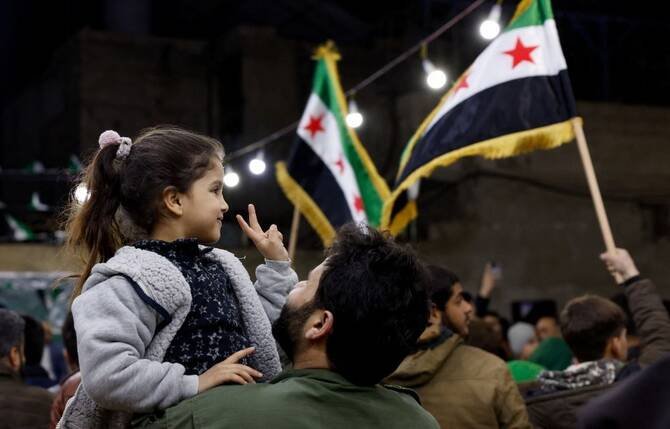
The warnings came as Syria marks the 15th anniversary of the uprising that sparked the civil war, which ended in December 2024 with the fall of the Assad regime, and as the country’s new authorities attempt a delicate political transition.
A constitutional framework adopted last year envisions elections and a new constitution by 2030, though implementation efforts remain uneven. Recent developments include indirect parliamentary elections in some areas and plans for further voting, alongside efforts to ensure broader representation, particularly among women and diverse, marginalized communities.
Cordone highlighted signs of progress in transitional justice, including the establishment of a national commission tasked with addressing prior abuses and fostering reconciliation. However, he stressed that strengthening rule-of-law institutions and ensuring accountability remain critical to the process.
Security challenges persist. There have been renewed attacks by Daesh militants in eastern Syria, signaling attempts to regroup. At the same time, the closure of Al-Hol detention camp has raised concerns about the dispersal of individuals with alleged links to militants, and the risks this might pose to stability and reintegration.
Economically, Syria is showing tentative signs of improvement following years of international isolation, with increased electricity supplies, the return of refugees and renewed financial activity. But Cordone warned that slow reintegration into the global financial system, and the lingering effects of sanctions, continue to threaten recovery.
“The regional conflict has come at the wrong time,” he said, noting the disruptions to trade and energy supplies caused by the US-Israeli conflict with Iran.
Cordone also highlighted cautious signs of progress in talks between the Syrian government and Kurdish-led forces on the integration of the latter into national institutions, though key issues remain unresolved.
He said that Syria’s long-term stability depends on an inclusive political process, greater participation of civil society representatives, especially women, and sustained international support.
“The success of Syria’s transition will depend on the ability of Syrians themselves to shape a future grounded in sovereignty, accountability and inclusion,” he added.