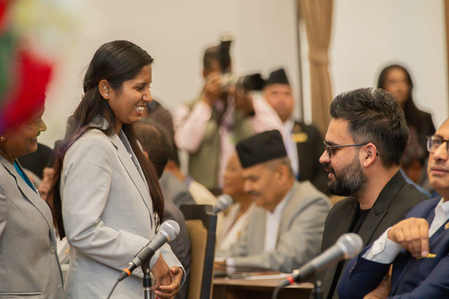
Kathmandu, April 16 (IANS) Nepal’s newly-elected Deputy Speaker of the House of Representatives, Rubi Kumari Thakur, has announced that she will not participate in any wedding where dowry transactions are involved.
Thakur, 26, was elected Deputy Speaker on April 9, becoming the youngest person ever to hold the position, as the country’s politics witnessed a generational shift. She was elected to the lower house through the proportional representation system from the Shram Sanskriti Party, a newly formed political party.
After being elected as a lawmaker, she had said she would work against the dowry system, which has been a source of domestic violence against women, particularly among the Madhesi community in Madhes Province, from where she hails.
“I have recently been receiving many wedding invitations. However, I have not noticed a clear mention of ‘dowry-free marriage’ on any of the cards. This indicates that our society has still not been able to completely free itself from the serious social evil of dowry,” she said in a Facebook post. “Not only giving or taking dowry, but also accepting marriages based on dowry transactions, participating in such events, or attending the feasts is socially unacceptable and legally punishable. This practice directly undermines women’s dignity, equality, and rights,” she added.
She further stated that she would be unable to participate in weddings where dowry transactions are involved, urging everyone to promote dowry-free, equality-based, and dignified marriages. “I earnestly urge you to include a clear message in wedding invitation cards stating: ‘Dowry-free marriage; giving and taking dowry is a social and legal offence.’”
Thakur’s remarks come amid ongoing concerns that dowry-related customs continue to persist despite legal prohibitions and growing awareness efforts.
According to Nepal Police statistics, the police received 10 complaints related to dowry in the fiscal year 2023–24, seven of which were registered in Madhes Province, where the practice is most prevalent among the Madhesi community, though it is practiced across socio-economic groups. Given that the system is prevalent widely, usually only those where violence is involved, get reported.
In 2017, under the Penal Code (Act) 2074, Nepal strengthened its laws against dowry payments in marriage. The practice is considered a key contributor to domestic violence in Nepal and a driver of child marriage, as younger girls often require lower dowries, which incentivizes early marriage.