During the full-scale military aggression imposed by the United States of America and Israel against the Islamic Republic of Iran on 28th February 2026, certain remarks made by Donald Trump regarding Iran’s regime have drawn strong criticism from scholars across India.
Presented below are their remarks and reactions, submitted to the Consulate of the Islamic Republic of Iran, expressing their concerns and perspectives on the matter.
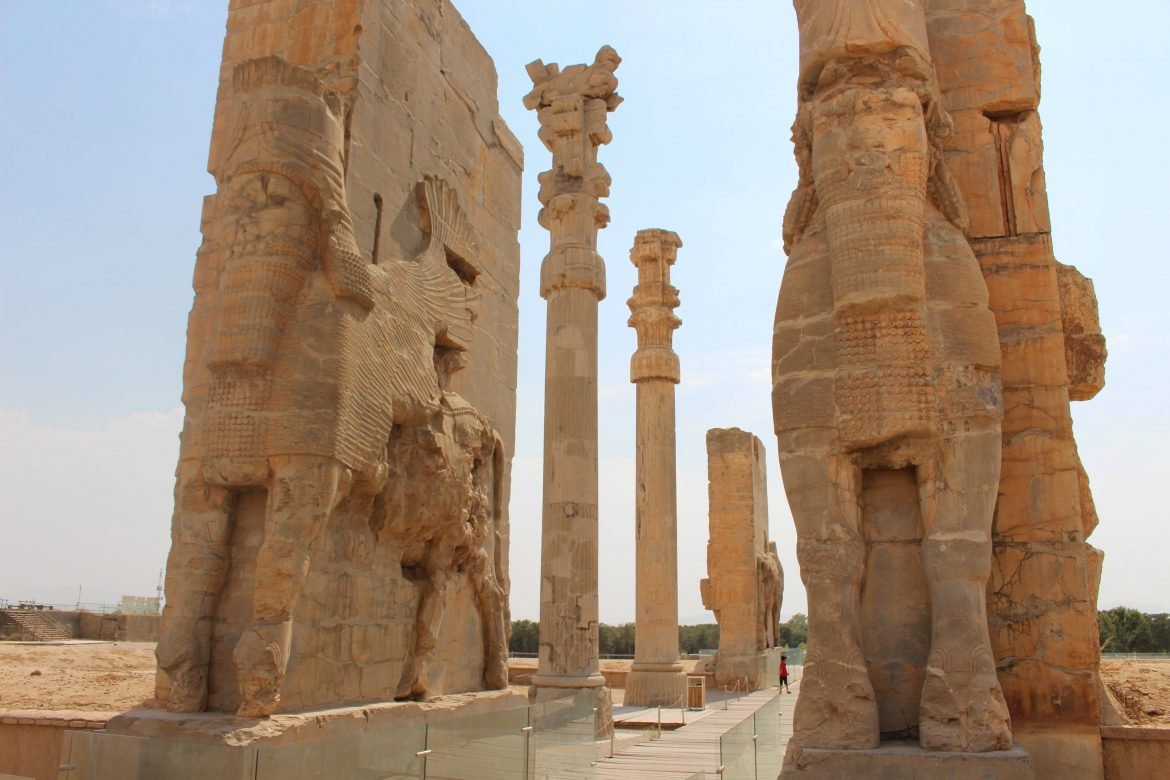
The recent remarks made by former U.S. President Donald Trump threatening to return Iran to the “Stone Age” have drawn deep concern and strong reactions from scholars, intellectuals, and students of Persian language and literature across India. Such statements, viewed by many as historically insensitive and inconsistent with the spirit of diplomacy and mutual respect, have prompted members of academic and literary circles to speak in defense of one of the world’s oldest and most enduring civilizations. Iran, a land renowned for its rich cultural heritage, intellectual traditions, literature, philosophy, and artistic brilliance, has for centuries shared profound civilizational and cultural ties with India through the enduring legacy of the Persian language. The following reflections and statements by distinguished professors, researchers, and students of Persian studies represent thoughtful responses to the language of hostility and threats directed toward Iran. They reaffirm the belief that great civilizations, shaped through centuries of knowledge, resilience, and human achievement, cannot be weakened by intimidation or political rhetoric, and that the modern world must continue to uphold the values of dialogue, wisdom, dignity, and peaceful coexistence among nations.
Professor Aziz Bano, Professor of Persian Language and Central Asian Studies, stated that the rich and artistic civilization of Iran is among the oldest and most significant civilizations in the world. She emphasized that Persian language and literature remain a priceless shared heritage for Indians, especially admirers of Persian poetry. Referring to the threat to return Iran to the “Stone Age,” she described such remarks as irresponsible and rooted in historical ignorance, adding that no authentic civilization can be destroyed through bombings or threats. According to her, such statements merely reflect a violence-oriented mentality that prefers force over dialogue and mutual respect.
Tasdeeqat al-Zahra, who holds a PhD in Persian Language and Literature, termed the statement about destroying Iran and returning it to the “Stone Age” a foolish idea that has damaged Trump’s credibility across the world. She noted that Iran has historically remained a great and powerful nation in terms of culture, military capability, civilization, and historical legacy. She further remarked that recent events once again demonstrated Iran’s resilience and strength in the face of challenges.
Dr. Mohammad Afroz Alam, Professor in the Department of Persian Language and Literature at the University of Kashmir, stated that the threatening and insulting remarks against Iran reveal a lack of political maturity and diplomatic understanding. As a scholar of Persian literature and Iranian studies, he observed that threatening an ancient nation reflects ignorance of Iran’s deep historical roots, culture, and capabilities. He stressed that civilizations which have survived for thousands of years cannot be weakened by emotional slogans or hostile rhetoric. According to him, such language exposes weakness in logic and diplomacy rather than strength. He further added that Iran has repeatedly demonstrated resilience throughout history — from invasions and colonial pressures to modern conflicts — and therefore threats against Iran only reveal a misunderstanding of the nation’s true strength and civilizational depth.
Al-Zahra Zaidi, a doctoral student of Persian Language, described Iran as one of the world’s oldest and most influential civilizations, which has consistently advanced through resilience and progress. She remarked that the statement about returning Iran to the “Stone Age” appeared more like an emotional and propagandistic slogan than a historically grounded political assessment. Referring to centuries of invasions, external pressures, and foreign interference faced by Iran, she pointed out that the country has always re-emerged with greater determination and stability. She also highlighted that today Iran has become an important regional and international actor through its scientific advancement, technological capabilities, political strength, and strategic geographical position. In her view, real power lies not only in military or economic might, but also in history, culture, national identity, and the resilience of nations.