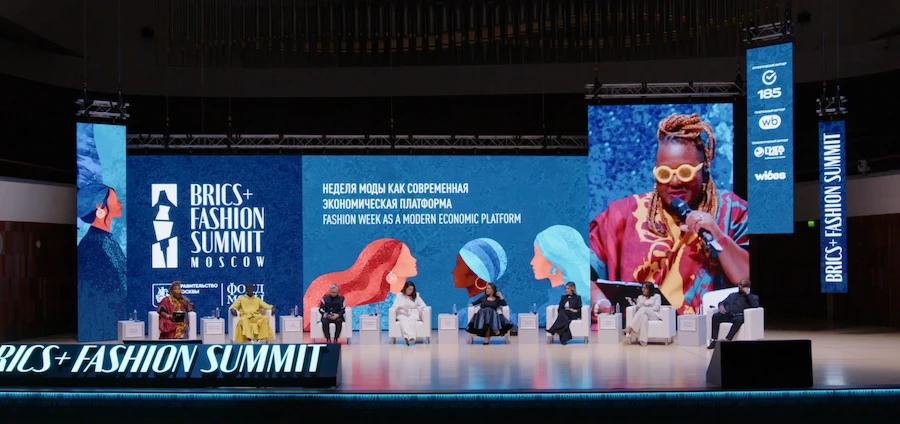
MOSCOW (ARAB NEWS): The runways may command the spotlight, but the impact of fashion weeks is measured by what happens after the shows end, speakers at the BRICS+ Fashion Summit have said.
From business deals to new industry opportunities, the event’s lasting economic value was the focus of the panel “Fashion week as a modern economic platform” at Moscow’s Zaryadye Concert Hall.
The discussion brought together fashion week organizers and industry representatives from countries including Jordan, Morocco, South Sudan, Malaysia, Paraguay, South Africa and Turkiye. They explored how fashion events could become year-round networks connecting designers with buyers, manufacturers, investors, institutions and international markets.
“A fashion week becomes a permanent platform when the work continues after the audience leaves,” said Gabriela Tome, strategic director of partnerships and sponsorship at Asuncion Fashion Week.
She described a process that begins before the shows, with designers preparing their businesses and collections, and continues afterward through introductions, meetings and followup.
“Permanent does not mean producing events all year,” said Tome. “It means that the relationships and opportunities created by the event continue all year.”
She said Asuncion Fashion Week had held more than 40 editions over two decades, building recognition for local designers and strengthening relationships across the industry.
Jay Ishak, founder and CEO of the International Fashion Chamber Malaysia, likewise argued that commercial connections must be planned rather than left to chance. He said: “The runway creates attention. The connections around it create the economic value.”
Ishak described a format used at Malaysia International Halal Showcase that combines a forum, runway presentations and a nearby pavilion where designers can display their work. The forum builds understanding, the runway generates interest and the pavilion gives buyers somewhere to take the conversation, he said.
For those conversations to turn into trade, designers also need clear prices, production capacity, minimum order quantities and delivery timelines.
Shirene Rifai, founder and CEO of Jordan Fashion Week, framed the challenge as making visibility lead to sustained collaboration. “Fashion weeks should not be measured by what happens on the runway, but what happens because of the runway,” she said. Organizers, she added, need to understand each designer’s needs and capabilities before connecting them with buyers, retailers, artisans or other partners.
Rifai said Jordan Fashion Week’s first season brought together more than 90 local designers across runway shows, showrooms and presentations. She cited a 68 percent increase in designers’ sales and paid work for models, photographers, hotels and restaurants as examples of the wider economic activity a fashion platform can support.
Digital tools can help designers reach audiences beyond major fashion capitals, Tome said, through livestreams, social media, digital showrooms and virtual appointments. But views alone are not proof of market access. She called for organizers to track qualified buyer meetings, sample requests, orders, contracts, repeat sales, new markets and jobs — then review results over months, not just during the event.
Panelists also highlighted fashion’s cultural and economic dimensions. Hind Joudar, founder of Morocco Fashion Week, spoke about the Moroccan kaftan as both a marker of national identity and a source of livelihoods. Some garments require around 200 hours of embroidery, she said, with families and women working from home contributing to their production. Fashion platforms, she argued, can help preserve those skills while finding new markets for traditional designs.
For South Sudan, where the fashion industry is still developing, Dawson Deng pointed to obstacles including limited manufacturing equipment, weak connectivity beyond the capital, training needs and trade costs. Partnerships, institutional support and international platforms could help local designers build capacity and reach buyers, he said.
Stephen Menzini of Soweto Fashion Week noted that the impact of exposure can be difficult to measure directly. In South Africa, he said, signs of progress may be practical: a designer moving from one sewing machine to two, or acquiring transport to support the business.