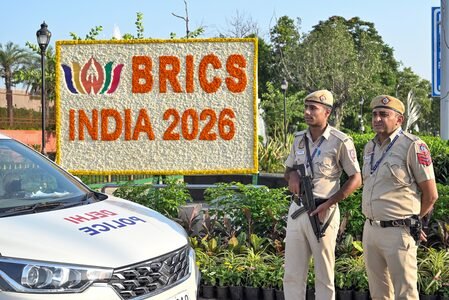
BRICS Summit: Rashtrapati Bhavan Museum, Amrit Udyan shut from Sep 11 to 13

© Provided by The Rahnuma Daily

BRICS Summit: Rashtrapati Bhavan Museum, Amrit Udyan shut from Sep 11 to 13

New Delhi, Sep 10 (IANS) In view of security, logistical arrangements and the focus on decongesting central Delhi for the 18th BRICS Leaders’ Summit, the Rashtrapati Bhavan Museum and Amrit Udyan will remain closed for visitors from September 11 to 13, said an official on Thursday.

The Change of Guard Ceremony will also not take place at the Forecourt of Rashtrapati Bhavan on Saturday, said the official in a statement.

The closure is part of an effort to minimise inconvenience to BRICS delegates and avoid congestion on roads by restricting public visitors to areas close to the Summit venue.

The Delhi Metro has also decided to keep its museum at the Supreme Court metro station closed for three days starting Friday.

While the Delhi government had earlier declared a holiday for its offices on September 11, the Ministry of Personnel, Public Grievances and Pensions issued an official circular declaring a holiday for Central government offices on that day.

Earlier, the Delhi Traffic Police informed the public about a change in dates for official work and legal cases in courts, especially those situated near the BRICS Summit venue at Bharat Mandapam.

The traffic police advisory said that a National Lok Adalat that was scheduled to be held on September 12 in courts will now be organised on October 10.

Since subordinate courts will observe a holiday on September 11 and 12, the advisory said that cases listed on these two dates will now be listed on September 14.

The traffic police said that litigants should check the new date of their court case or Lok Adalat before leaving their homes and avoid an unnecessary journey to the high-security and traffic-regulated zone.

Ahead of the international event, the Delhi Traffic Police have been conducting rehearsals for traffic movement during the Summit.

As part of the traffic management drill for the events from September 11 to 13, the Traffic Police have planned diversions at 22 points with regulated traffic movement on more than 35 roads.

During the trial runs, the traffic police enforced curbs and diversions between 10 a.m. and 3 p.m. for a Motor Carcade Rehearsal ahead of the BRICS Business Forum and the 18th BRICS Leaders’ Summit.

September 12 and 13, being a Saturday and Sunday, are expected to be relatively less challenging for traffic managers who are handling Summit-related arrangements.

The traffic police have urged citizens and cab service providers to go through the advisory issued for routes where movement will be restricted, in view of the upcoming BRICS Summit in the national capital.

Additional Commissioner of Police (Traffic) Dinesh Kumar Gupta said that advisories are being shared with the public through the Delhi Police website, Facebook, Twitter, Instagram and print media so that the public does not face inconvenience during the movement.

“We have 22 diversion points in place, under which we will divert the traffic from designated points. We have also briefed our staff to guide people, wherever needed, regarding the diverted routes,” he added.

share it
Facebook
Twitter
LinkedIn
WhatsApp

Leave a Reply

Your email address will not be published. Required fields are marked *


Latest Post

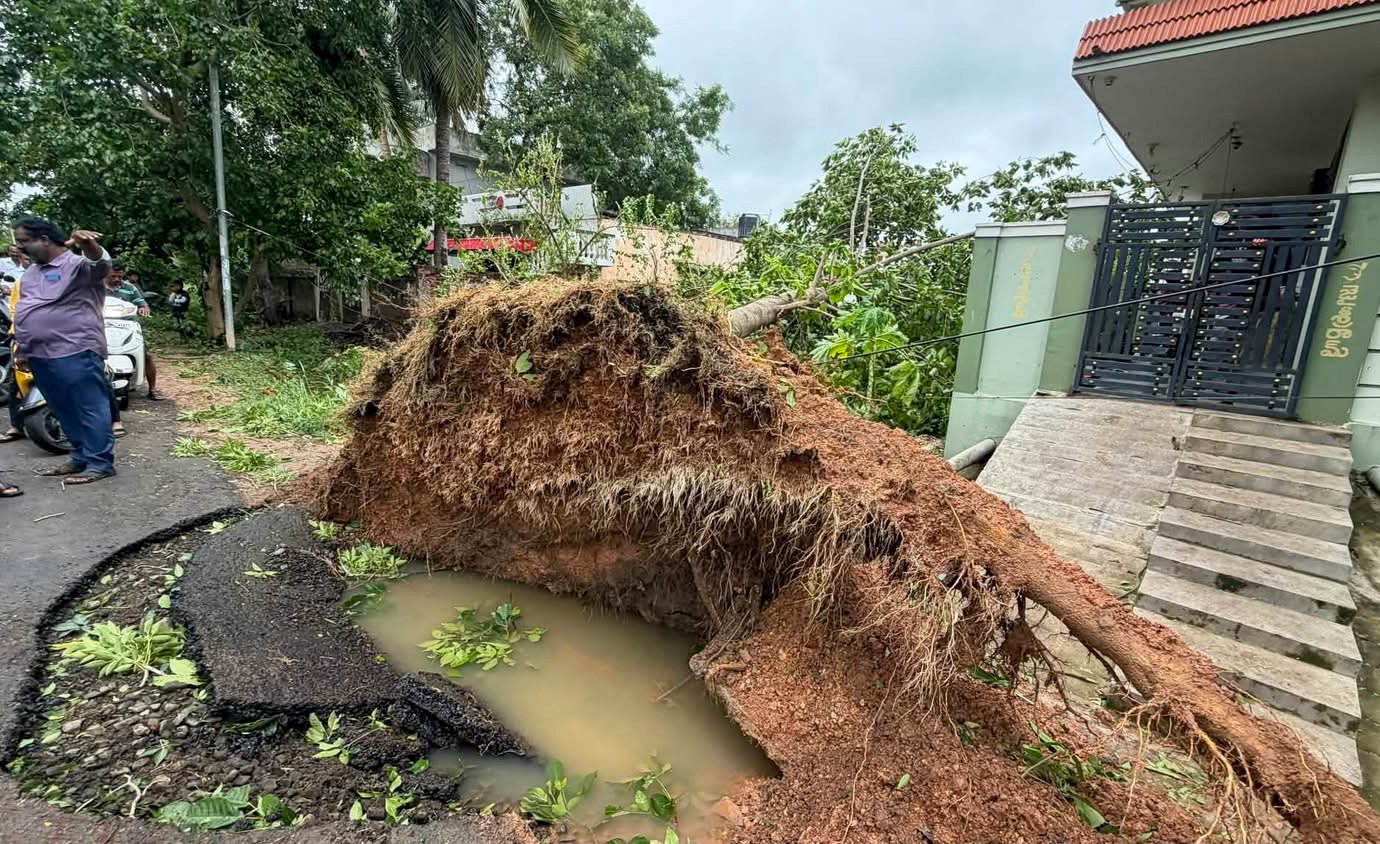
Cyclone Arnab claims four lives, leaves trail of destruction in coastal Andhra (Roundup) Amaravati, Oct 28 (IANS) Very severe cyclone Arnab, which crossed Andhra Pradesh coast on Wednesday, claimed four lives, leaving a trail of destruction in coastal districts, uprooting thousands of trees, electricity poles and causing extensive damage to crops. Heavy rains accompanied by gusty winds lashed the region, causing widespread destruction of property. Dr B. R. Ambedkar Konaseema and Kakinada districts bore the brunt. According to preliminary reports, agricultural and horticultural crops over 2.24 lakh hectares, belonging to 3.45 lakh farmers across 14 districts, have been inundated or damaged. State Agriculture Minister K. Atchannaidu wrote to Union Minister for Agriculture Shivraj Singh Chouhan that paddy accounted for 2.09 lakh hectares of the reported affected area. The impact in the Godavari delta was especially severe, with approximately 82% of the paddy area in West Godavari, 75% in Dr B.R. Ambedkar Konaseema and 48% in Kakinada district reported as inundated. A total of 15,000 electricity poles collapsed due to gusty winds, disrupting power supply. Thousands of trees were also uprooted. Though the cyclone has crossed the coast, the State Disaster Management Authority has appealed to people to remain alert in view of the forecast of more heavy rains. Relief and restoration works in the affected areas have been launched on a war footing, with 34,000 personnel engaged in works clearing fallen trees and electricity poles. Chief Minister Chandrababu Naidu said that power supply has been restored in all districts, with the exception of some areas in Konaseema and West Godavari districts. Restoration efforts are facing challenges due to factors such as mud and ongoing rain. Tree falling disrupted traffic movement on highways. Traffic movement on state highways and panchayat roads is expected to be restored by tonight. According to IMD, the cyclone crossed the coast with maximum sustained wind speed of 125-135 kmph, gusting up to 150 kmph. The cyclone made landfall around 2 a.m., and the process was completed by 8 a.m. After crossing the coast, it weakened into a severe cyclonic storm. According to the latest IMD bulletin, ‘Arnab’ moved very slowly with a speed of 7 kmph during the past six hours and lay centred at 2.30 p.m., about 40 km north-northeast of Narsapur, 40 km west-northwest of Yanam (Puducherry UT), 50 km west-southwest of Kakinada and 100 km northeast of Machilipatnam. It is very likely to move north-northwestwards during the next 48 hours and weaken gradually. It will weaken into a cyclonic storm in the evening and further into a deep depression by Wednesday night. Chief Minister Chandrababu Naidu told the media on Wednesday evening that four persons lost their lives in the cyclone. Two people died in Visakhapatnam after being struck by an electric pole and a falling tree, while one person each died in Anakapalli and Bhimavaram. He announced compensation of Rs 5 lakh each for the families of the deceased. He said that he wrote to the Centre seeking assistance for cyclone damage and also briefed Union Home Minister Amit Shah on the intensity of the cyclone and its impact on Andhra Pradesh. The Chief Minister said a preliminary assessment of the damage will be submitted to the Centre, followed by a comprehensive report. He said coconut plantations and other horticultural crops suffered damage. Chandrababu Naidu said that he would visit cyclone-affected regions – probably Konaseema and West Godavari districts on Thursday afternoon to personally assess the extent of the damage. He outlined the government’s response to Cyclone Arnab, the damage caused by the storm, and the relief measures being extended to affected people. The Chief Minister announced the relief measures, including 25 kg of rice for families whose houses were inundated; weavers and fishermen: 50 kg of rice, along with one kilogram each of onions, cooking oil and red gram dal. Financial assistance of Rs 1,000 per person will be given. The Chief Minister said agricultural and horticultural crops would be enumerated to assess losses and extend support to affected farmers. Financial assistance to affected people in the districts will begin from Thursday, excluding crop-related compensation, which will follow the damage assessment process. A decision on the relief measures will be taken at the virtual Cabinet meeting scheduled for Thursday. The Chief Minister stated that the state’s average rainfall deficit had declined from 39 per cent to 27 per cent following the rains associated with Cyclone Arnab. Visakhapatnam district recorded 21 cm of rainfall, while Vizianagaram and Srikakulam districts received 18 cm and 14 cm, respectively. Krishna district recorded 9 cm of rainfall. He claimed that thanks to proactive measures, not a single tank breach occurred anywhere in the state. Through the Real-Time Governance Society (RTGS), the situation was monitored in low-lying areas and on roads across the state to track potential flooding caused by the rainfall. “We also kept drones ready to deliver medicines and food in case of emergencies. I have been continuously monitoring the situation through teleconferences with 30,000 field-level officials and staff members,” he said.

Get free tips and resources right in your inbox, along with 10,000+ others

Related Article