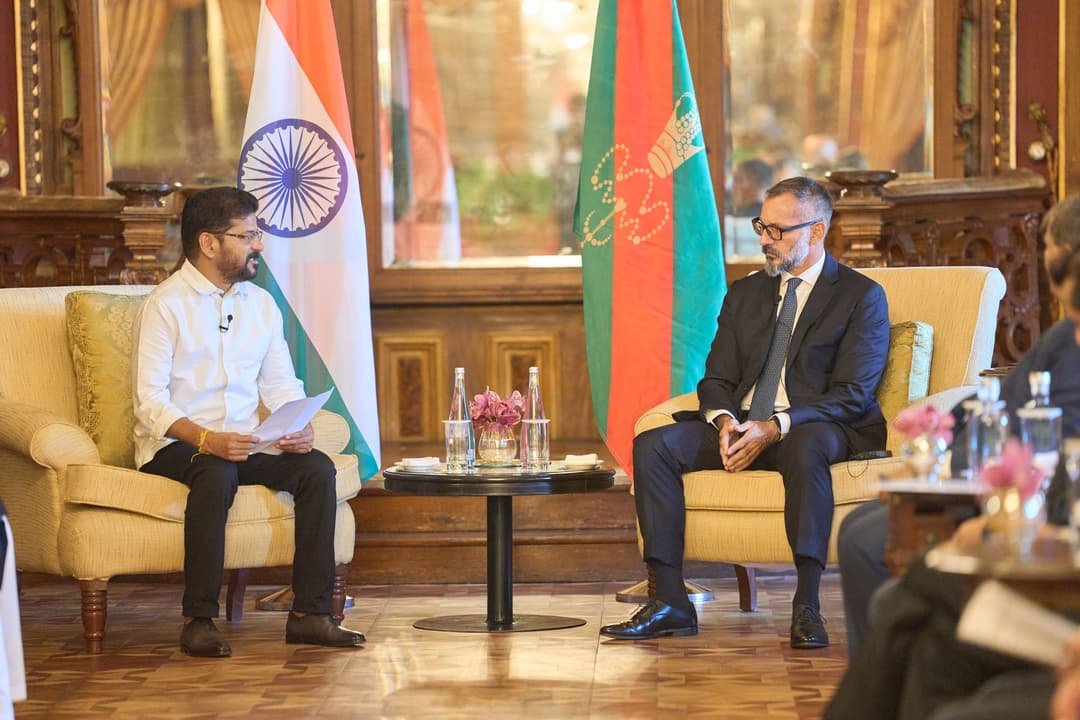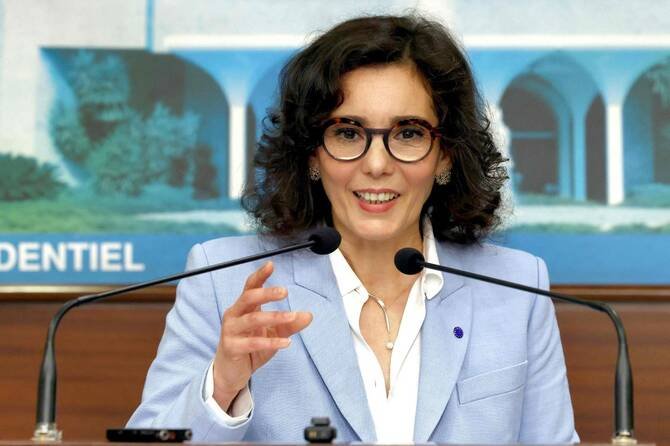
BEIRUT(RAHNUMA): European Union crisis management chief Hadja Lahbib on Saturday urged increased humanitarian access in south Lebanon, where Israel has kept up strikes and Hezbollah has been launching attacks despite a ceasefire.
“Humanitarian aid is ready, but too often it cannot reach those who need it most,” Lahbib told a news conference on the second day of her visit to Lebanon, ahead of an expected EU aid delivery.
A ceasefire came into effect on April 17 but Israel has kept up strikes. Its troops are operating inside an Israeli-announced “yellow line” that runs around 10 kilometers (six miles) deep inside Lebanon along the border, where Lebanese have been warned not to return.
Under the terms of the ceasefire, Israel reserves the right to act against “planned, imminent or ongoing attacks.”
With both sides trading accusations of truce violations, the Iran-backed Hezbollah has also announced attacks, mainly on Israeli targets in south Lebanon.
“South of the Litani River, access is still severely restricted due to evacuation orders and Israeli military activity. And this includes 55 villages below the so-called yellow line,” Lahbib said.
The Litani River runs around 30 kilometers from the border, an area where many of the attacks since the ceasefire have taken place.
She noted that key infrastructure including bridges over the Litani have been destroyed, “and that means longer routes, people waiting days and days for help.”
“Even north of the Litani River, where some of these constraints have eased, it is still not enough. We need humanitarian access in full respect of international humanitarian law. Aid cannot save lives if it cannot reach people,” she said.
Lahbib said that since the start of the war, the European Union had announced some 100 million euros in new humanitarian support for Lebanon and had sent six planes carrying aid, with a seventh due to arrive in the coming days.
Authorities say more than 2,750 people have been killed since March 2, including at least 104 health and emergency workers, with Israeli strikes having killed dozens since the ceasefire.
More than one million people have been displaced.
“Hospitals and ambulances targeted and journalists attacked for simply doing their job — there is no justification for this. International humanitarian law must be respected,” Lahbib said.
“This crisis is not over, so all support for the Lebanese people must continue,” she said.
Hezbollah drew Lebanon into the Middle East conflict on March 2 with rocket fire at Israel to avenge the killing of Iran’s supreme leader Ayatollah Ali Khamenei in US-Israeli strikes.
On Saturday in Bourghliyeh near the southern city of Tyre, AFP correspondents saw peacekeepers from the United Nations Interim Force in Lebanon (UNIFIL) distributing aid to displaced people.