GDP to grow at 7 pc for FY25, budget to focus on taxation reforms, new jobs: FICCI report

© Provided by The Rahnuma Daily

GDP to grow at 7 pc for FY25, budget to focus on taxation reforms, new jobs: FICCI report

New Delhi, July 18 (IANS) Leading industry chamber FICCI on Thursday projected an annual median GDP growth forecast for the year 2024-25 at 7 per cent, adding that Union Budget 2024-25 should focus on taxation reforms, employment generation, innovation and sustainable development.

According to the FICCI’s ‘Economic Outlook Survey’ results, median GDP growth is estimated at 6.8 per cent and 7.2 per cent in Q1 2024-25 and Q2 2024-25, respectively.

The survey put the median growth forecast for agriculture and allied activities at 3.7 per cent for 2024-25.

“This marks an improvement vis-a-vis growth of about 1.4 per cent reported in the year 2023-24. Ebbing El Nino effects with the expectation of a normal southwest monsoon are likely to bode well for agricultural production,” said the apex industry body.

Industry and services sector, on the other hand, are anticipated to grow by 6.7 per cent and 7.4 per cent respectively in the current fiscal year.

Further, the median forecast for CPI-based inflation has been put at 4.5 per cent for 2023-24, with a minimum and maximum range of 4.4 per cent and 5 per cent, respectively.

“While food prices remain sticky with inflation inching up in cereals, fruits and milk, the survey participants expect an easing of prices in the second quarter with kharif output reaching the market,” said FICCI.

The policy repo rate is forecasted to moderate to 6 per cent by the end of the fiscal year 2024-25 (March 2025), according to the economists.

On the subject of fiscal management and expenditure, the participating economists mentioned that the government has done a deft job on the fiscal side.

“It is expected that such prudence will continue as it is important to ensure macro-economic stability. According to economists, the government has an opportunity to leverage additional resources from robust tax collections and Reserve Bank of India’s dividend transfer,” the FICCI survey report mentioned.

On capital expenditure, it was pointed out that the target could be increased but not much deviation was expected from the Rs 11.1 trillion figure that was indicated in the interim budget for FY2025.

The surveyed economists expected some reforms on the taxation side aimed at stimulating economic growth.

“Potential revisions in tax rates to boost disposable income and stimulate consumption, particularly for lower income brackets, is anticipated,” they said.

Further, it was suggested that enhancing limits under Section 80C and similar provisions could encourage long-term savings and investment. Simplification of the capital gains tax regime and a framework guiding towards streamlining of GST slabs are also expected, the report mentioned.

The economists indicated that the forthcoming budget is expected to introduce comprehensive measures to boost employment and enhance workforce capabilities.

The announcement of an employment-linked incentive scheme, the introduction of an urban counterpart of Mahatma Gandhi National Rural Employment Guarantee Act, increased investments in labour skilling programmes and soft infrastructure, and the implementation of targeted policies and support systems to increase female labour force participation were some of the suggestions highlighted by the surveyed economists.

 

share it
Facebook
Twitter
LinkedIn
WhatsApp

Leave a Reply

Your email address will not be published. Required fields are marked *


Latest Post

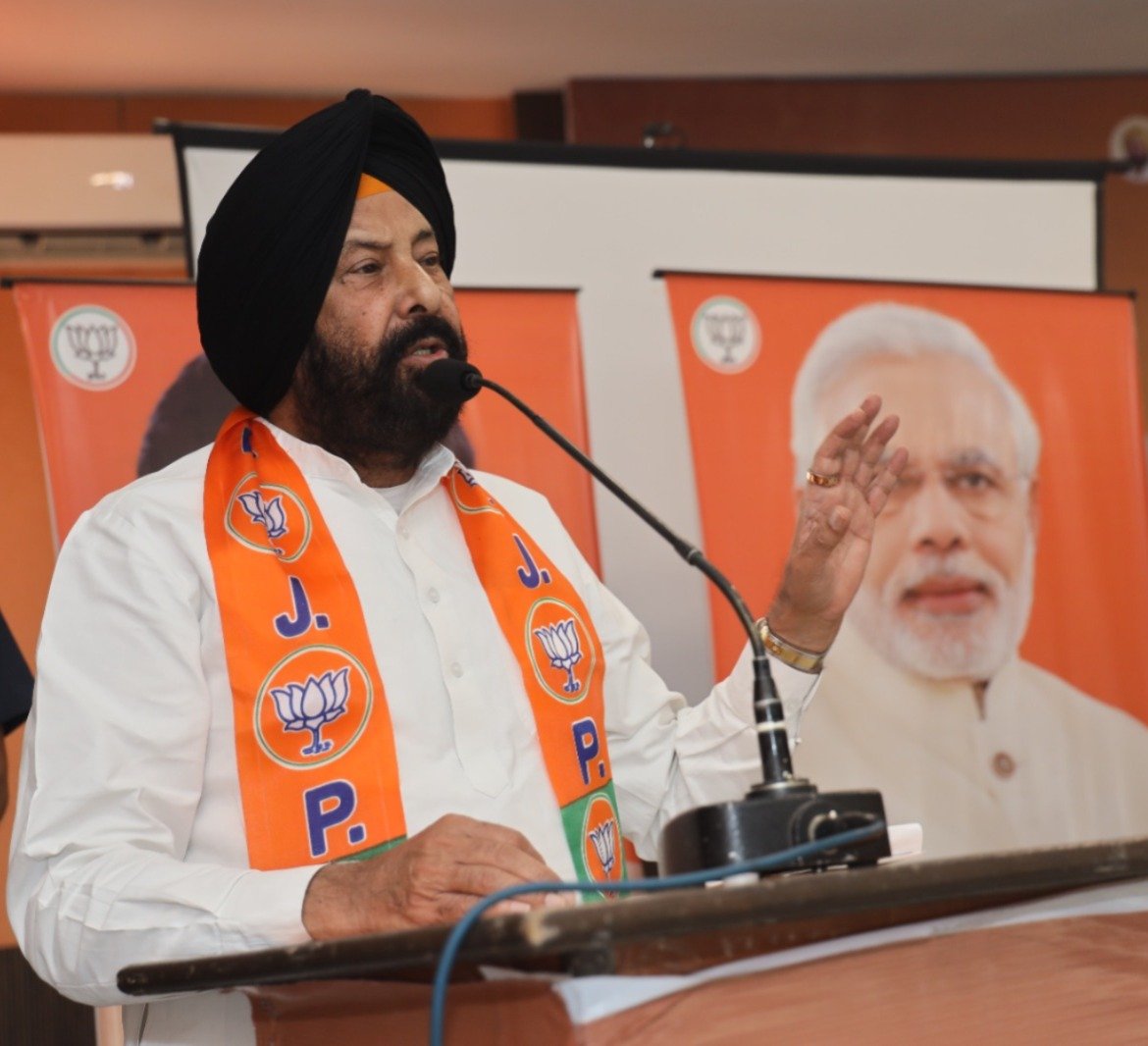
‘40 people responsible for Punjab’s destruction’: BJP lambasts AAP’s poll candidate list Chandigarh, Oct 31 (IANS) Bharatiya Janata Party (BJP) Punjab President Kewal Singh Dhillon on Saturday launched a scathing attack on the Aam Aadmi Party (AAP) following the announcement of its first list of 40 candidates. He said the list is not a list of 40 candidates, but of 40 people responsible for Punjab’s destruction. He added that instead of featuring individuals known for their integrity and commitment to public service, the list included leaders embroiled in serious allegations and controversies. He said the AAP government was misleading people by putting up hoardings across Punjab proclaiming an ‘Honest Chief Minister’. Given the prevailing situation in the state, he remarked that these hoardings should instead read ‘Dishonest Chief Minister’. Several candidates on the list, he alleged, were facing accusations of corruption, fraud, money laundering and other serious offences. Dhillon said that whether AAP announces its candidates now or later, the people of Punjab would not accept them again. Punjab has already fallen victim to the party’s false promises once and will not be misled a second time. The BJP state President said that AAP’s promise of change had come at a high cost to Punjab, with the government failing on every front. He alleged that the party’s leaders and MLAs, who came to Punjab after facing defeat in Delhi, had exploited the state for the past five years and were now preparing to do so again. He asserted that the people of Punjab would never tolerate another attempt to plunder the state. Dhillon said that AAP had devastated Punjab over the past five years. The leaders whom the party has fielded again have been in power for nearly five years and are equally responsible for the state’s decline. Taking the government to task over law and order, he said the situation in Punjab had deteriorated to such an extent that there was virtually no fear of the law. Murders, extortion and incidents of gunfire had become commonplace. He further alleged that the government had failed miserably to curb the drug menace, with young people continuing to fall victim to drug abuse every day. –IANS vg/dan
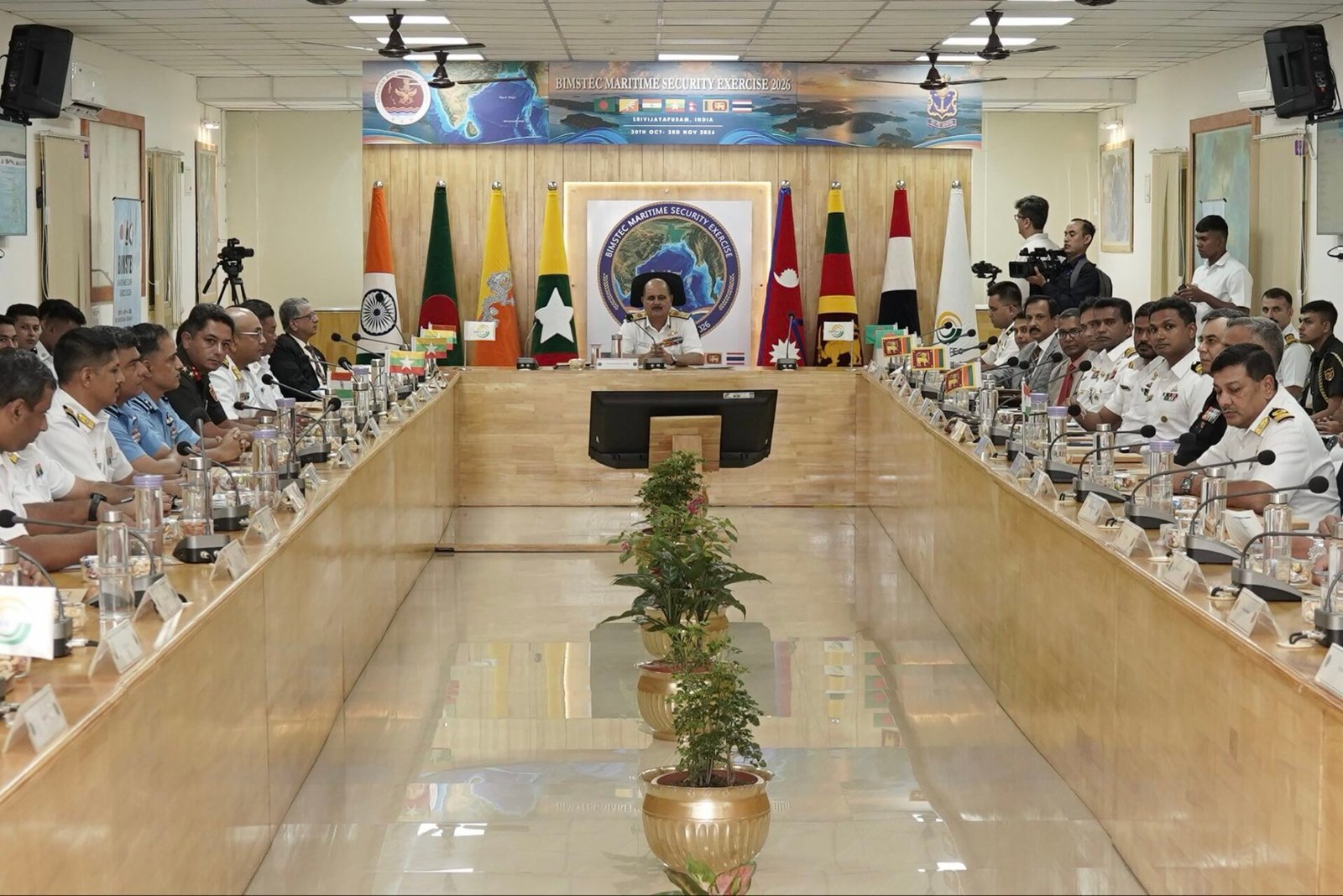
India hosts maiden BIMSTEC maritime security exercise in Andaman and Nicobar Islands New Delhi, Oct 31 (IANS) India is hosting the maiden BIMSTEC Maritime Security Exercise in Sri Vijaya Puram, the capital of the Union Territory of Andaman and Nicobar Islands, to strengthen maritime cooperation, enhance operational coordination and interoperability among member countries, the Ministry of External Affairs (MEA) announced on Saturday. The exercise, which commenced on Friday and will continue until November 3, is among the key initiatives announced by Prime Minister Narendra Modi at the 6th BIMSTEC Summit in Thailand last year. It features three days of Tabletop Exercises followed by a two-day Harbour Phase, with ships from BIMSTEC member countries participating. In a post on X, the MEA said, “The exercise translates the shared vision of BIMSTEC leaders into action, reinforcing maritime cooperation, enhancing operational coordination and interoperability, and contributing towards a safe, secure and stable maritime environment in the Bay of Bengal.” According to Andaman and Nicobar Command, the maiden BIMSTEC Maritime Security Exercise was inaugurated at Sri Vijaya Puram on Friday by Vice Admiral Vineet McCarty, Commander-in-Chief, Andaman and Nicobar Command. The ceremony was attended by Vice Admiral Biswajit Dasgupta, National Maritime Security Coordinator, along with senior delegations from Bangladesh, Myanmar and Sri Lanka. “Anchored in the Delhi Declaration, the exercise marks a significant step towards translating shared maritime security commitments into coordinated action at sea. It aims to enhance interoperability, strengthen information sharing and promote collective responses to maritime threats and transnational challenges, including terrorism,” Andaman & Nicobar Command posted on X on Saturday. The exercise aims to enhance maritime domain awareness (MDA), build operational coordination across the Bay of Bengal, strengthen regional security cooperation, humanitarian assistance and disaster relief (HADR), and responses to cross-border maritime crimes as well as marine pollution due to oil and hazardous material spills. BIMSTEC (the Bay of Bengal Initiative for Multi-Sectoral Technical and Economic Cooperation) is a regional organisation comprising Bangladesh, Bhutan, India, Myanmar, Nepal, Sri Lanka, and Thailand. Over the years, BIMSTEC has emerged as a vibrant and dynamic regional organisation. Member states share the vision of a free, peaceful, stable, and prosperous Indian Ocean Region (IOR). –IANS scor/sd/
China’s cyber espionage becomes harder to contain due to AI-enabled scale, speed New Delhi, Oct 31 (IANS) China-linked cyber operations, particularly by state-aligned hacking groups, are becoming harder to contain as artificial intelligence (AI) and automation allow attackers to conduct credential attacks and access attempts at unprecedented speed and scale, a new report has said. The report from Colombo-based publication Asian News Post also pointed to a pattern of attack that can create risks across a much broader network of organisations unlike traditional attacks that targeted a single organisation. The report mentioned the 2026 breach of US software provider ConnectWise– a trusted technology supplier done by a China state-aligned group tracked using an AI-enabled penetration-testing framework that automated parts of its campaign. The campaign targeted organisations across the defence, energy, finance, government and technology sectors creating concerns of access that persisted even after the initial breach was contained. ConnectWise’s software has trusted connections to other organisations, using which the attackers could reach multiple customers without breaking into each organisation independently. The publication alleged that Chinese state-linked cyber actors repeatedly target suppliers, service providers on which many organisations depend while their intended victims could be government communications, political dissidents, critical infrastructure and private companies. It cites previous campaigns including Salt Typhoon, which US authorities said compromised telecommunications networks. “The campaign also extended beyond the United States, prompting warnings about the security of global telecommunications infrastructure. Telecommunications networks are particularly valuable because they carry enormous amounts of information about how people communicate,” the report noted. Even without intercepting every conversation, the campaign can gain access to call records and related data to reveal parties in communication and their location. “In March 2025, the US Justice Department charged 10 Chinese nationals in connection with hacking activities conducted through i-Soon, a China-based cybersecurity company,” the report said. The indictment said the company collaborated with Chinese public security and state security agencies from 2016-2023 to compromise email accounts, mobile phones, servers and website
Renewed Bangladesh-Pakistan relations face hard economic realities: Report New Delhi, Oct 31 (IANS) As Bangladesh and Pakistan deepen engagement after years of limited contact, questions are emerging over what tangible benefits Dhaka stands to gain from the renewed relationship particularly amid a persistent trade imbalance and unresolved historical issues, a report has said. As per analysis by Daily Waadaa, recent months have seen increased exchanges between the two countries. Pakistan’s national carrier-linked connectivity has expanded, ships from Karachi are regularly arriving at Chattogram, scholarship programmes have been announced and official, private-sector delegations have travelled in both directions, it added. However, trade figures underscore a stark imbalance. The report also highlighted that Pakistan’s exports to Bangladesh stood at $67.2 million in fiscal year 2025–26, which reflects an approximately 11-to-1 trade ratio in favour of Pakistan based on State Bank of Pakistan data (compared to $71.6 million out in the preceding year). Much of Pakistan’s exports to Bangladesh comprise cotton and textile raw materials that have become more competitive due to the depreciation of the Pakistani rupee, it added. Bangladesh has repeatedly sought tariff concessions for jute and jute products, a sector in which it enjoys a dominant supplier position. While Pakistan imports nearly all of its raw jute and jute yarn from Bangladesh, significantly higher duties are imposed on value-added jute products, limiting Bangladeshi access to the market. Industry representatives say the tariff structure has contributed to a sharp decline in Bangladesh’s jute earnings from Pakistan in recent years. The report also noted that Pakistan has publicly discussed raising exports to Bangladesh substantially, while no comparable target has been articulated for Bangladeshi exports to Pakistan. While Bangladesh performs strongly on several international digital indicators, Pakistan has made notable progress in connecting financial institutions, digital wallets and government services through shared platforms. According to the report, such institutional and technological cooperation may ultimately offer greater value than trade alone. However, it cautions that Dhaka will need to balance those potential benefits against unresolved historical disputes, market access concerns and the domestic political sensitivities that continue to shape relations between the two countries. –IANS ag/
Nepal PM Balendra Shah’s expected India visit offers chance to reshape bilateral ties Kathmandu/New Delhi, Oct 31 (IANS) Nepal Prime Minister Balendra Shah’s expected visit to India in the coming weeks could offer an opportunity for the two countries to establish a new bilateral framework, a report said. It noted that rather than treating it as another high-level interaction or a symbolic celebration of friendship, both sides should consider a phased five-year agenda built around six key priorities. These included Himalayan disaster resilience; secure and humane border governance; youth skills, employment and educational exchanges; digital and financial connectivity; trade and transit facilitation; and faster implementation of existing agreements. “The next chapter in India-Nepal relations should be built around a more practical question: can the two countries create institutions capable of protecting their citizens from insecurity, disasters, economic shocks and the pressures of a rapidly changing region? That question is particularly relevant as Nepal’s Prime Minister is expected to visit India in the coming weeks,” a report in India Narrative detailed. “The visit would follow recent engagements involving Nepal’s Home Minister and Foreign Minister Shisir Khanal’s emphasis on making bilateral economic relations more ambitious and implementation-oriented. The timing offers both countries an opportunity for a relationship facing new challenges,” it added. India and Nepal are often regarded as close neighbours due to their shared geography, cultural traditions, religious ties and strong people-to-people connections. However, the defining aspect of their relationship today extends beyond these historical and cultural bonds to the everyday interdependence between the two countries, the report mentioned. “People cross the border for employment, education, healthcare, trade and family obligations. Nepal depends significantly on access to Indian transport networks, markets and ports. India, in turn, benefits from economic links with Nepal, hydropower potential, regional connectivity and a stable Himalayan neighbourhood,” it stated. The report noted that Sudhakar Dalela’s appointment as India’s next Ambassador to Nepal is particularly significant, as he brings with him valuable diplomatic experience, having previously served as India’s envoy to Bhutan. “His Bhutan experience could be particularly useful in Nepal, although the two relationships are distinct and should not be treated as identical. Bhutan and Nepal have different political systems, economic structures, historical experiences and foreign-policy priorities. Yet Dalela’s work in Bhutan would have exposed him to several issues that are also relevant to India-Nepal relations: Himalayan geography, hydropower, environmental vulnerability, connectivity, development partnerships and the sensitivities of relations between a large neighbouring state and a smaller Himalayan country,” it mentioned. According to the report, the traditional vocabulary used to describe India-Nepal relations — friendship, special ties, misunderstandings and interference — is no longer sufficient. The relationship, it said, needs a new framework centred on resilience, co-production, transparency and shared public goods. “India and Nepal do not need to rediscover their historical closeness. They need to modernise the institutions that govern their interdependence. The success of the next phase will be determined by- whether a trader crosses the border more efficiently, whether a flood warning reaches a vulnerable village in time, whether electricity projects are delivered, and whether young people find more opportunities on both sides,” India Narrative mentioned. –IANS scor/as

Get free tips and resources right in your inbox, along with 10,000+ others

Related Article