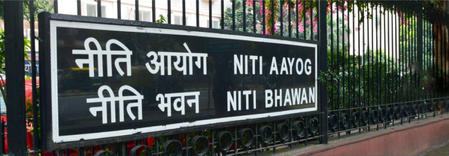
NITI Aayog draws roadmap to boost India’s circular economy

© Provided by The Rahnuma Daily

NITI Aayog draws roadmap to boost India’s circular economy

New Delhi, Jan 27 (IANS) NITI Aayog has launched three reports on Enhancing Circular Economy in End-of-Life Vehicles (ELVs), Waste Tyres and E-waste and Lithium-ion Batteries in India.

These reports analyse challenges in the circular economy ecosystem in India and provide recommendations for infrastructure development, sector formalisation, strengthening the Extended Producer Responsibility (EPR) framework, and enhancing economic potential for revenue generation, according to an official statement issued on Tuesday.

Electronic and electrical equipment, along with lithium-ion batteries and automotive vehicles, will play a pivotal role in powering digitalisation, enhancing mobility, and the broader energy transition.

Electric vehicle (EV) sales increased from 50,000 in 2016 to 2.08 million in 2024, and the government seeks to attain a 30 per cent share of EVs in total vehicle sales by 2030. Consequently, demand for Lithium-ion Batteries is projected to surge from 29 GWh in 2025 to 248 GWh by 2035, the statement said.

The number of end-of-life vehicles (ELVs) in India is expected to increase from 23 million in 2025 to 50 million by 2030. Also, E-waste is expected to rise from 6.19 MMT in 2024 to 14 MMT by 2030. There are significant challenges of sustainable management of ELVs, waste tyres, e-waste and lithium-ion batteries.

This makes a circular economy for these sectors not just an environmental necessity but a strategic imperative, central to realising the Viksit Bharat 2047 vision of sustainable and inclusive growth, the statement explained.

Developed through extensive consultations with key stakeholders, including line ministries, regulators, industry, and knowledge partners, these reports offer a timely and comprehensive review of current challenges, along with actionable recommendations to fast-track the transition to the circular economy. These will improve resource efficiency, strengthen material security, and enhance sustainability in India, the statement said.

The reports were discussed at the International Material Recycling Conference (IMRC) organised by the Material Recycling Association of India in Jaipur on January 22.

The conference and exposition focused on bringing Indian and International Recyclers under one roof for networking and showcasing their business interest, products, technologies, services, new innovations and perspectives.

Over 3,000 delegates and more than 200 exhibitors participated in the event.

The three reports can be accessed at:

https://niti.gov.in/sites/default/files/2026-01/Enhancing-Circular-Economy-of-End-of-Life-Vehicles-ELVs-in-India.pdf

https://niti.gov.in/sites/default/files/2026-01/Enhancing-Circular-Economy-of-Waste-Tyres-in-India.pdf

https://niti.gov.in/sites/default/files/2026-01/Advancing-Circular-Economy-of-Waste-Electronic-and-Electrical-Equipment-Ewaste-and-Lithium-Ion-Batteries-in-India.pdf

share it
Facebook
Twitter
LinkedIn
WhatsApp

Leave a Reply

Your email address will not be published. Required fields are marked *


Latest Post

India can strengthen regional stability in Middle East through maritime cooperation, diplomacy: Report Washington, Oct 31 (IANS) With key maritime routes through the Strait of Hormuz and the Bab el-Mandeb Strait facing growing threats, India has an opportunity to strengthen its role in maritime security and diplomacy in the Middle East, a report has stated. It noted that this could involve examining competing proposals for Gaza, opposing efforts to diplomatically isolate Israel, and revisiting the India-Middle East-Europe Economic Corridor (IMEC) in line with available funding and concrete political commitments. “Threats around Hormuz endanger the Gulf energy supplies that Indian refineries rely on. Houthi attacks around Bab el-Mandeb make Indian exports to Europe more expensive when shipping companies divert vessels around Africa. Insurance premiums and delivery delays reach manufacturers negotiating contracts with European buyers. Saudi Arabia can move oil west through its East-West Pipeline to Yanbu, but insecurity in the Red Sea also threatens shipping from that port. India cannot count on one threatened passage as a dependable alternative to the other,” according to a report in ‘Real Clear Defence’(RCD). “Indian warships have already helped merchant vessels in the western Indian Ocean. New Delhi could expand maritime intelligence exchanges with Riyadh and Abu Dhabi, coordinate escorts when threats warrant them, and use its P-8I surveillance aircraft to help identify suspicious shipping movements. It could press Tehran over attacks affecting Indian crews and cargo while working with Gulf partners on protecting port facilities and oil shipments. Continued attacks would also force a discussion of stronger collective measures to defend commercial navigation,” it detailed. The report noted that India’s sustained ties with Tehran give New Delhi a channel to discuss attacks on shipping while protecting its interests at Chabahar. It added that Saudi Arabia and the UAE could share intelligence on suspected weapons shipments with Indian agencies. Aden’s historic trade links with India also provide scope for cooperation with legitimate Yemeni authorities on port security. Separately, possible links between Houthi and Al-Shabaab across the Gulf of Aden deserve closer attention because trafficking routes and technical exchanges could pose a threat to Indian commercial shipping, the RCD report mentioned. “The original IMEC proposal was unrealistic before the Gaza war. Riyadh showed little willingness to shoulder the enormous infrastructure bill, and Saudi-Israeli normalization was never assured. Saudi Arabia and the UAE were already competing to attract logistics investment and control regional trade routes. Egypt objected to a corridor that could draw traffic away from the Suez Canal, while Bahrain resented being excluded despite its connections with Saudi Arabia and its normalization agreement with Israel,” it noted. –IANS scor/as
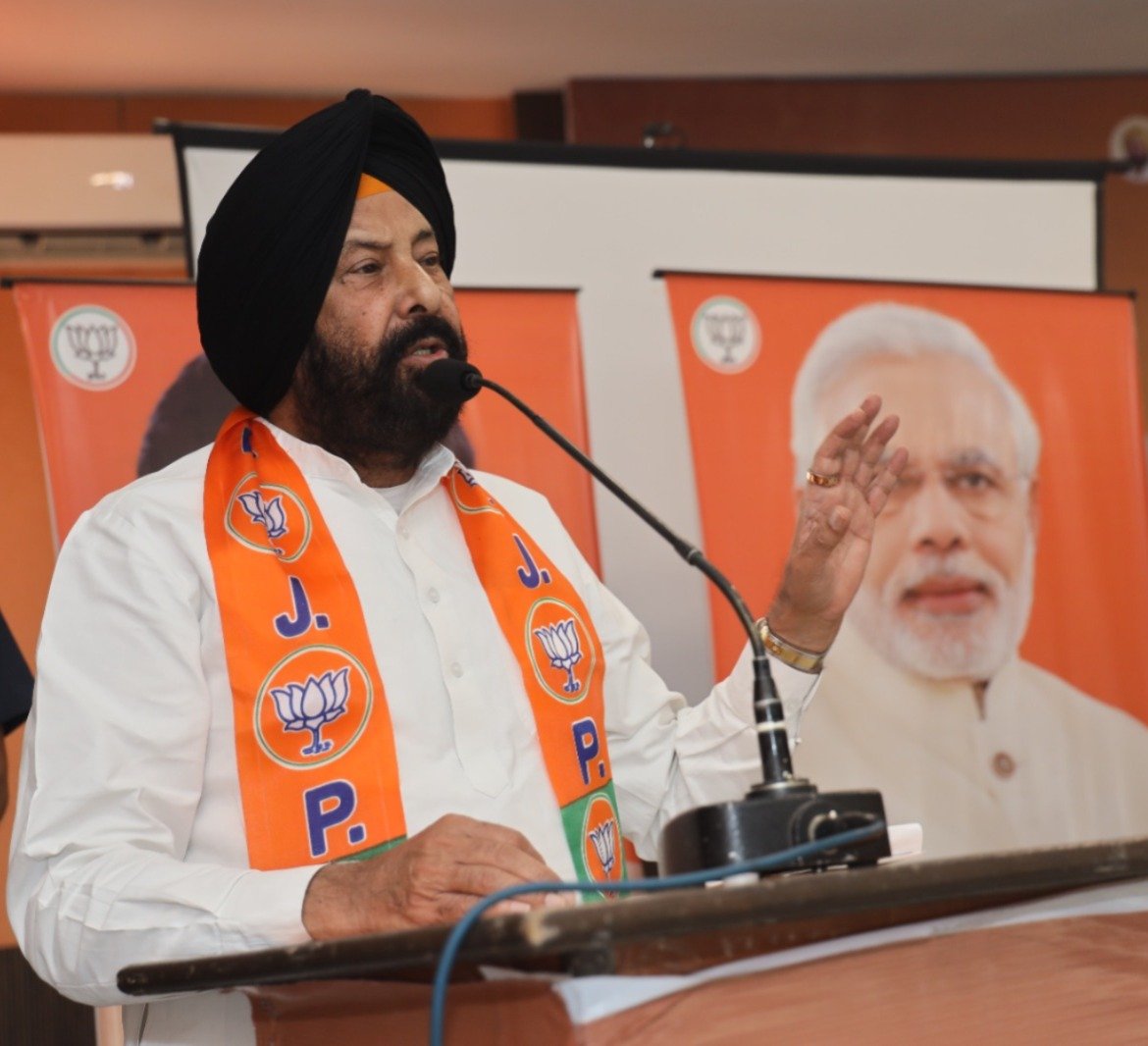
‘40 people responsible for Punjab’s destruction’: BJP lambasts AAP’s poll candidate list Chandigarh, Oct 31 (IANS) Bharatiya Janata Party (BJP) Punjab President Kewal Singh Dhillon on Saturday launched a scathing attack on the Aam Aadmi Party (AAP) following the announcement of its first list of 40 candidates. He said the list is not a list of 40 candidates, but of 40 people responsible for Punjab’s destruction. He added that instead of featuring individuals known for their integrity and commitment to public service, the list included leaders embroiled in serious allegations and controversies. He said the AAP government was misleading people by putting up hoardings across Punjab proclaiming an ‘Honest Chief Minister’. Given the prevailing situation in the state, he remarked that these hoardings should instead read ‘Dishonest Chief Minister’. Several candidates on the list, he alleged, were facing accusations of corruption, fraud, money laundering and other serious offences. Dhillon said that whether AAP announces its candidates now or later, the people of Punjab would not accept them again. Punjab has already fallen victim to the party’s false promises once and will not be misled a second time. The BJP state President said that AAP’s promise of change had come at a high cost to Punjab, with the government failing on every front. He alleged that the party’s leaders and MLAs, who came to Punjab after facing defeat in Delhi, had exploited the state for the past five years and were now preparing to do so again. He asserted that the people of Punjab would never tolerate another attempt to plunder the state. Dhillon said that AAP had devastated Punjab over the past five years. The leaders whom the party has fielded again have been in power for nearly five years and are equally responsible for the state’s decline. Taking the government to task over law and order, he said the situation in Punjab had deteriorated to such an extent that there was virtually no fear of the law. Murders, extortion and incidents of gunfire had become commonplace. He further alleged that the government had failed miserably to curb the drug menace, with young people continuing to fall victim to drug abuse every day. –IANS vg/dan
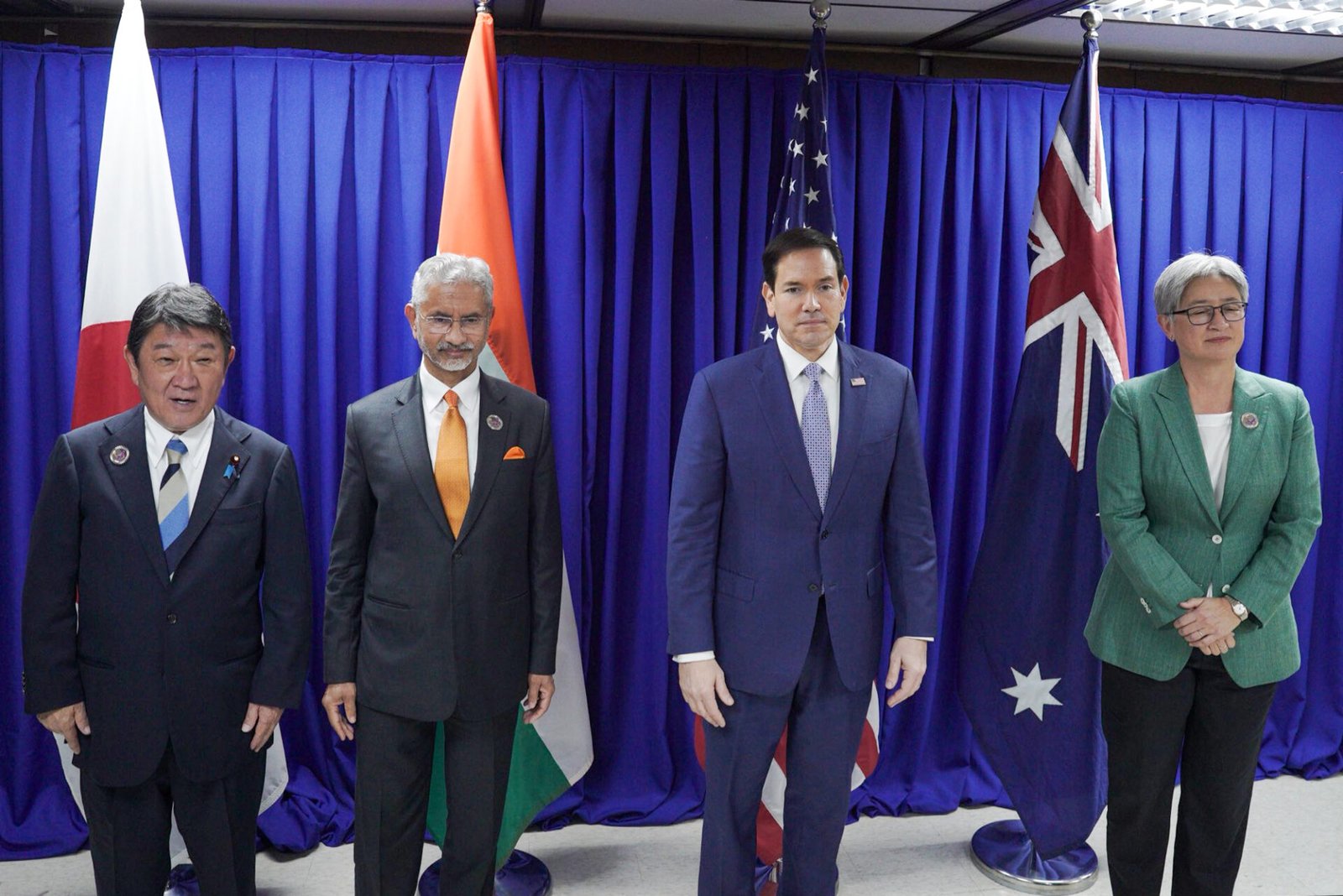
Quad ministers meet in Atlanta with leaders’ summit in view Atlanta, Oct 31 (IANS) External Affairs Minister S. Jaishankar will join his US, Japanese and Australian counterparts for a Quad foreign ministers’ meeting here on Saturday, talks that experts said would help lay the groundwork for a long-stalled Quad leaders’ summit and test the group’s cohesion amid strains in India-US ties. The meeting, hosted by Secretary of State Marco Rubio on the sidelines of the G20 Foreign Ministers’ Meeting, is scheduled for 9 a.m. (local time) on Saturday. Rubio will then take part in the G20’s third session, on supply chains, and deliver closing remarks at 10 a.m., before holding a press availability on the ministerial at 12:30 p.m., the schedule said. Japanese Foreign Minister Toshimitsu Motegi and Australian Foreign Minister Penny Wong are in Atlanta for the G20 talks. “Together, we will advance practical cooperation on regional security, maritime security and economic resilience in support of a peaceful, stable and prosperous Indo-Pacific,” Wong said in a statement ahead of the visit. Announcing EAM Jaishankar’s visit on Wednesday, Ministry of External Affairs spokesperson Randhir Jaiswal said: “On the sidelines of this meeting, he will also participate in a QUAD Foreign Ministers’ Meeting and also have several bilateral engagements with his counterparts.” Farwa Aamer, Director of South Asia Initiatives at the Asia Society Policy Institute, said the ministers “are expected to lay the groundwork for the long-stalled leaders’ summit in Manila next month.” “Despite the bilateral trust issues that have seeped in over the past year, particularly between India and the United States, the Quad is that one vehicle where you see officials still championing alignment on the Indo-Pacific, supply chains, and economic security,” Aamer said. She cautioned that the meeting “may, however, remain more of an optics game,” noting that much of the Quad agenda was “being worked out bilaterally between its members,” from critical minerals to energy. Emma Chanlett-Avery, ASPI’s Senior Director of Political-Security Affairs, said a leaders’ meeting “will be welcome news to Tokyo, Canberra, and Delhi.” But she warned that it “could be overshadowed by a potential trilateral summit with Trump, Putin, and Xi just a day later, presenting a very different vision of a world order dominated by authoritarian leaders.” Maritime security is set to feature prominently. At the G20’s first plenary on Friday, EAM Jaishankar stressed the “Urgent need to preserve the freedom of navigation and ensure cessation of attacks within the framework of international law, especially UNCLOS,” and said the “Global South is disproportionately bearing the consequences of attacks on civilian shipping and seafarers,” according to his post on X. At the second plenary, on energy, EAM Jaishankar “Reaffirmed that India needs reliable and predictable LPG supplies for its clean cooking needs,” he posted. Rubio said on X that he had told the G20 that “maritime and food security drive economic security.” On Friday evening, Rubio, Motegi and South Korea’s Cho Hyun signed a memorandum creating a Trilateral Arctic Pacific Partnership, Rubio said. Wong said Australia had joined the European Union-led “No Fees/No Tolls” pledge, “opposing unlawful fees and tolls that would undermine freedom of navigation and set a dangerous precedent for international shipping.” The Quad meeting comes a week after Rubio’s visit to India. On Friday EAM Jaishankar met the foreign ministers of Argentina, Canada, Mexico, Brazil and Germany on the sidelines. EAM Jaishankar travels from Atlanta to Antigua and Barbuda for the Commonwealth Heads of Government Meeting from November 1 to 4. –IANS lkj/rs
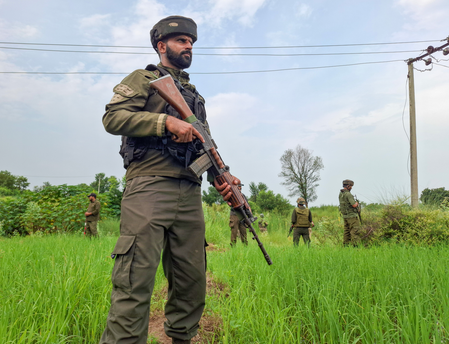
ISI-backed Kashmir Study Group shifts terror strategy to south India amid intensified security in north New Delhi, Oct 30 (IANS) Pakistan’s Inter-Services Intelligence (ISI) has expanded its tactical focus toward south India on the recommendation of the Kashmir Study Group (KSG), seeking to exploit pre-existing radicalised networks in states like Kerala, Karnataka, and Tamil Nadu as security grids tighten across north India, including Jammu and Kashmir, intelligence officials have revealed. The ISI’s internal study group KSG was set up after the abrogation of Article 370 in 2019 and is now led by high-ranking military officers in the ranks of a Brigadier and a Colonel. Initially tasked with advising the Pakistani establishment on Jammu and Kashmir, its brief is said to have expanded over the past two to three years to cover other parts of India. In its latest assessment, the KSG is understood to have advised the ISI to explore recruiting radicalised individuals in southern states. An official said the proposed shift followed increased security pressure in Jammu and Kashmir and disruption of networks in northern India. Security agencies in Jammu and Kashmir remain on high alert, making it harder for terror groups to operate, the official said. “The KSG had earlier recommended proxy organisations, including The Resistance Front (TRF), the People’s Anti-Fascist Front (PAFF), Kashmir Tigers and Allah Tigers. These groups were created to provide both the Lashkar-e-Taiba (LeT) and Jaish-e-Mohammed (JeM) with a degree of deniability,” the official said. In the north, after the Red Fort car bomb blast in Delhi last year, the ISI, on the advice of the KSG, recruited Shahzad Bhatti to carry out recruitments through social media. This network, which was busted recently, recruited across North India. Those recruited were assigned tasks including drug smuggling, installing surveillance cameras at sensitive locations, and carrying out targeted attacks, the official said. The recruits were paid to smuggle drugs, install surveillance cameras at sensitive and crowded locations, and also carry out hit jobs. Another official said that with these modules failing, the KSG has advised the ISI to shift its focus to south India. “Shifting attention to the south could divert the focus of security agencies from Jammu and Kashmir and northern India. It would also give the ISI time to review and reorganise its operations in those regions,” the official said. An Intelligence Bureau official said Al Qaeda and the Islamic State had, over the years, sought to expand their influence in parts of southern India, particularly Kerala, Karnataka and Tamil Nadu. “Kerala, Karnataka and Tamil Nadu have been hot hubs for these terror outfits. The radicalisation is so deep in south India that the KSG felt that it would be fit to tap these individuals and get them to carry out terror acts for the ISI,” the official said. The ISI has agents in several countries and has relied on overseas contacts for recruitment in India, officials alleged. They said Pakistan-based handlers sought to avoid direct contact with recruits, making it harder for investigators to establish links to the Pakistani establishment. Officials said such precautions had become more important after Operation Sindoor, when India declared that future acts of terrorism would be treated as acts of war, not merely as cross-border terrorism. They said this had increased pressure on Pakistan-based networks to conceal their involvement. The KSG, during recent interactions with the top brass of the ISI, has advised tapping into the radicalised youth in the Southern states. There is not much for the ISI agents to do where radicalisation is concerned, as Al-Qaeda and Islamic State have already undertaken that exercise. This means the ISI could tap into the already existing pool of talent and then pick them up for subversive activities, officials say. The very fact that this pool from south India has exposure to radical Islamic ideologies in West Asia makes them easy prey for the ISI’s recruiters. This change in strategy is not only a stop-gap arrangement until the ISI recalibrates in north India and Jammu and Kashmir. This is also a part of the strategy whereby the Pakistan spy agency taps into radicalised individuals across the country in a bid to run a pan-India operation. Officials explain that those radicalised by the Islamic State or Al Qaeda do not have an exclusive affiliation. These persons have been radicalised by violent ideology and not based on a particular group. The idea of both these groups was to create a completely radicalised society, with violent Jihad being the primary goal. Al Qaeda or the Islamic State would not necessarily oppose the ISI approaching this pool of individuals, as their objective is the destruction of India and they would welcome an ISI intervention in it, another official said.
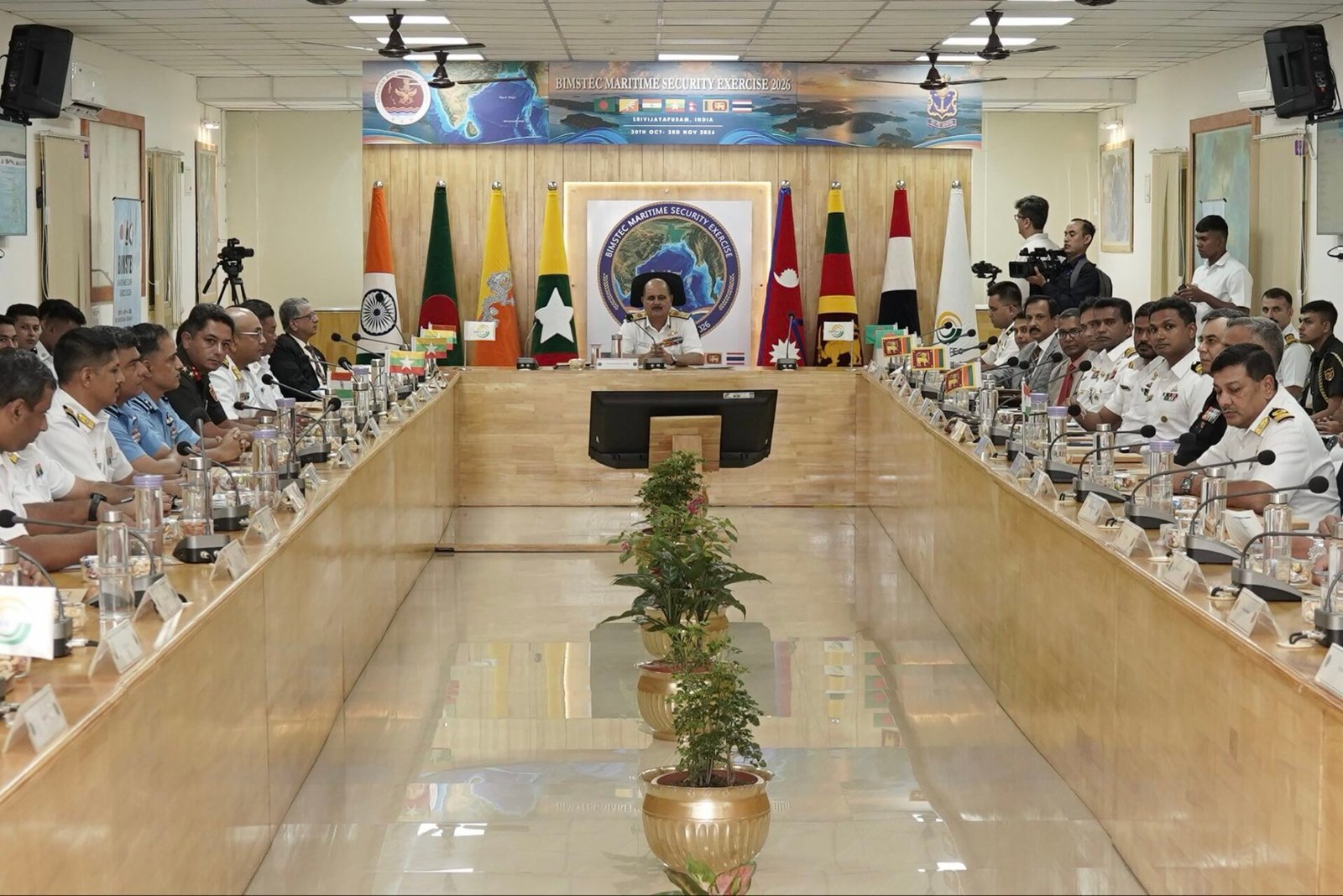
India hosts maiden BIMSTEC maritime security exercise in Andaman and Nicobar Islands New Delhi, Oct 31 (IANS) India is hosting the maiden BIMSTEC Maritime Security Exercise in Sri Vijaya Puram, the capital of the Union Territory of Andaman and Nicobar Islands, to strengthen maritime cooperation, enhance operational coordination and interoperability among member countries, the Ministry of External Affairs (MEA) announced on Saturday. The exercise, which commenced on Friday and will continue until November 3, is among the key initiatives announced by Prime Minister Narendra Modi at the 6th BIMSTEC Summit in Thailand last year. It features three days of Tabletop Exercises followed by a two-day Harbour Phase, with ships from BIMSTEC member countries participating. In a post on X, the MEA said, “The exercise translates the shared vision of BIMSTEC leaders into action, reinforcing maritime cooperation, enhancing operational coordination and interoperability, and contributing towards a safe, secure and stable maritime environment in the Bay of Bengal.” According to Andaman and Nicobar Command, the maiden BIMSTEC Maritime Security Exercise was inaugurated at Sri Vijaya Puram on Friday by Vice Admiral Vineet McCarty, Commander-in-Chief, Andaman and Nicobar Command. The ceremony was attended by Vice Admiral Biswajit Dasgupta, National Maritime Security Coordinator, along with senior delegations from Bangladesh, Myanmar and Sri Lanka. “Anchored in the Delhi Declaration, the exercise marks a significant step towards translating shared maritime security commitments into coordinated action at sea. It aims to enhance interoperability, strengthen information sharing and promote collective responses to maritime threats and transnational challenges, including terrorism,” Andaman & Nicobar Command posted on X on Saturday. The exercise aims to enhance maritime domain awareness (MDA), build operational coordination across the Bay of Bengal, strengthen regional security cooperation, humanitarian assistance and disaster relief (HADR), and responses to cross-border maritime crimes as well as marine pollution due to oil and hazardous material spills. BIMSTEC (the Bay of Bengal Initiative for Multi-Sectoral Technical and Economic Cooperation) is a regional organisation comprising Bangladesh, Bhutan, India, Myanmar, Nepal, Sri Lanka, and Thailand. Over the years, BIMSTEC has emerged as a vibrant and dynamic regional organisation. Member states share the vision of a free, peaceful, stable, and prosperous Indian Ocean Region (IOR). –IANS scor/sd/

Get free tips and resources right in your inbox, along with 10,000+ others

Related Article