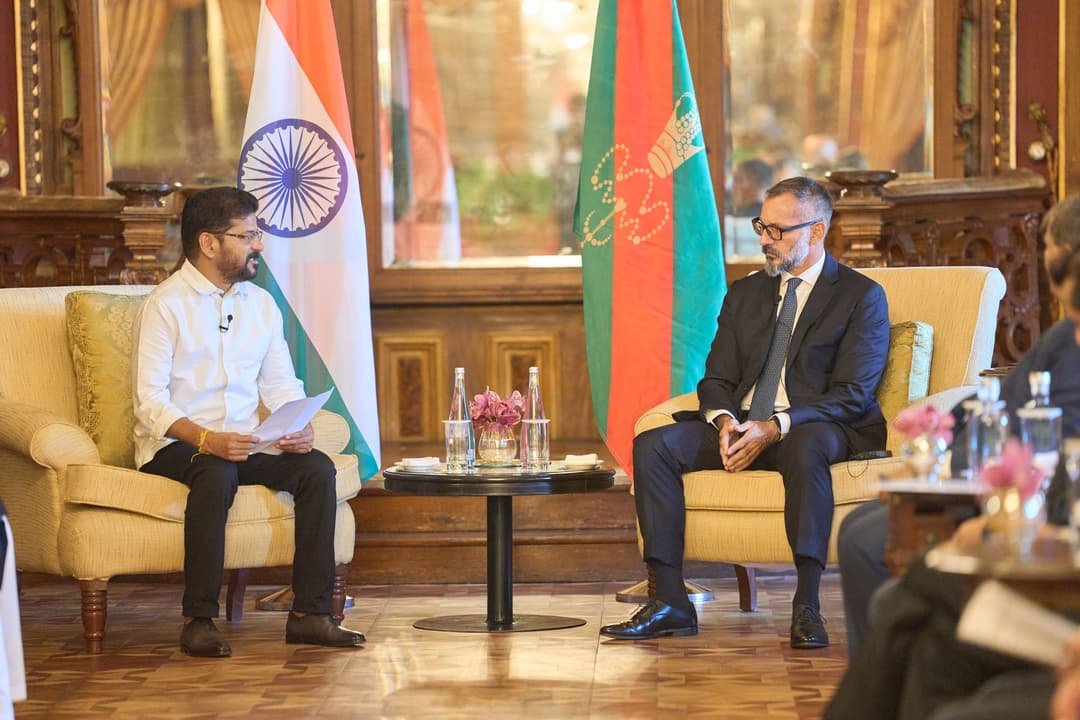
Telangana, 15 September 2026: His Highness Prince Rahim Aga Khan V, the 50th hereditary Imam of the Ismaili Muslims and Chair of the Aga Khan Development Network (AKDN), met today with the Honourable Chief Minister of Telangana, Shri A. Revanth Reddy, during His Highness’s first official visit to India since becoming Imam in February 2025, following the passing of his father, His Late Highness Prince Karim Aga Khan IV.
During the Telangana leg of the visit, he also met with the Honourable Governor of Telangana, Shri Shiv Pratap Shukla, on 14 September, who called for further strengthening cooperation between the State and the Aga Khan Development Network in education, healthcare, urban development and community welfare.
The meeting provided an opportunity to reaffirm the longstanding partnership between the Ismaili Imamat, the Aga Khan Development Network and the Government of Telangana, and to discuss opportunities to deepen collaboration in areas aligned with the State’s development priorities.
The Chief Minister expressed his highest respect for the work of the Aga Khan Development Network in Telangana and recalled the significant contributions of His Late Highness the Aga Khan IV to India and its people. He also remembered the conferment of the Padma Vibhushan on His Late Highness in 2015, in recognition of his distinguished contribution to the country and his longstanding work across development, education, culture and heritage.
The discussions reflected on AKDN’s longstanding work in Telangana across cultural heritage, education, healthcare, urban development and community development. The Chief Minister recalled His Highness’s visit to the Qutb Shahi Heritage Park in 2024 for the inauguration of the restored heritage complex and expressed his appreciation for the conservation and landscape development work undertaken by the Aga Khan Trust for Culture, which represents a notable example of public-private partnership.
The Chief Minister also expressed his appreciation for the Aga Khan Trust for Culture’s work at the Old Assembly Building in Hyderabad, as well as AKDN’s contribution to education, including through the Aga Khan Academy Hyderabad and other initiatives supporting human development and opportunity.
The discussion also covered AKDN’s work in community healthcare, women-led development and employment generation, and the importance of ensuring that such initiatives continue to create tangible benefits for local communities.
Looking ahead, the Chief Minister and His Highness discussed Telangana’s contribution to the Viksit Bharat 2047 vision and the State’s own Telangana Rising 2047 roadmap. The Chief Minister highlighted the importance of partnerships between government, development organisations and other stakeholders in advancing inclusive, sustainable and people-centric development, and recognised the potential of AKDN’s public-private partnership model to contribute to these broader development priorities.
His Highness said: “Meeting with the Honourable Chief Minister provides an opportunity to reaffirm the partnership between the Government of Telangana, the Ismaili Imamat and the Aga Khan Development Network. I greatly value the cooperation that has enabled us to contribute to improving the quality of life and creating opportunities for people in Telangana. The experience of our partnership across areas such as cultural heritage, education, healthcare and community development provides a strong foundation for continuing to strengthen this relationship and exploring further areas of collaboration in support of shared development priorities.”
His Highness’s first official visit to India since becoming Imam included engagements in New Delhi, Gujarat, Maharashtra and Telangana. Across the visit, His Highness met with senior national and state leaders to discuss the work of the Aga Khan Development Network, areas of mutual interest and opportunities for future partnership, and met members of the Ismaili community in India.
Institutions of the Ismaili Imamat have been present in India since the 19th century, when community institutions were first created. Those early roots grew into major national institutions that today serve over 9 million people through programmes and institutions encompassing rural and urban development, culture, economic inclusion, health, habitat, early childhood development, education and climate resilience.