Search News
Search
Close this search box.

Meghalaya faces severe water crisis as rainfall deficit touches 85 pc in Oct Shillong, Nov 2 (IANS) Meghalaya is facing growing concerns over water security after recording an 85 per cent rainfall deficit in October, with the state receiving only 38.3 mm of rain against the monthly normal of 255 mm, officials said on Monday. The sharp shortfall comes after an exceptionally deficient southwest monsoon, during which Meghalaya received just 1,077.1 mm of rainfall between June and September, against the seasonal normal of 2,695.3 mm, marking a deficit of 60 per cent. The rainfall shortage intensified as the monsoon progressed, with the deficit rising from 9 per cent in July to 38 per cent in August. The state received 359.7 mm of rainfall in August against the normal of 581.6 mm. The situation was widespread across Meghalaya, with all 11 districts recording large rainfall deficits in October. The shortfall ranged between 74 and 93 per cent, highlighting the severity of the situation across the hill state. South West Garo Hills recorded the highest deficit at 93 per cent, followed by East Jaintia Hills and North Garo Hills at 92 per cent each. East Khasi Hills registered a 91 per cent shortfall, while West Garo Hills recorded 86 per cent. South West Khasi Hills and West Khasi Hills reported deficits of 84 per cent each, followed by East Garo Hills at 81 per cent and West Jaintia Hills at 80 per cent. Ri Bhoi and South Garo Hills recorded the lowest deficits at 74 per cent each. The prolonged rainfall shortage has raised concerns over drinking water availability, particularly in rural and remote areas where communities depend heavily on natural springs. Chief Minister Conrad K. Sangma has earlier acknowledged water-supply challenges in several projects under the Jal Jeevan Mission, attributing them partly to declining water sources, changing rainfall patterns and climatic conditions. The Public Health Engineering Department has mapped around 55,000 springs across more than 70,000 springsheds and identified 785 critical water sources for rejuvenation. The worsening rainfall deficit has renewed concerns over the vulnerability of Meghalaya’s spring-fed water systems and the need for long-term conservation measures. –IANS tdr/dan

© Provided by The Rahnuma Daily

Meghalaya faces severe water crisis as rainfall deficit touches 85 pc in Oct Shillong, Nov 2 (IANS)

Rahnuma:Meghalaya is facing growing concerns over water security after recording an 85 per cent rainfall deficit in October, with the state receiving only 38.3 mm of rain against the monthly normal of 255 mm, officials said on Monday. The sharp shortfall comes after an exceptionally deficient southwest monsoon, during which Meghalaya received just 1,077.1 mm of rainfall between June and September, against the seasonal normal of 2,695.3 mm, marking a deficit of 60 per cent. The rainfall shortage intensified as the monsoon progressed, with the deficit rising from 9 per cent in July to 38 per cent in August. The state received 359.7 mm of rainfall in August against the normal of 581.6 mm.

The situation was widespread across Meghalaya, with all 11 districts recording large rainfall deficits in October. The shortfall ranged between 74 and 93 per cent, highlighting the severity of the situation across the hill state. South West Garo Hills recorded the highest deficit at 93 per cent, followed by East Jaintia Hills and North Garo Hills at 92 per cent each. East Khasi Hills registered a 91 per cent shortfall, while West Garo Hills recorded 86 per cent. South West Khasi Hills and West Khasi Hills reported deficits of 84 per cent each, followed by East Garo Hills at 81 per cent and West Jaintia Hills at 80 per cent. Ri Bhoi and South Garo Hills recorded the lowest deficits at 74 per cent each.

The prolonged rainfall shortage has raised concerns over drinking water availability, particularly in rural and remote areas where communities depend heavily on natural springs. Chief Minister Conrad K. Sangma has earlier acknowledged water-supply challenges in several projects under the Jal Jeevan Mission, attributing them partly to declining water sources, changing rainfall patterns and climatic conditions. The Public Health Engineering Department has mapped around 55,000 springs across more than 70,000 springsheds and identified 785 critical water sources for rejuvenation. The worsening rainfall deficit has renewed concerns over the vulnerability of Meghalaya’s spring-fed water systems and the need for long-term conservation measures. –IANS tdr/dan
share it
Facebook
Twitter
LinkedIn
WhatsApp

Leave a Reply

Your email address will not be published. Required fields are marked *

Latest Post

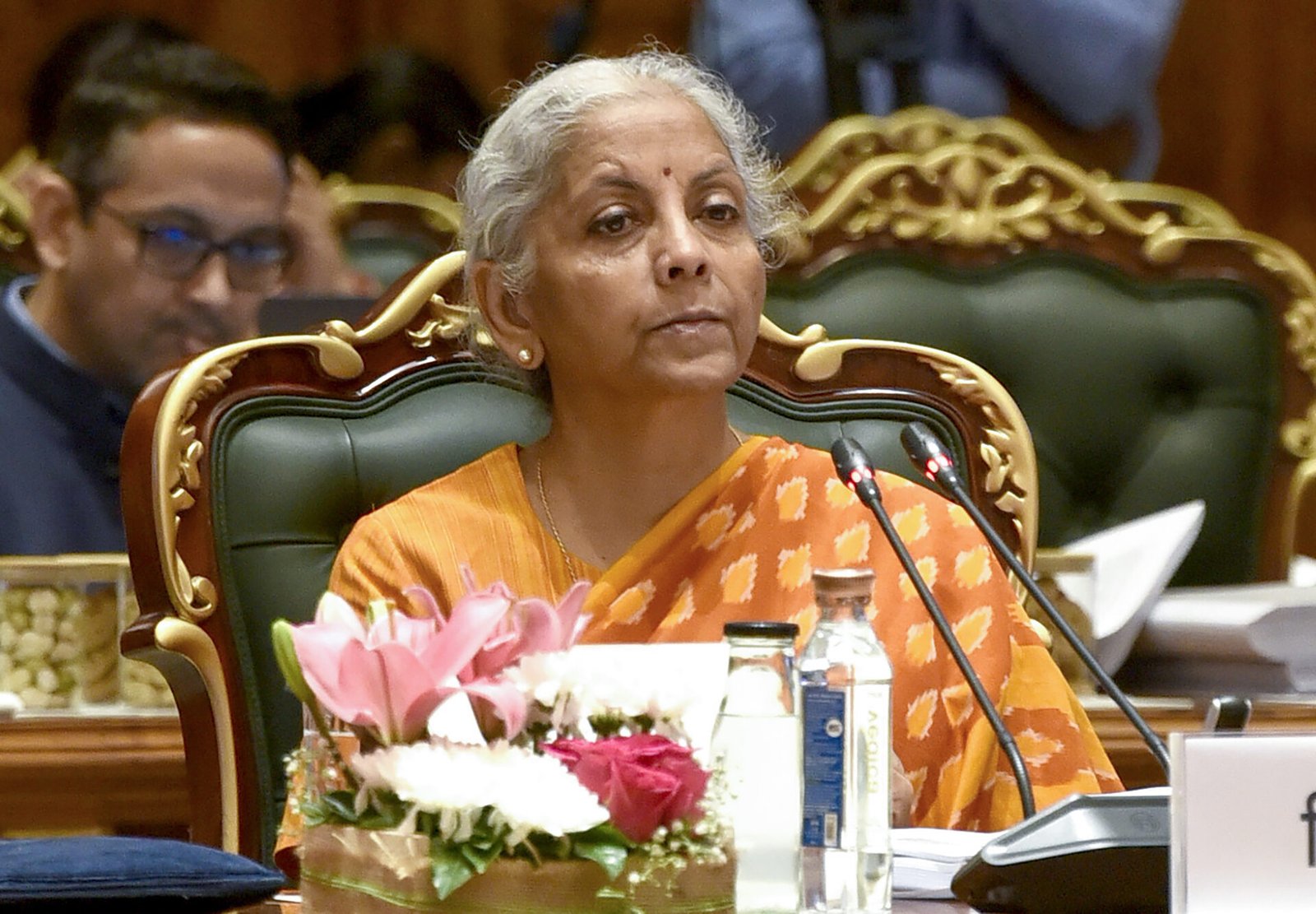
Will assess FPI demands on LTCG tax; expects Tata Trusts-Tata Sons issues to be settled amicably, says FM Sitharaman Mumbai, Nov 2 (IANS) Finance Minister Nirmala Sitharaman on Monday expressed confidence that the issues within the Tata Group, including differences over the re-appointment of its chairman and the proposed listing of Tata Sons, would be resolved amicably through internal discussions. Speaking at the Financial Express Leadership Awards here, FM Sitharaman described the matter as a sensitive issue involving significant commercial and business considerations, and said it should be settled by the concerned parties rather than through public disagreements. Highlighting the Tata Group’s importance to the Indian economy, she pointed to the conglomerate’s global brand value, the contribution of the Parsi community in building the group, and the wide range of sectors in which Tata companies operate. “I know the brand value of Tata, the contribution of the Parsee community to make Tata a huge global brand. I also know the expanse of activities in which Tatas are invested. So this is a very critical component to the Indian economy and therefore it has to be amicably settled between themselves,” FM Sitharaman said. The Finance Minister urged all stakeholders to engage in dialogue and restore normalcy at the earliest, adding that prolonged public disputes were not desirable for an institution of such stature. Addressing another key issue concerning investors, FM Sitharaman said the government would listen to concerns raised by foreign portfolio investors (FPIs) regarding India’s capital gains tax regime before deciding on any course of action. Speaking amid growing demands for a reduction in long-term capital gains (LTCG) tax, the minister acknowledged that changing market conditions and foreign investment outflows had intensified calls for a reassessment of the tax structure. “These are very delicate matters, and a lot of business and commercial acumen will have to come into play,” the finance minister said. FM Sitharaman, however, noted that the existing taxation framework was the same during 2023, when India witnessed record foreign investment inflows. “The taxation structure was what it is today even in 2023, when inflows were at record highs. Today, the circumstances have changed. FII outflows have happened, and voices of concern are louder. I will consider all this,” FM Sitharaman mentioned. The Finance Minister indicated that the government would weigh multiple factors before considering any changes to the current tax regime, while taking into account concerns voiced by global investors. –IANS pk
Meghalaya faces severe water crisis as rainfall deficit touches 85 pc in Oct Shillong, Nov 2 (IANS) Meghalaya is facing growing concerns over water security after recording an 85 per cent rainfall deficit in October, with the state receiving only 38.3 mm of rain against the monthly normal of 255 mm, officials said on Monday. The sharp shortfall comes after an exceptionally deficient southwest monsoon, during which Meghalaya received just 1,077.1 mm of rainfall between June and September, against the seasonal normal of 2,695.3 mm, marking a deficit of 60 per cent. The rainfall shortage intensified as the monsoon progressed, with the deficit rising from 9 per cent in July to 38 per cent in August. The state received 359.7 mm of rainfall in August against the normal of 581.6 mm. The situation was widespread across Meghalaya, with all 11 districts recording large rainfall deficits in October. The shortfall ranged between 74 and 93 per cent, highlighting the severity of the situation across the hill state. South West Garo Hills recorded the highest deficit at 93 per cent, followed by East Jaintia Hills and North Garo Hills at 92 per cent each. East Khasi Hills registered a 91 per cent shortfall, while West Garo Hills recorded 86 per cent. South West Khasi Hills and West Khasi Hills reported deficits of 84 per cent each, followed by East Garo Hills at 81 per cent and West Jaintia Hills at 80 per cent. Ri Bhoi and South Garo Hills recorded the lowest deficits at 74 per cent each. The prolonged rainfall shortage has raised concerns over drinking water availability, particularly in rural and remote areas where communities depend heavily on natural springs. Chief Minister Conrad K. Sangma has earlier acknowledged water-supply challenges in several projects under the Jal Jeevan Mission, attributing them partly to declining water sources, changing rainfall patterns and climatic conditions. The Public Health Engineering Department has mapped around 55,000 springs across more than 70,000 springsheds and identified 785 critical water sources for rejuvenation. The worsening rainfall deficit has renewed concerns over the vulnerability of Meghalaya’s spring-fed water systems and the need for long-term conservation measures. –IANS tdr/dan
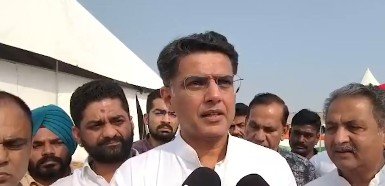
AAP has pushed Punjab towards drug addiction, lawlessness: Sachin Pilot Sangrur (Punjab), Nov 2 (IANS) Congress in-charge for Punjab Sachin Pilot on Monday accused the Aam Aadmi Party (AAP) government of pushing the state towards a crisis of drug addiction and deteriorating law and order, alleging that killings had become commonplace and the police had lost public trust. Ahead of Leader of the Opposition in the Lok Sabha Rahul Gandhi’s scheduled visit to Punjab, Pilot said the Congress would raise issues affecting the state’s people at the ‘Insaaf Rally’ in Sangrur on November 4 and that his visit is a positive sign for Punjab. “In the last few years, the AAP has completely ruined Punjab. The entire state has been pushed towards addiction, and murders and killings have become normal. In the last two years, 395 innocent people have been shot. The police have been rendered helpless. They are working as yes-men of the government, thus losing the trust of the people,” he alleged. He said the rally would bring together Congress workers, farmers, young people and members of the public from across Punjab to demand justice and draw attention to issues such as drug addiction and violence. “Rahul Gandhi will address an ‘Insaaf Rally’ in Sangrur on November 4. He will meet the people of Punjab to demand their rights and justice and to address issues such as drugs and violence. It will be a historic rally, with party workers from across the state, as well as members of the public, farmers and youth, participating,” Pilot said. He added that the rally would mark the beginning of efforts to find a way to restore Punjab. Pilot described Rahul Gandhi’s visit as an opportunity for the Congress to consolidate its organisation and reach out to the people ahead of the upcoming elections. “Rahul Gandhi coming to the state is a positive sign. The entire party is working together with zeal so that the message can be sent to the masses that Congress will win the upcoming elections and serve the people dedicatedly,” he said. The Congress leader also targeted the AAP over reports of prominent leaders and Rajya Sabha members leaving the party, arguing that the departures reflected growing dissatisfaction with its functioning and failure to deliver on its promises. “The crack has been open for long. Several AAP Rajya Sabha members have left the party, and prominent leaders are also quitting because the party has completely failed to deliver on the issues and promises on which it was founded and with which it entered Punjab,” Pilot said. Questioning the AAP leadership’s response to those leaving the party, he asked how it could retain public confidence if its own elected representatives no longer trusted it. “If your MLAs and MPs do not trust you, how can the public trust you? Now, you are saying that the ones who are leaving were useless; then why did you bear with them for the last five years? Why did you give them important positions in the cabinet?” he asked. Calling the AAP’s response arrogant, Pilot asserted that the principal political contest in Punjab was between the Congress and the ruling party. “This is arrogance and pride, and the real competition is between AAP and Congress,” he said. –IANS sud/vd
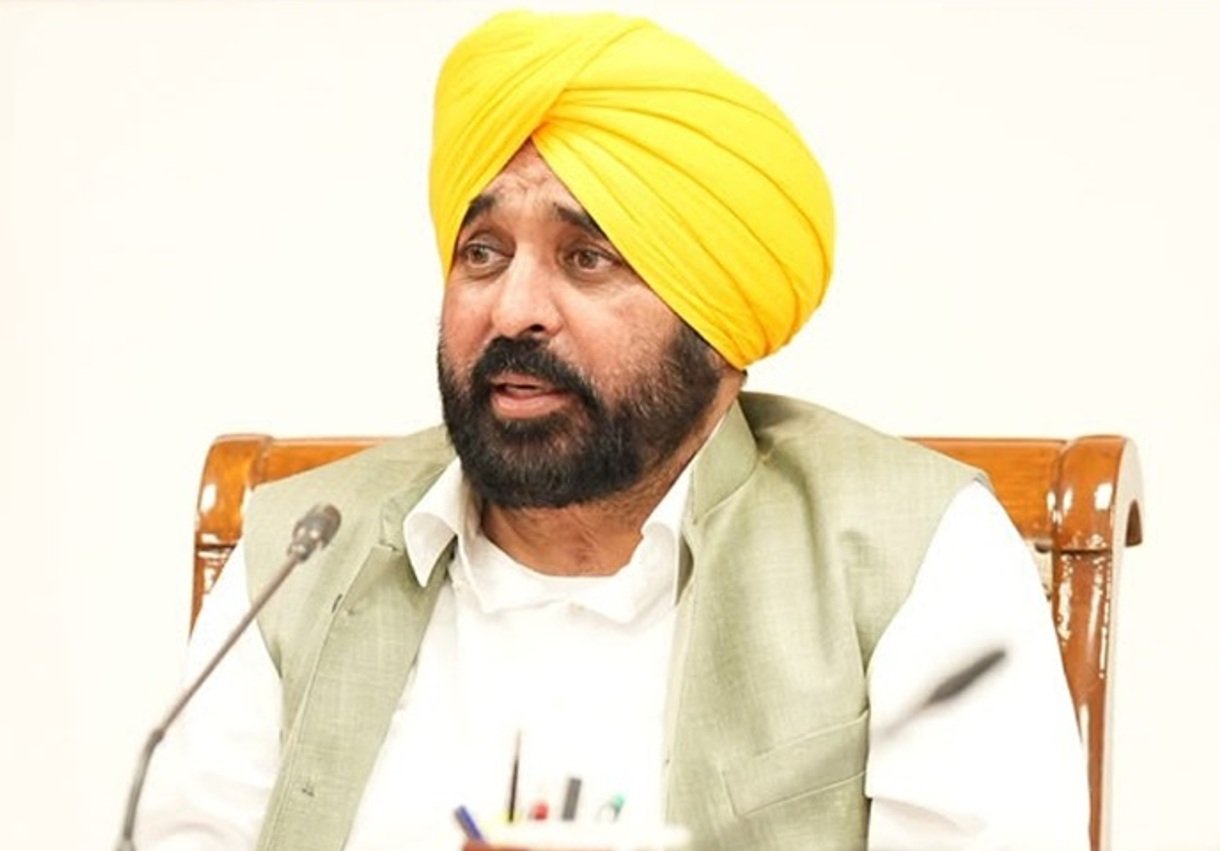
Congress, Akalis, BJP joined hands to derail development: Punjab CM Chandigarh, Nov 2 (IANS) Punjab Chief Minister Bhagwant Mann on Monday slammed the Congress, the Akali Dal and the BJP, calling them deeply corrupt parties that had joined hands to derail the state’s development and protect their shared political interests. Describing the forthcoming political battle as ‘One vs All’, he said that despite having different flags and election symbols, these parties shared the same intention of looting Punjab and exploiting its people. At a public gathering in Ghanaur in Patiala, the Chief Minister said the traditional parties are uncomfortable because an ordinary family’s son was honestly working for the welfare of every section of society. He asserted that the love and blessings of Punjabis were his greatest strength and warned the Opposition that, just as in 2022, the people would send its big leaders back home in 2027 as well. The Chief Minister pointed out that they have different flags and election symbols, but their intentions are the same. They cannot tolerate the fact that Punjab’s resources are now being utilised for the welfare of Punjabis rather than a handful of political families. He said these political parties were united in their efforts to loot Punjab, whereas he had shared the joys and sorrows of 3.25 crore Punjabis. The traditional parties were targeting him because they had realised that people were no longer willing to accept their politics of deception, corruption and family interests. “During their tenure, the Akali leadership developed interests in almost every business. These leaders forcibly took their share in every business venture, whereas I have chosen to share the happiness, struggles and hardships of ordinary people. They are uncomfortable because our government is working for the common people rather than powerful families,” he added. Highlighting the affection he received during his visits to villages, CM Mann said people’s love and blessings were his greatest strength and reward for serving Punjab. “Whenever I visit villages, my turban gets filled with flowers as people shower their love, blessings and affection on me. I do not have the backing of powerful families or wealthy interests, but I have the blessings of the people. As long as the people of Punjab stand with me, I do not care about the opposition,” he added. –IANS vg/dan
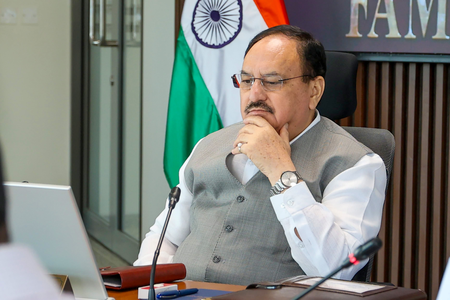
Gujarat: JP Nadda inaugurates AIIMS Rajkot’s Rs 39-crore cancer treatment facility Rajkot, Nov 2 (IANS) Cancer patients in Saurashtra will no longer have to travel long distances for several advanced radiotherapy procedures, with AIIMS Rajkot inaugurating a Rs 39-crore facility equipped with modern radiation treatment technology on Monday. The facility was inaugurated virtually by Union Health and Family Welfare Minister Jagat Prakash Nadda. It is expected to serve patients from Rajkot, Saurashtra and neighbouring districts, particularly those from rural and semi-urban areas who face financial and logistical difficulties in accessing specialised cancer treatment. Gujarat Minister of State for Health, Family Welfare and Medical Education, Praful Pansheriya, also joined the inauguration ceremony through video conferencing from Gandhinagar. Addressing the programme, Pansheriya said the facility would provide significant relief to cancer patients and their families, who often have to undertake long journeys for treatment and follow-up consultations. “Cancer affects not only the patient but the entire family. Travelling long distances for treatment and follow-up increases the financial and emotional burden on patients and their families. The availability of this facility at AIIMS Rajkot will provide major relief, particularly to patients from rural, semi-urban and economically weaker families,” he said. Developed with an investment of approximately Rs 39 crore by the Central government, the facility houses a high-energy Linear Accelerator, a wide-bore CT simulator and a High Dose Rate (HDR) brachytherapy unit. The equipment will allow treatment using techniques such as Intensity-Modulated Radiation Therapy (IMRT), Volumetric Modulated Arc Therapy (VMAT), Image-Guided Radiotherapy, stereotactic techniques and brachytherapy. These methods allow radiation treatment to be delivered with greater precision while improving the protection of surrounding healthy tissues. Patients with different types of cancer, including head and neck, gynaecological and breast cancers, will be able to access these specialised treatment options at the institute. Referring to the Ayushman Bharat-Pradhan Mantri Jan Arogya Yojana, Pansheriya said: “Financial assistance under the scheme is important in ensuring that eligible patients can access treatment. The government’s priority is to ensure that no family is deprived of necessary cancer care because of financial constraints.” He also highlighted the state government’s focus on strengthening healthcare infrastructure, developing trained medical manpower, promoting early diagnosis, improving referral systems and increasing public awareness about cancer. “Apart from providing treatment, AIIMS Rajkot would contribute to medical education, professional training, research and public health,” he added. Pansheriya congratulated the Union Health Ministry, the AIIMS Rajkot leadership, its Department of Radiation Oncology and the medical, technical and administrative teams involved in establishing the facility. He also acknowledged Nadda’s support and expressed confidence that the facility would benefit thousands of cancer patients and their families. Lok Sabha MP Parshottam Rupala, Rajya Sabha MP Kesaridevsinh Jhala, Union Health and Family Welfare Ministry Secretary Punya Salila Srivastava, AIIMS Rajkot President Prof Dr J S Titiyal and Executive Director and Chief Executive Officer Prof Dr L N Doraijaran were among those present. Faculty members, doctors, healthcare workers and students also attended the programme. –IANS mys/dan

Get free tips and resources right in your inbox, along with 10,000+ others

Related Article