From Hazrat Pirane Pir Shaykh Abdul Qadir Jilani’s noble line to Cyprus’s spiritual heart — how a global Sufi leader’s beliefs on Imam al-Mahdi challenge sectarian divides
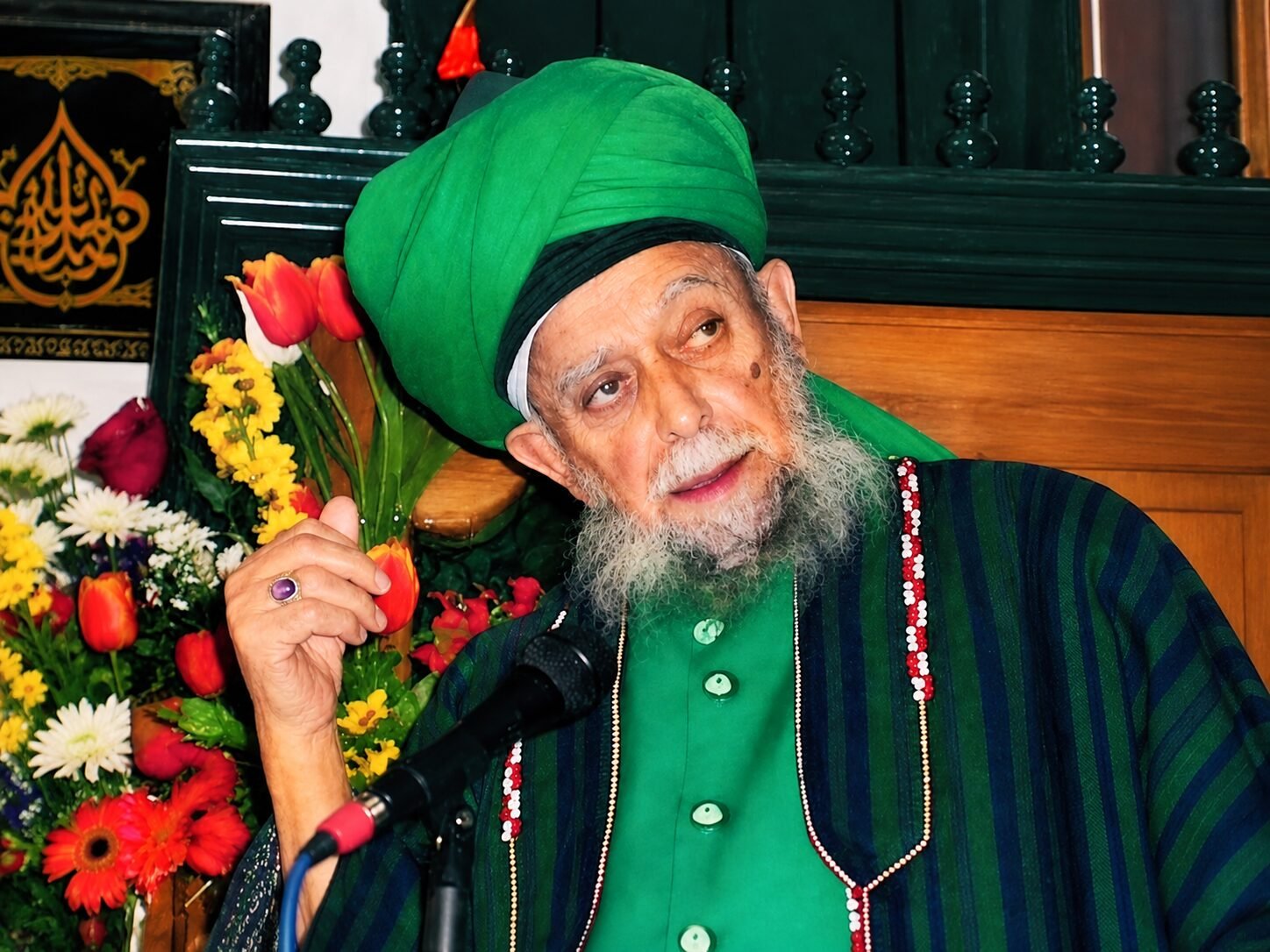
(RAHNUMA) Shaykh Muhammad Nazim Adil al-Qubrusi (1922–2014), remembered worldwide simply as Shaykh Nazim, remains one of the most influential spiritual figures of the modern Muslim world. Born into noble lineage and trained in the classical Sufi tradition, he represented a living continuation of Ottoman spiritual authority in a post-imperial age. His teachings, global influence, and remarkable humility earned him followers from every continent. Yet it is his bold pronouncements on the Awaited Mahdi — expressed in vocabulary rarely heard from Sunni pulpits — that continue to spark debate among theologians and mystics alike.
Descent From Hazrat Pirane Pir Shaykh Abdul Qadir Jilani
Shaykh Nazim traced his family lineage to Pirane Pir Shaykh Abdul Qadir Jilani, specifically through the saint’s eldest son. This lineage positioned him firmly within an unbroken genealogical chain connected to the Prophet Muhammad through Imam Hasan and Imam Hussain. Among both Sufi Sunni and Irfani Shia spiritual communities, Hazrat Abdul Qadir Jilani carries distinct honour as the spiritual master of Ibn Arabi’s father.
Last Grand Shaykh of the Ottoman Sufi World
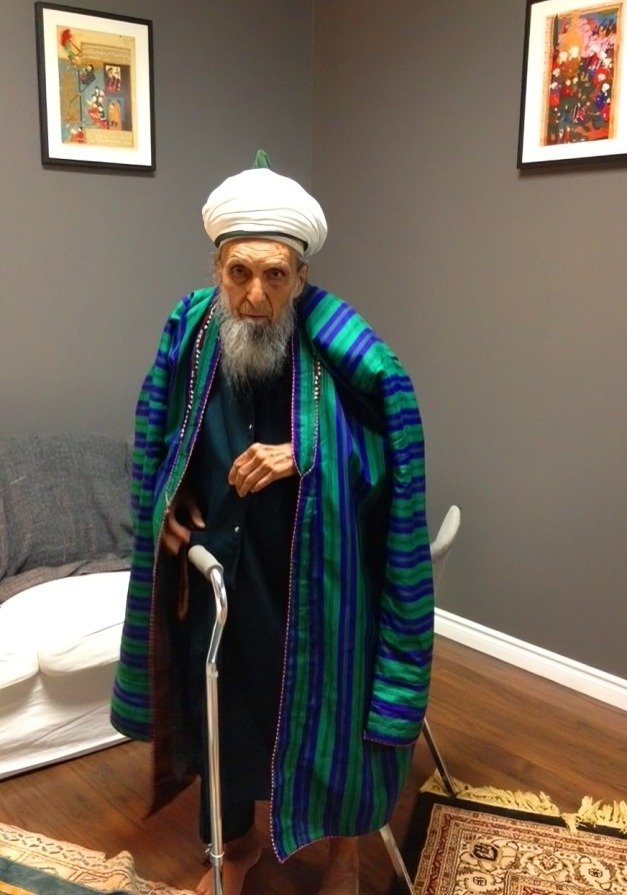
Shaykh Nazim was recognised as the Grand Shaykh of the Naqshbandi-Haqqani order, embodying the values, discipline, and grace associated with Ottoman-era Sufi scholarship. He served as the representative of his master, Shaykh Abdullah al-Daghestani, and continued the Ottoman Naqshbandi tradition into the 21st century from his spiritual home in Lefke, Cyprus. He was also known to possess Mevlevi initiation, symbolically intertwining his lineage with the legacy of Mevlana Jalaluddin Rumi — a blending that reflected his universal outlook and deep love for the spiritual arts of the Islamic world.
Global Influence and Distinguished Admirers
Shaykh Nazim’s gatherings drew prime ministers, heads of state, scholars, artists, diplomats, tribal leaders, and ordinary seekers alike. Members of the Royal Family of Brunei sought him, as did royalty from Malaysia and dignitaries from the Gulf, including the Emirate of Sharjah. Among his admirers was the legendary boxing icon Muhammad Ali, who visited him as a seeker, not as a celebrity. From Europe to Southeast Asia, and from Damascus to London, his teachings reached millions. Hyderabad maintained a historical, personal connection to his spiritual circle as well — most notably through the late Lt. Col. Syed Mohammed Amiruddin Khan Asifjahi, last Military Secretary to H.E.H. The Nizam of Hyderabad, who had a spiritual affinity with Shaykh Nazim’s tradition.
Both Lt. Colonel Amiruddin Khan and his grandson Imam ul-Mulk IV were initiated into the Order of the Masters of Wisdom – Tariqat e-Khwajagan – through Shaykh Nazim al-Qubrusi in accordance to family tradition traced back to the era of Khwaja Ubaidullah Ahrar, who initiated their ancestor into the Order in the 1400’s according to the original family tree.
The Nizam of Hyderabad H.E.H. Asaf Jahi VII Mir Osman Ali Khan was also an initiate of the Order of the Masters of Wisdom – Tariqat e-Khwajagan from a lineage tracing through each of the Asif Jahi Nizam’s back to their ancestor Khwaja Abid.
Lt. Colonel Amiruddin’s date of demise fell upon the same day Operation Polo ended and the Nizam State ended in back in 1948.
Recognised Among the Most Influential Muslims
Throughout his life, Shaykh Nazim was repeatedly acknowledged as one of the world’s most influential Muslim personalities in global surveys, opinion indexes, and popular polls. His authority, however, was not built through institutional power or political campaigns, but through the persuasive magnetism of spiritual character, humility, and moral example. His influence arose organically, grounded in personal transformation, spiritual guidance, and a universal message of mercy.
The Cyprus Sanctuary
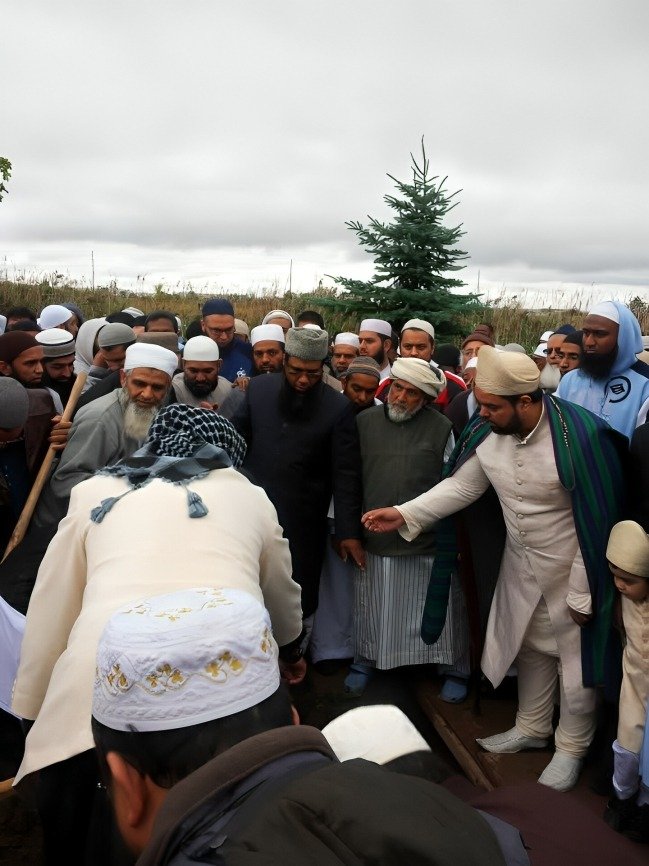
Though trained in Damascus and rooted in Ottoman-Turkish culture, Shaykh Nazim made Lefke, Cyprus his spiritual base. The village became a perennial spiritual sanctuary, drawing pilgrims throughout the year. It is said that seekers left Lefke with hearts softened, spirits awakened, and an unshakeable memory of a man who combined courtly adab with saintly tenderness — a figure who embodied the beauty and hospitality of classical Islam.
His Statements on Imam al-Mahdi
Among his most striking teachings were his frequent references to the imminent appearance of Imam al-Mahdi. Shaykh Nazim spoke not in speculative terms, but with conviction that the Mahdi is alive, active, and known to the saints of the age. He consistently referred to him as “Sahib-uz-Zaman, Imam al-Mahdi (ʿalaihi salam),” and “Master of the Age” — language historically associated with Twelver Imamology rather than standard Sunni eschatology.
The Controversial Claim
Shaykh Nazim further stated that he and his teacher, Shaykh Abdullah al-Daghestani, physically encountered Imam al-Mahdi near the holy city of Medina during the 1960s. Remarkably, he never used this claim to assert political authority nor to elevate himself as any deputy or representative of the Mahdi. For his followers, the sincerity of the claim was reinforced by the fact that he neither monetised it for the collection of Khums, nor politicised it; he simply stated it and moved on.
Where His Belief Aligns
In classical Sunni doctrine, the Mahdi is yet to be born. In Twelver Shia belief, the Mahdi lives in occultation and may appear to chosen servants of God. Shaykh Nazim’s language — particularly his consistent use of Sahib-uz-Zaman and his attribution of active living presence — aligns far more closely with the Shia theological formulation, despite his Sunni-Sufi identity and Ottoman Naqshbandi training. His teachings reflect an older Sufi worldview wherein love for the Ahl al-Bayt, belief in the hidden qutb, and Imamology transcend later sectarian divisions.
Al-Azhar’s Ecumenical Horizon
Modern Al-Azhar positions support this broader theological tolerance. The historic Shaltut ruling recognised the Jaʿfari school as a valid Islamic legal tradition, and contemporary Azhari voices have acknowledged that belief in a living Mahdi is not outside possibility and hence recognised as a valid position Muslims are free to choose within the faith of Islam. Al-Azhar has repeatedly affirmed the validity of Sufism as an Islamic science and spiritual discipline essential to the faith’s inner life. These positions offer space for Sufi-Imamological expressions like Shaykh Nazim’s.
A Spiritual Synthesis Beyond Sectarianism
Shaykh Nazim’s legacy lies not merely in his ability to gather global audiences, but in his capacity to speak of the Mahdi with an authority rooted in centuries of Sufi Imamology. He represents a rare bridge between Sunni and Shia eschatological symbolism at a time when sectarian discourse dominates the Muslim world. His approach — honouring the spiritual Sunni path while embracing language historically associated with Twelver eschatology — reflects an older Islamic cosmology in which the House of the Prophet Muhammad is the spiritual axis of the Ummah.
Final Reflection
Shaykh Nazim al-Qubrusi lived as a Sufi master of nobility, humility, and luminous presence. His life invites us to consider whether the Imam of the Age belongs to any sect at all — or whether he stands above sectarian divisions as the divinely guided shepherd of all believers. In Shaykh Nazim’s vision, the Mahdi is not a partisan saviour, but the fulfilment of prophetic hope — a universal light returning to heal humanity. His example reminds us that true fidelity to the Ahl al-Bayt and to the spiritual tradition of Islam is not confined to slogans, labels, or political identity, but rests in sincerity, love, humility, and truth.